
La grotte du jardin du Luxembourg ou fontaine Médicis — History & Facts
Can paint confess what words never could? In the delicate interplay of light and shadow, an awakening whispers through the verdant foliage, inviting quiet contemplation. Look to the foreground, where the gentle curves of the fountain beckon the eye. Notice how the water dances in the sunlight, casting shimmering reflections onto the surrounding stones, each droplet a tiny prism of color. The interplay of greens and blues creates a serene palette, while the warm tones of the surrounding garden envelop the viewer in a soft embrace.
The composition is harmonious, with the fountain as its heart, drawing the viewer in and holding them captive in a moment of tranquil beauty. Yet, amidst this idyllic scene lies a contrast between stillness and the provocation of longing. The lush vegetation suggests growth and life, while the solitary figure resting nearby hints at a contemplative solitude—perhaps a yearning for connection or escape. The detailed brushwork captures not only the physical but also the emotional landscape, infusing the serene scene with a depth that transcends its visual beauty. Jean Baptiste Maréchal painted this piece likely in the early 19th century, during a time of burgeoning Romanticism in France.
The garden of the Luxembourg was a popular retreat, reflecting both the natural beauty cherished by Parisians and the era’s embrace of emotion over reason. In this context, the painting serves as a personal sanctuary, allowing viewers to explore their inner landscapes amid the charm of the world outside.
More Artworks by Jean Baptiste Maréchal
Browse all →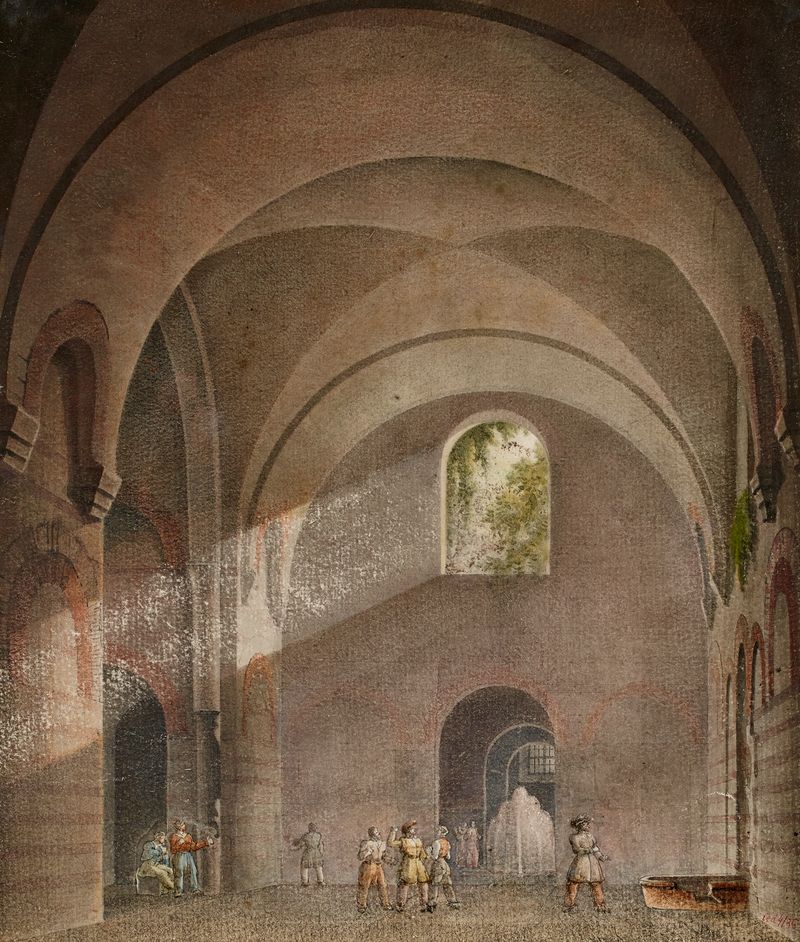
Vue intérieure des Thermes de Julien
Jean Baptiste Maréchal
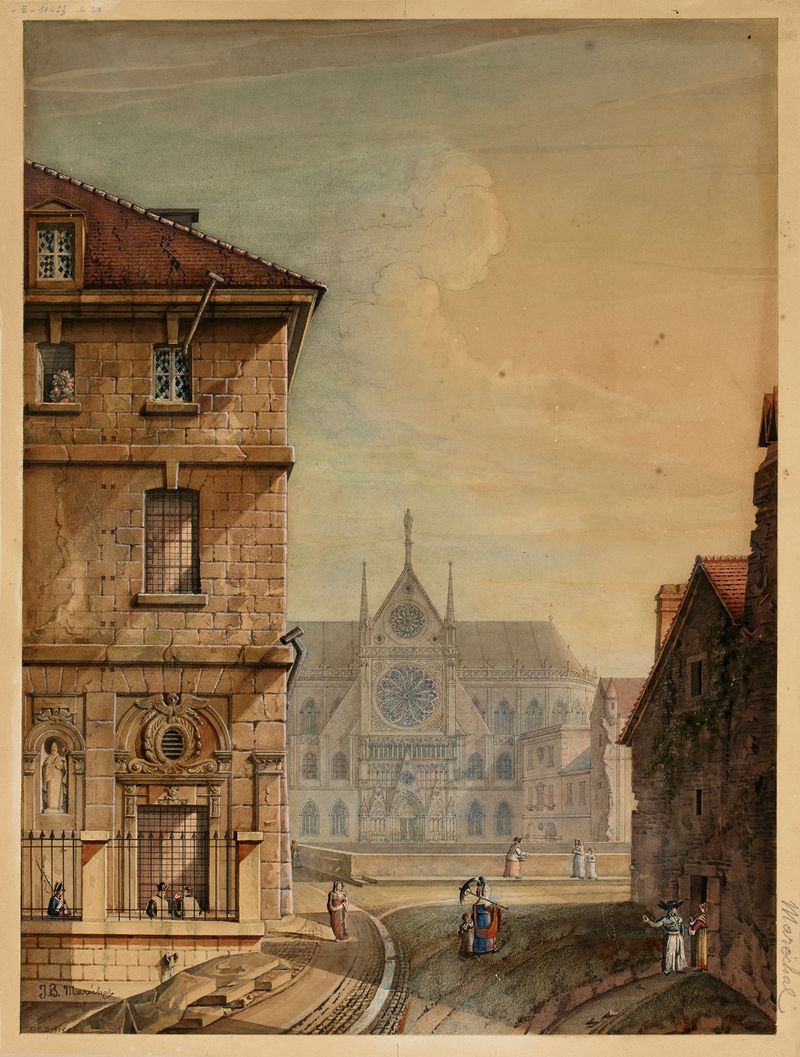
Cathédrale Notre-Dame de Paris et le vieil Hôtel-Dieu
Jean Baptiste Maréchal
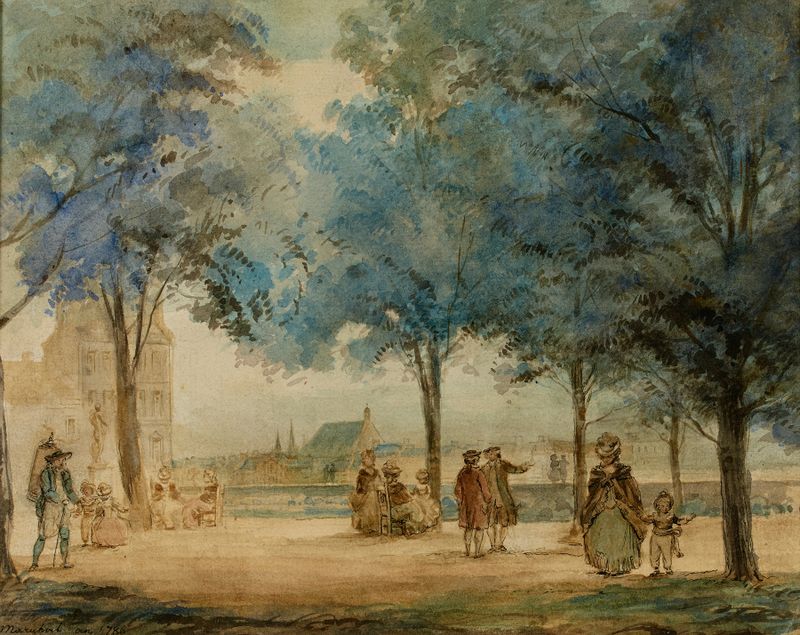
La terrasse des Tuileries en 1786
Jean Baptiste Maréchal

Vue intérieure du cloître de l’église Saint-Etienne-du-Mont
Jean Baptiste Maréchal
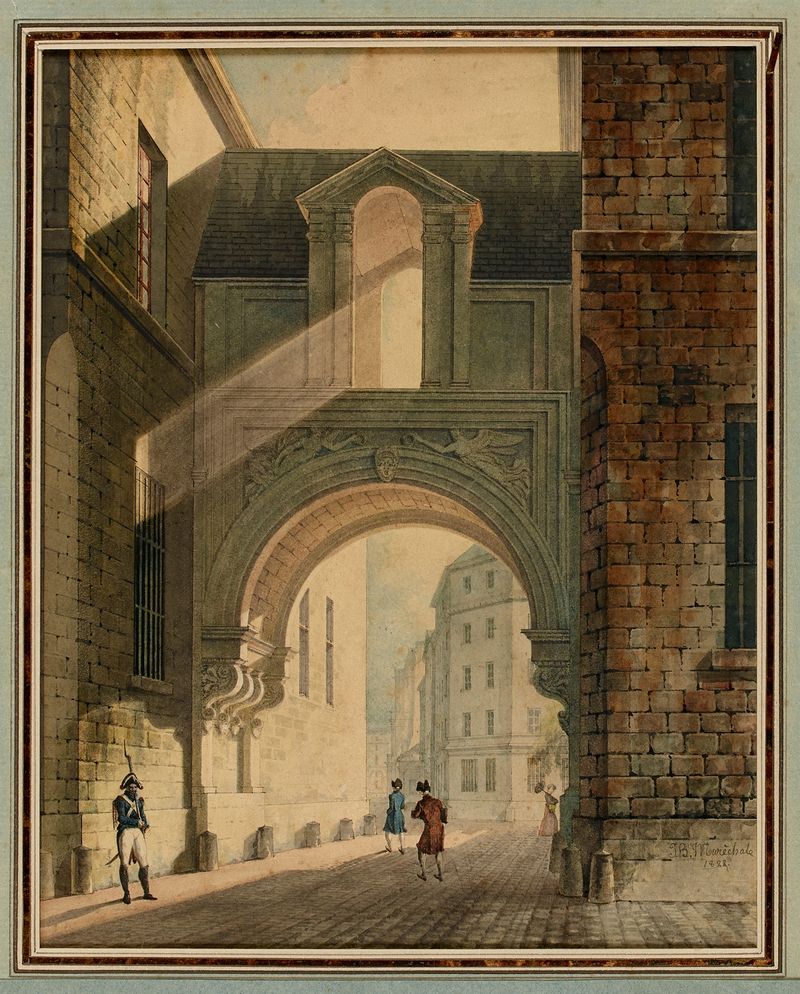
L’arc dit de Nazareth sur l’île de la Cité
Jean Baptiste Maréchal
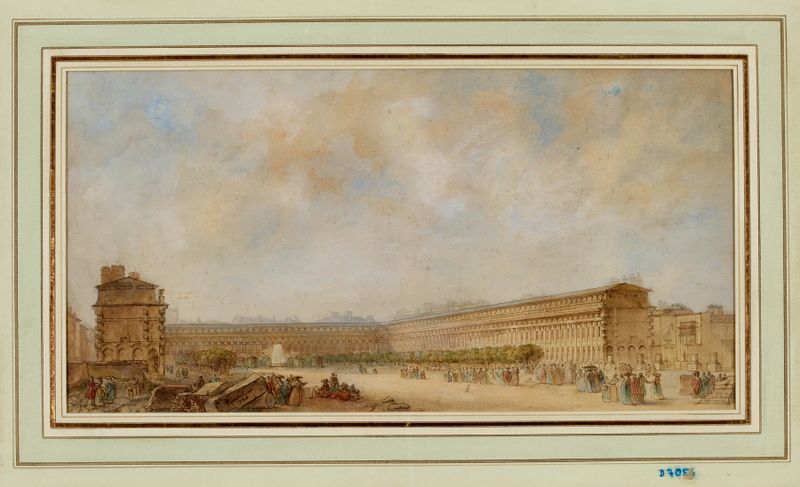
Le Palais Royal en 1789
Jean Baptiste Maréchal

La fontaine des Innocents
Jean Baptiste Maréchal
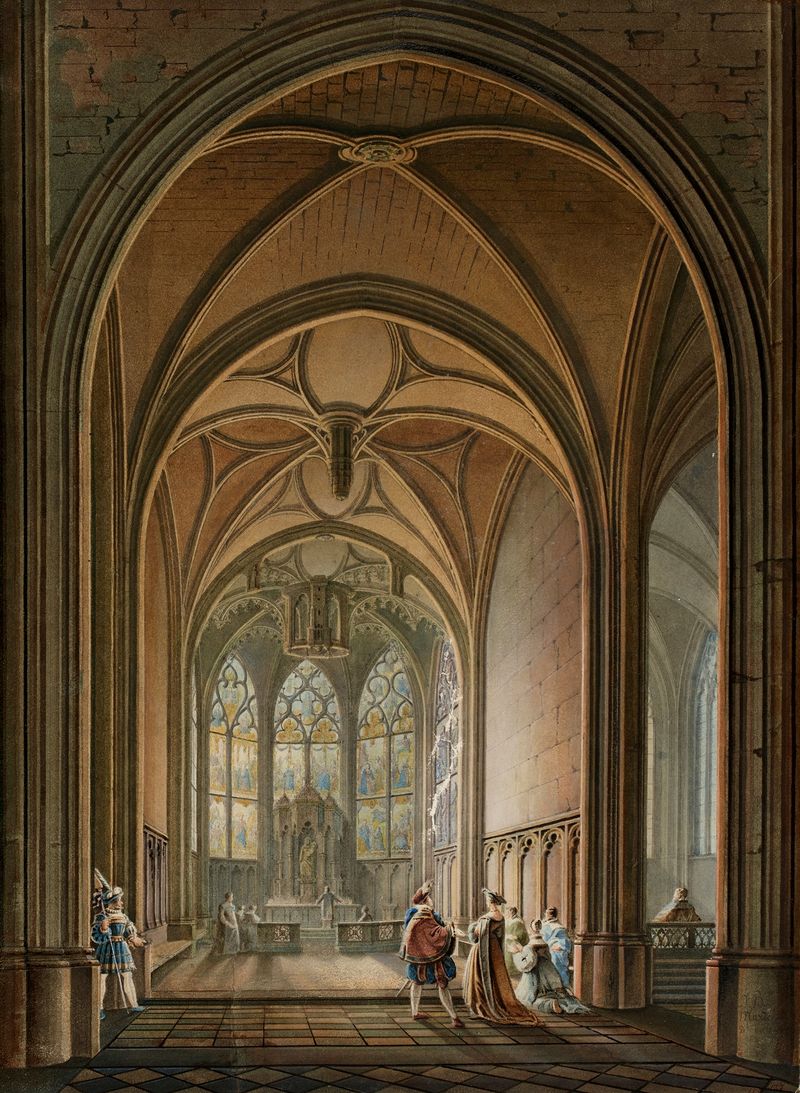
Vue intérieure de la chapelle de la Vierge de l’église Saint-Gervais
Jean Baptiste Maréchal





