Vue intérieure des Thermes de Julien — History & Facts
In the realm of art, movement often serves as a reminder of the transience of existence, urging us to pause and reflect. Look closely at the intricate columns to the left, where soft light dances across their surfaces, highlighting the tension between solidity and fragility. Notice how the warm hues of ochre and gold blend seamlessly with the cool blues and greens, creating a harmonious yet dynamic atmosphere. The arrangement of figures, each engaged in their own quiet pursuits, creates a sense of rhythm that invites the viewer to explore the depth of the scene. Amidst the architectural grandeur, subtle emotional tensions emerge.
The figures appear absorbed in their activities, yet there is an underlying sense of isolation, as if even in company, they drift within their own thoughts. The juxtaposition of the lush environment against the starkness of stone suggests a duality of permanence and impermanence, embodying the fleeting nature of beauty itself. Painted during the early 19th century, Vue intérieure des Thermes de Julien reflects Maréchal's fascination with neoclassical architecture and its ability to evoke both nostalgia and contemplation. At this time, he was deeply immersed in the cultural currents of post-revolutionary France, where the resurgence of classical ideals was both a reaction to and a reflection of the societal transformations surrounding him.
More Artworks by Jean Baptiste Maréchal
Browse all →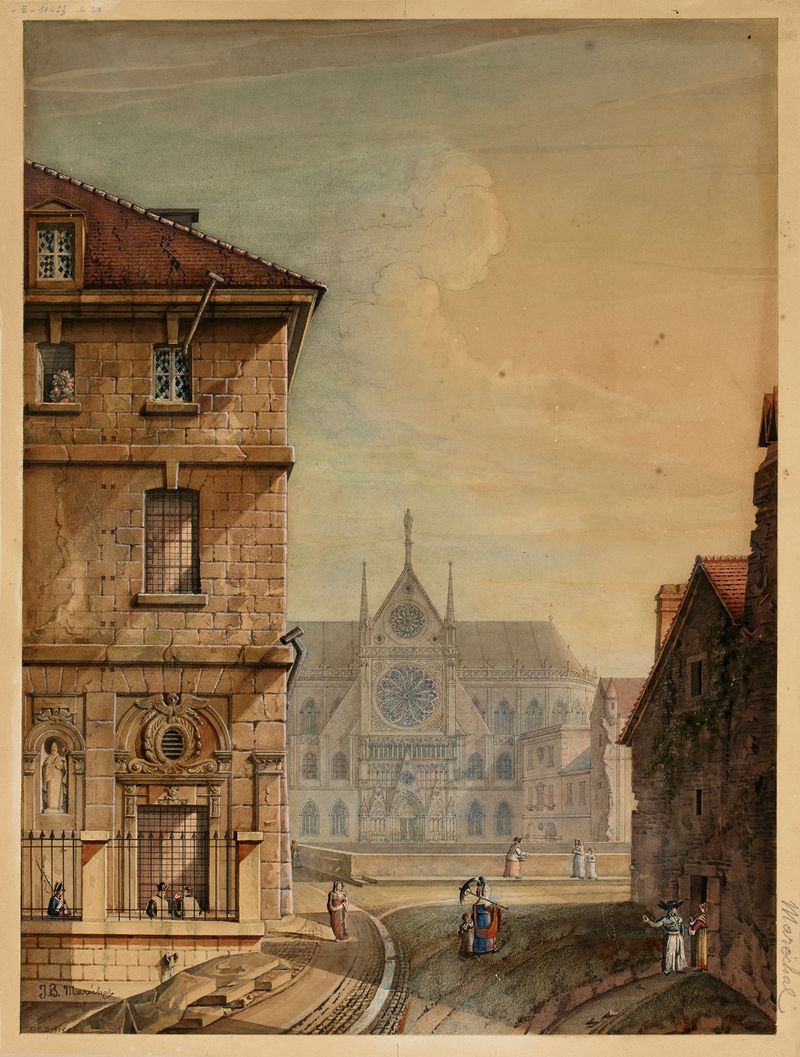
Cathédrale Notre-Dame de Paris et le vieil Hôtel-Dieu
Jean Baptiste Maréchal
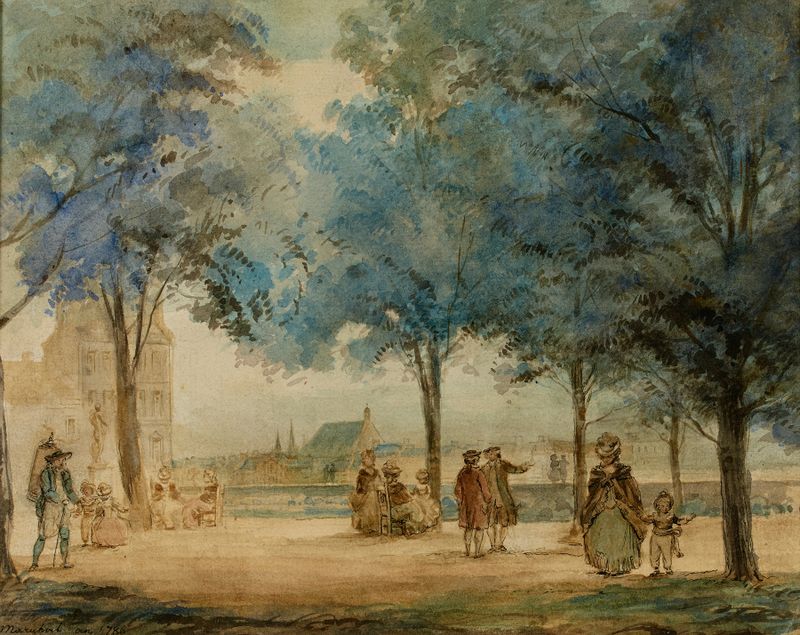
La terrasse des Tuileries en 1786
Jean Baptiste Maréchal

Vue intérieure du cloître de l’église Saint-Etienne-du-Mont
Jean Baptiste Maréchal
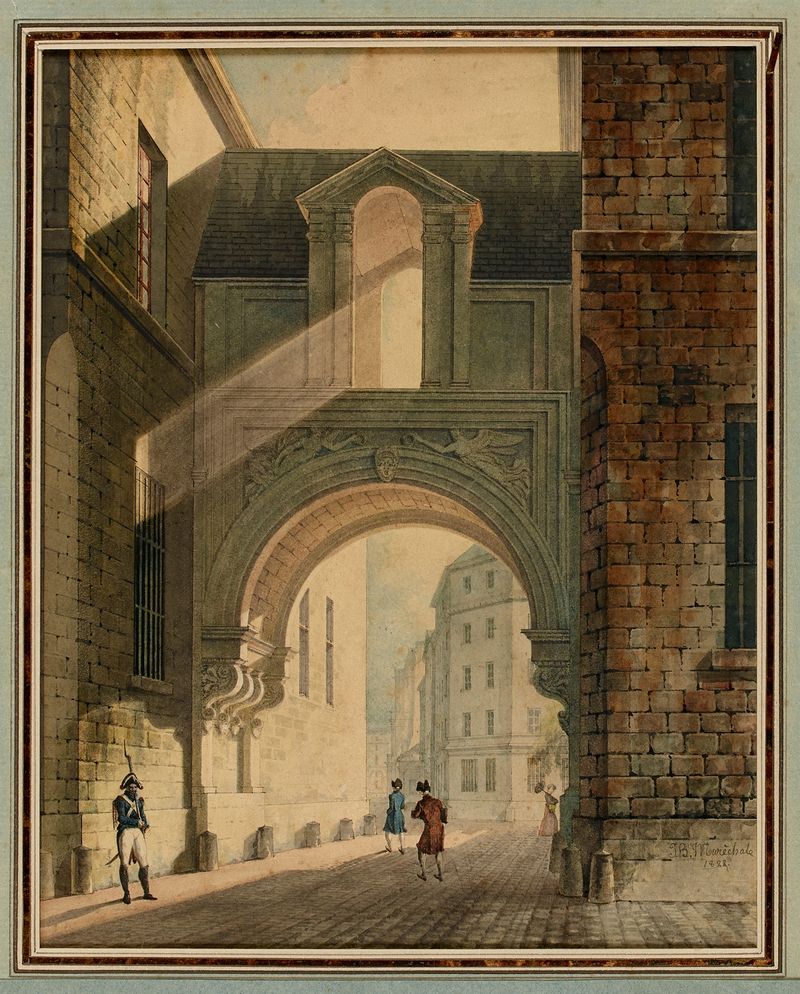
L’arc dit de Nazareth sur l’île de la Cité
Jean Baptiste Maréchal
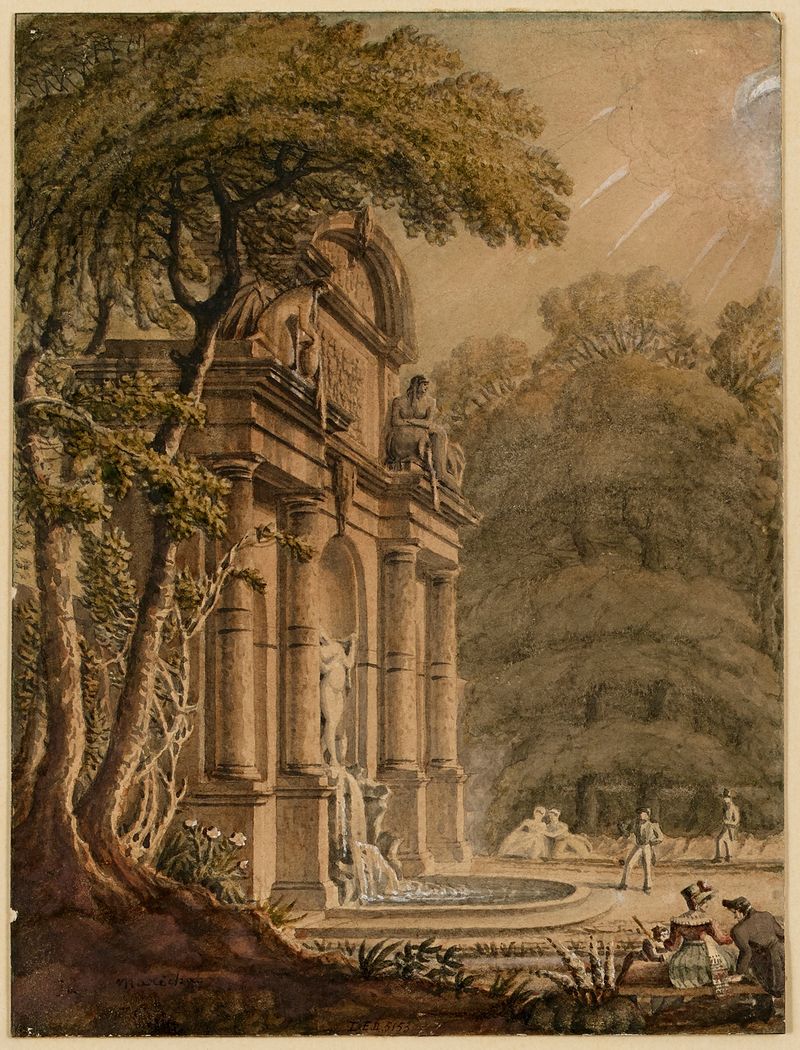
La grotte du jardin du Luxembourg ou fontaine Médicis
Jean Baptiste Maréchal
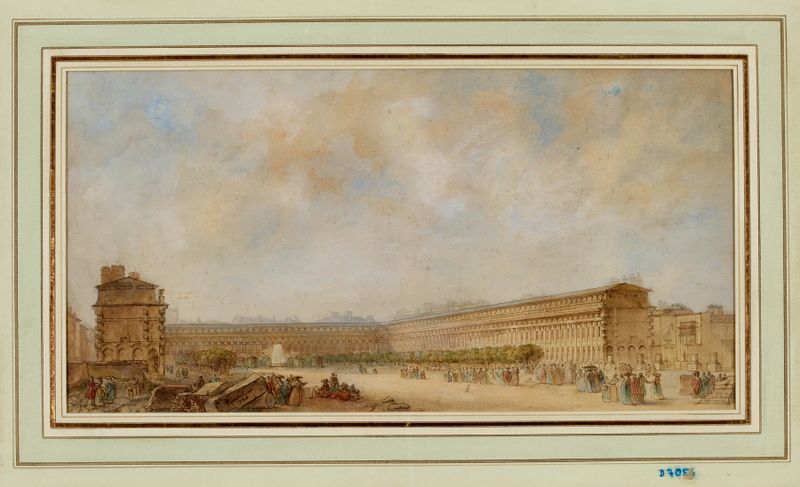
Le Palais Royal en 1789
Jean Baptiste Maréchal

La fontaine des Innocents
Jean Baptiste Maréchal
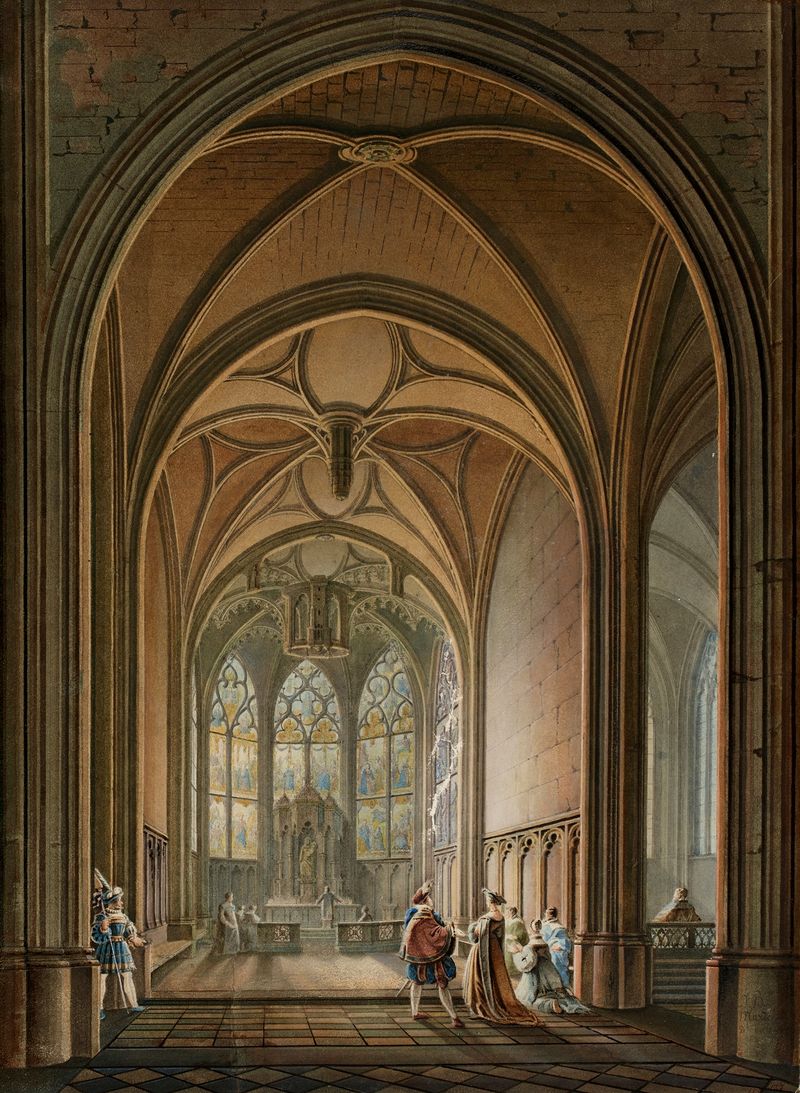
Vue intérieure de la chapelle de la Vierge de l’église Saint-Gervais
Jean Baptiste Maréchal