
La fontaine des Innocents — History & Facts
Here, desire waits patiently, captured in a single moment that echoes with the whispers of longing. It invites us into a world where the heart's deepest yearnings are etched into the very fabric of existence. Look to the center, where the fountain emerges, its intricate details rendered in soft, flowing lines that seem to dance with the water's movement. Notice how the gentle hues of blue and green create a serene atmosphere, wrapping the scene in a soothing embrace.
The figures surrounding the fountain, although entwined in their own spaces, radiate a collective yearning, their gestures both tender and melancholic. Each element is meticulously placed, drawing the viewer's gaze outward to the edges of the composition, where the quiet anticipation lingers. Delve into the nuances of emotion woven into the scene. The cascading water symbolizes both purity and the passage of time, suggesting a longing for renewal and connection.
The figures, caught in their own reverie, reflect a blend of hope and nostalgia—each face telling a story of unfulfilled desires and the fleeting nature of happiness. The play of light and shadow adds a layer of complexity, hinting at the duality of joy and sorrow that often accompanies such heartfelt yearnings. During the period Maréchal created this work, little is documented about his life, but it is clear that the art world was steeped in the echoes of Romanticism. In this era, artists found themselves exploring deep emotional landscapes, often reflecting the social upheaval and philosophical inquiries of their time.
This painting, though undated, embodies the spirit of that quest—a longing for connection, beauty, and the ephemeral nature of existence.
More Artworks by Jean Baptiste Maréchal
Browse all →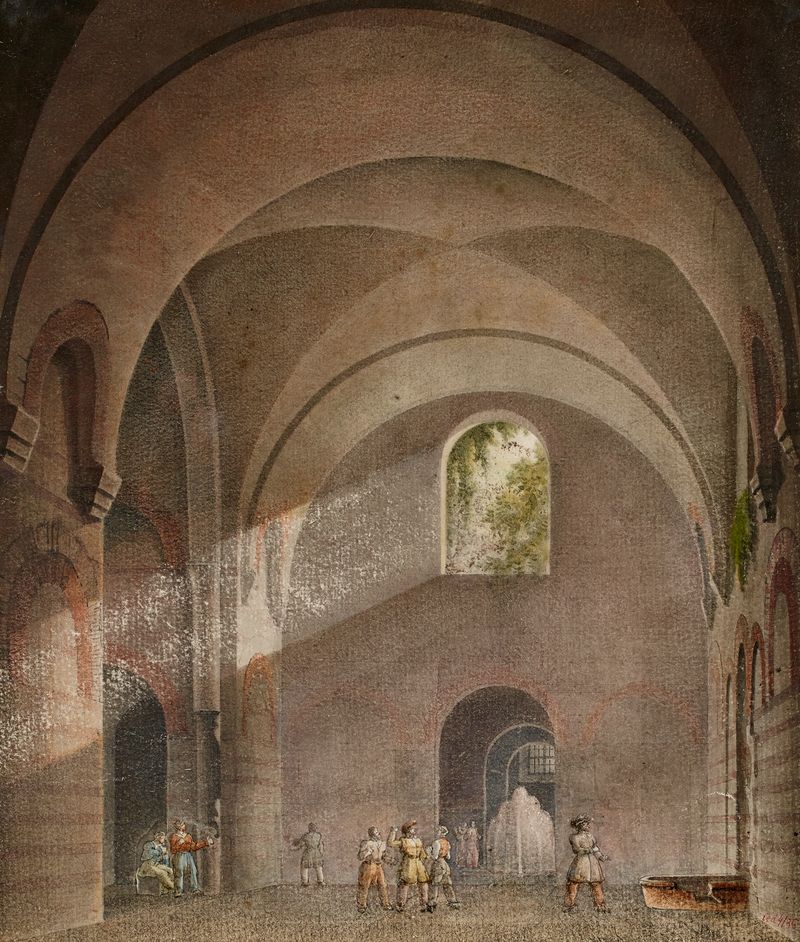
Vue intérieure des Thermes de Julien
Jean Baptiste Maréchal
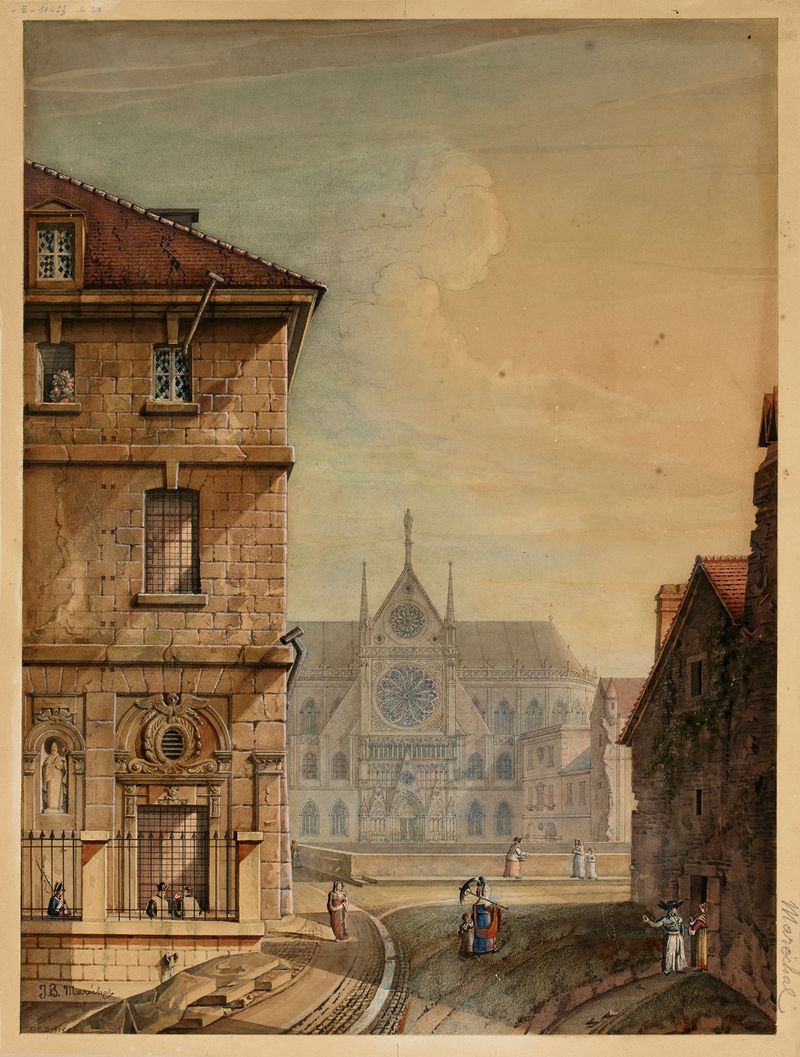
Cathédrale Notre-Dame de Paris et le vieil Hôtel-Dieu
Jean Baptiste Maréchal
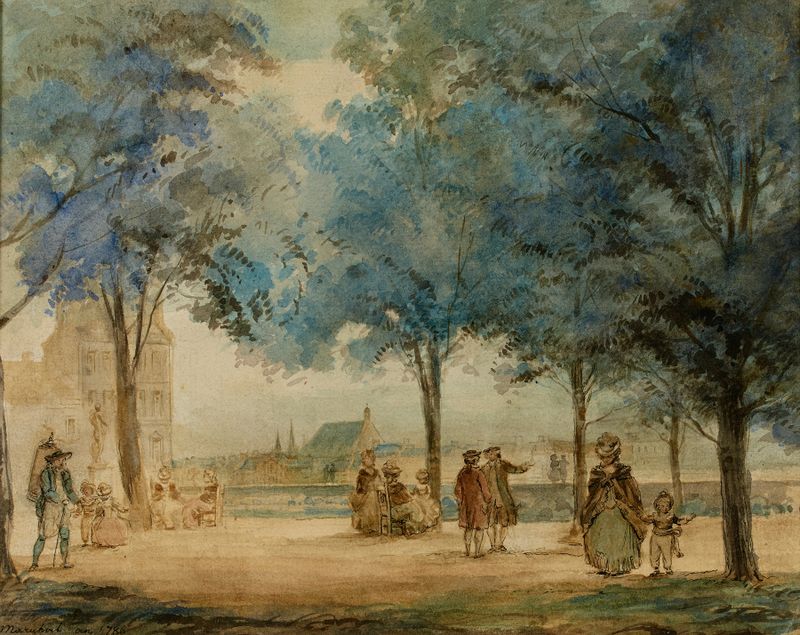
La terrasse des Tuileries en 1786
Jean Baptiste Maréchal

Vue intérieure du cloître de l’église Saint-Etienne-du-Mont
Jean Baptiste Maréchal
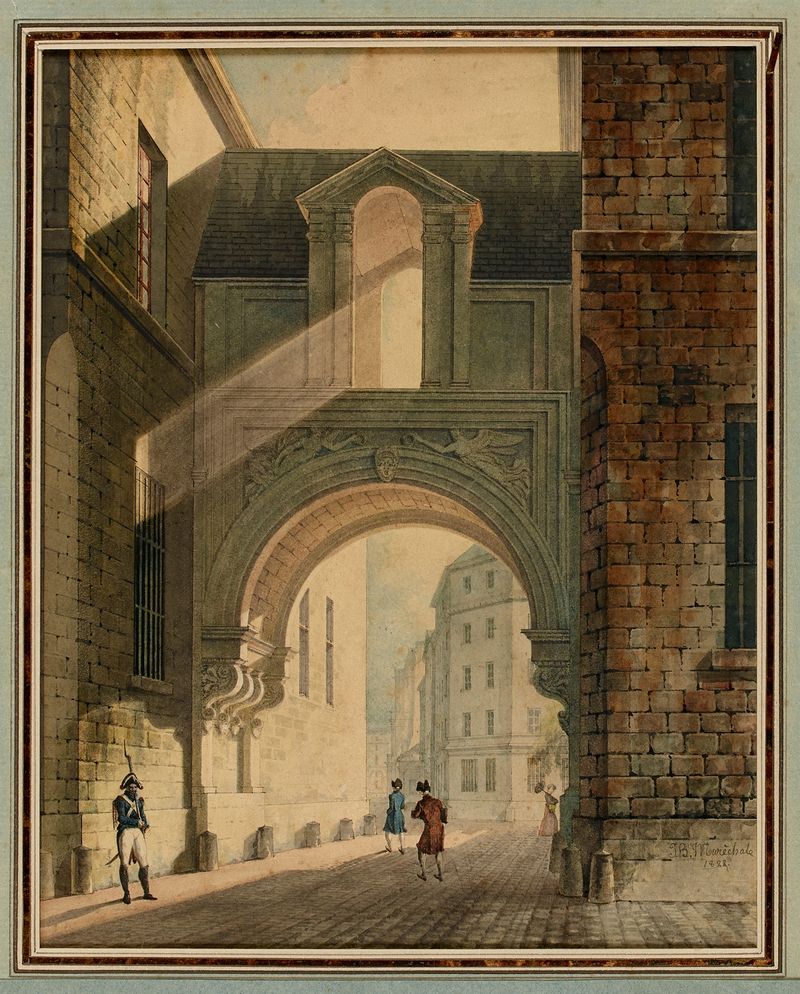
L’arc dit de Nazareth sur l’île de la Cité
Jean Baptiste Maréchal
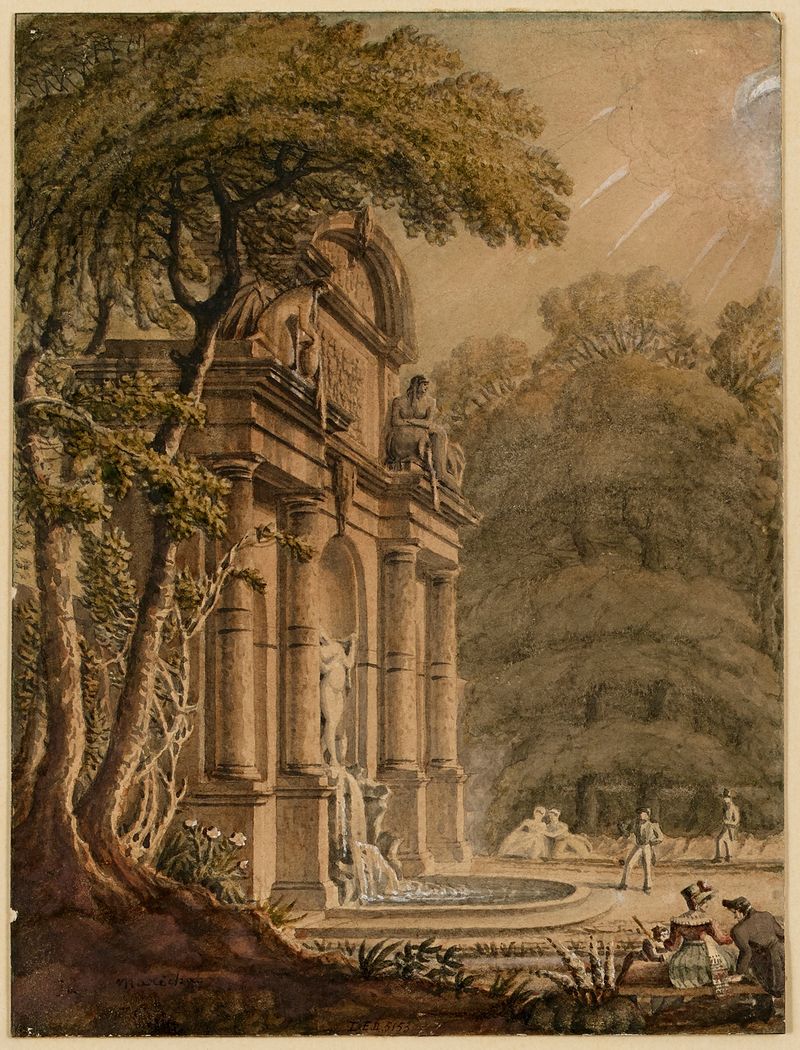
La grotte du jardin du Luxembourg ou fontaine Médicis
Jean Baptiste Maréchal
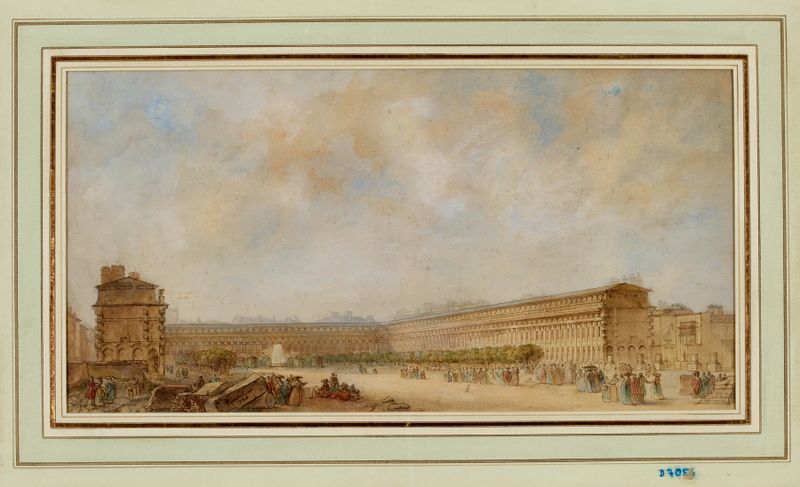
Le Palais Royal en 1789
Jean Baptiste Maréchal
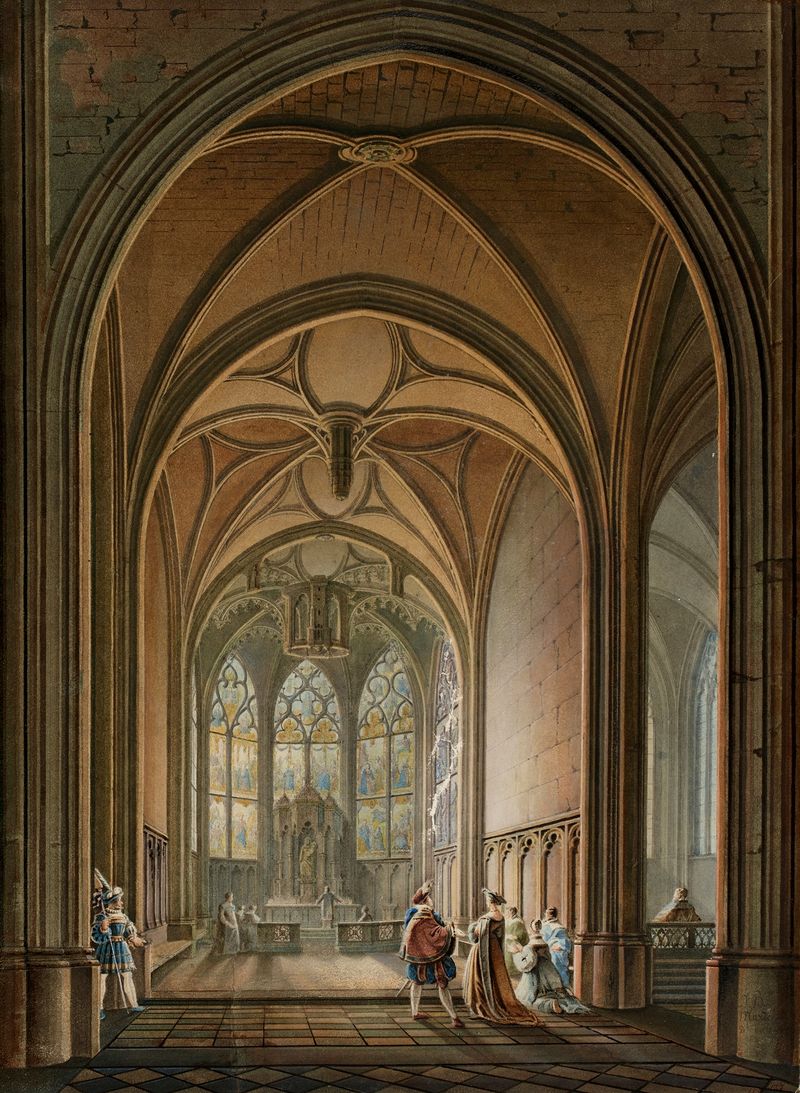
Vue intérieure de la chapelle de la Vierge de l’église Saint-Gervais
Jean Baptiste Maréchal





