
La Maison de Mimi Pinson à Montmartre — History & Facts
Did the painter know this moment would outlive them, encased in light and shadow, whispering secrets of a bygone era? Look to the left at the charming façade of the house, its soft colors contrasting with the vibrant greens of the surrounding foliage. Notice how the dappled sunlight filters through the leaves, casting intricate shadows that dance upon the cobblestone path. The brush strokes are both delicate and deliberate, inviting the viewer to step into the scene, to immerse themselves in the quietude of Montmartre.
This painting radiates a sense of intimacy, as if the viewer has stumbled upon a cherished memory. Within the tranquility, there lies an undercurrent of nostalgia; the house, once full of life, stands as a testament to fleeting moments. Observe the shadows creeping along the walls, hinting at the passage of time and the stories left untold. The juxtaposition of light and dark not only enhances the visual depth but also evokes an emotional resonance — a reminder of what has come and gone in this vivid yet serene corner of the world. In 1923, the artist was immersed in the vibrant life of Montmartre, a district teeming with artists and intellectuals.
During this time, the painting captures not just a scene, but a spirit reflective of an era characterized by both artistic innovation and personal introspection. David-Nillet, navigating the complexities of post-war life in Paris, found solace in the familiar rhythms of his surroundings, forever immortalizing this moment in La Maison de Mimi Pinson à Montmartre.
More Artworks by Germain David-Nillet
Browse all →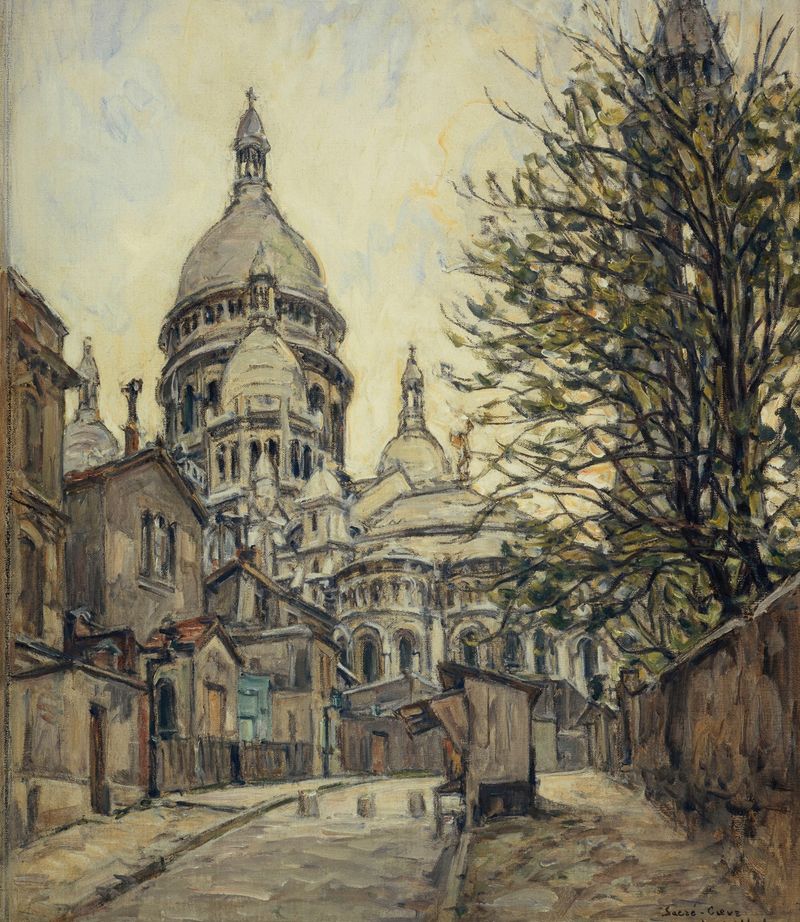
Le Sacré-Coeur à Montmartre.
Germain David-Nillet

Travaux du métropolitain, à l’angle de la rue du faubourg Saint-Antoine et de la rue de Reuilly.
Germain David-Nillet
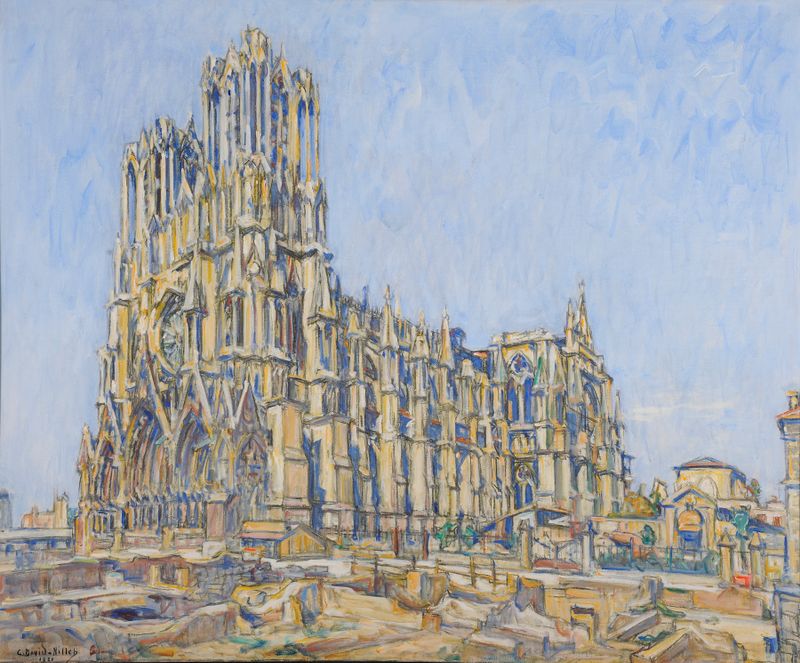
Cathédrale de Reims (côté sud)
Germain David-Nillet
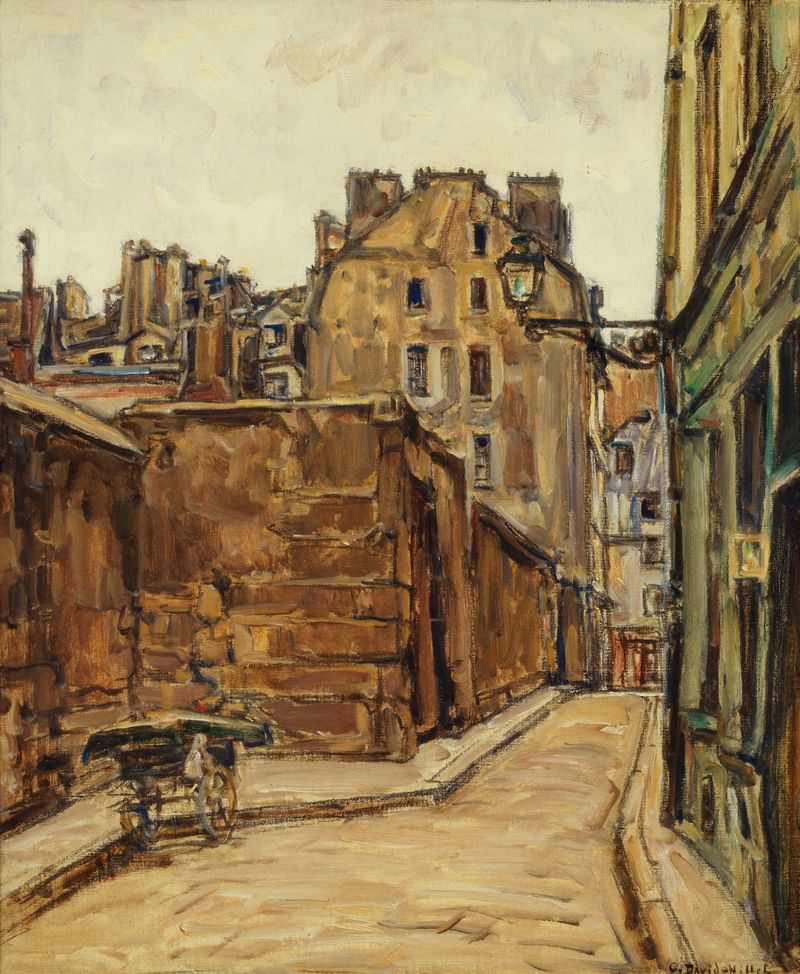
La rue Saint-Julien-le-Pauvre
Germain David-Nillet
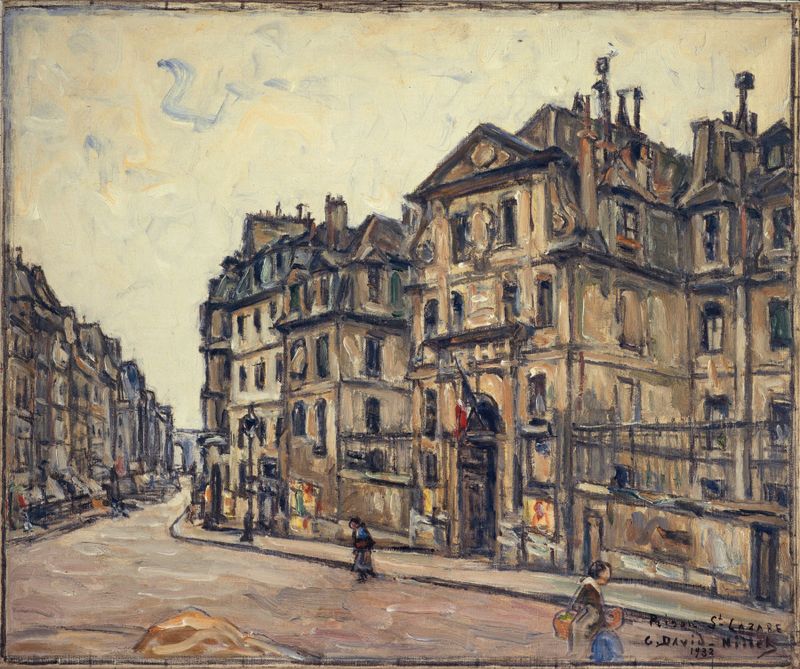
La Prison Saint-Lazare.
Germain David-Nillet





