La Prison Saint-Lazare. — History & Facts
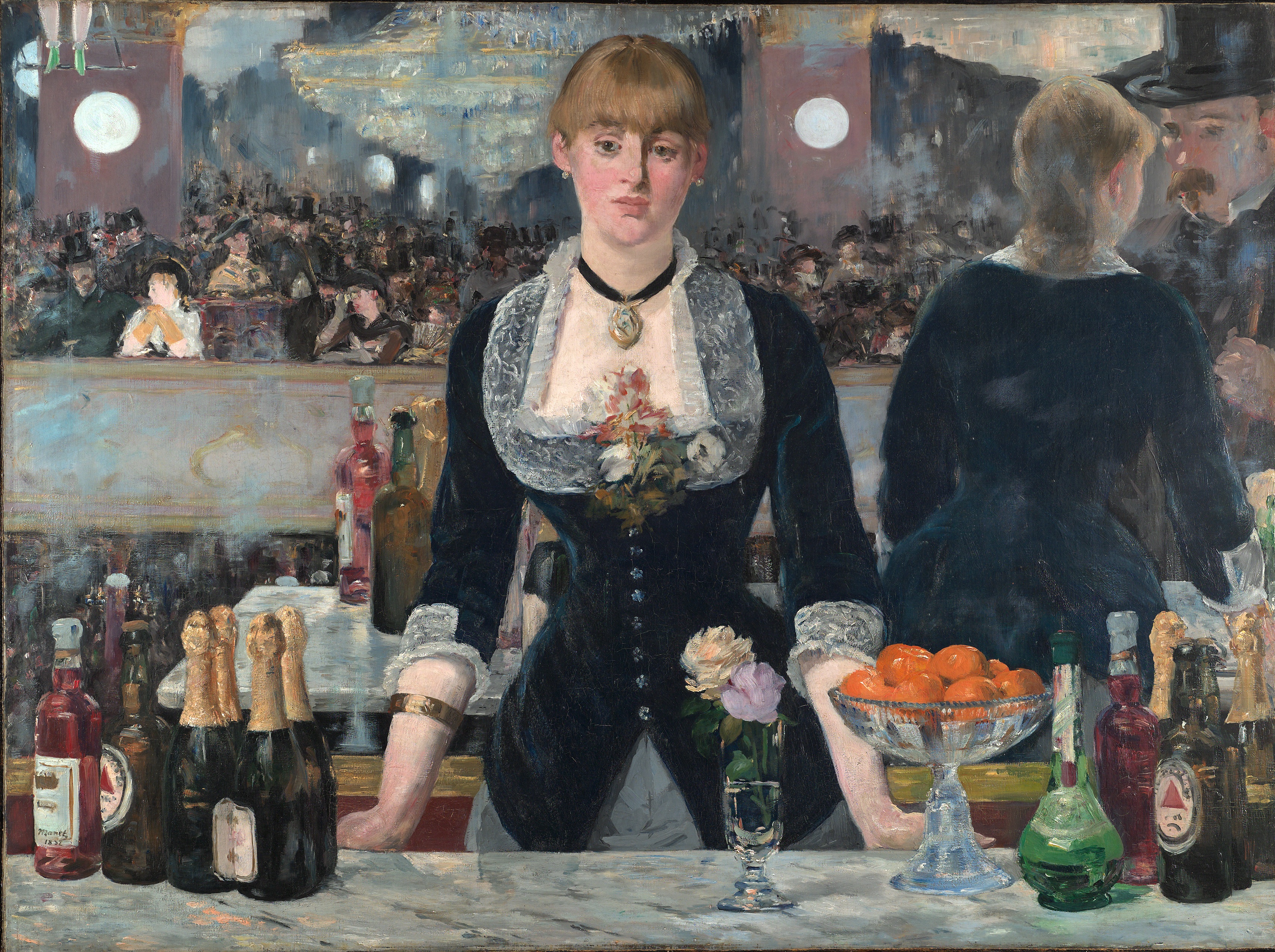
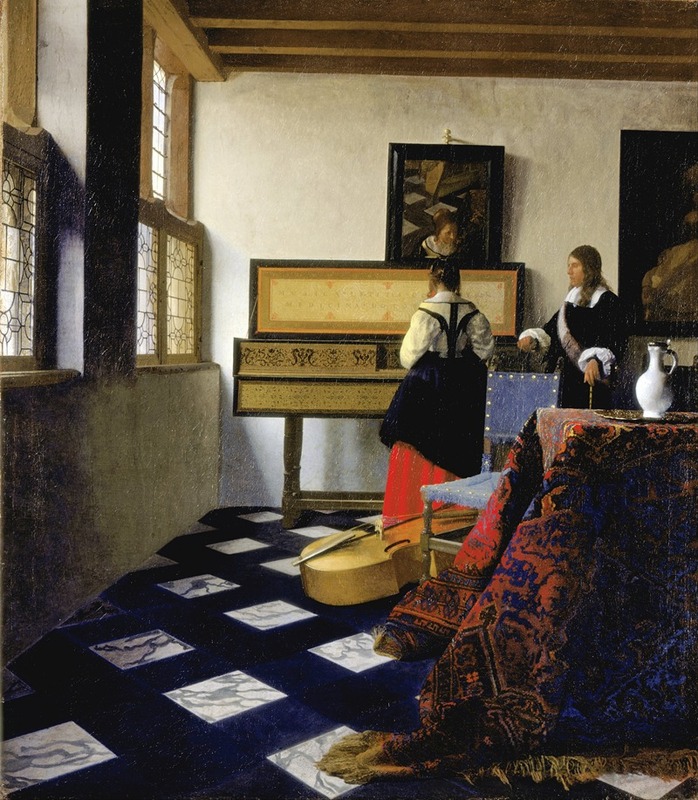
When did color learn to lie? The vibrant hues in La Prison Saint-Lazare evoke a tension that pulsates beneath the surface, challenging our perceptions of reality and emotion. Look to the right at the stark contrast between the deep blues and fiery oranges that define the dreary prison walls and the fleeting glimpses of joy. The brushwork is both frenetic and deliberate, with swirling patterns suggesting the chaotic energy of life beyond confinement. Notice how the light filters through the barred windows, creating a play of shadows that dances across the floor, illuminating the figures caught in a moment of longing and despair. Delve deeper into the anguished faces of the prisoners, whose expressions tell stories of both suffering and unquenchable hope.
The juxtaposition of the heavy, oppressive architecture with the lightness of the brush strokes captures a duality: the weight of confinement against the yearning for freedom. Each detail — a hand reaching out, a gaze turned towards the light — reveals the hidden ecstasy of potential release, a reminder that beneath despair lies the flicker of hope. Germain David-Nillet painted La Prison Saint-Lazare in 1932 during a time when he was deeply engaged with the struggles of modern life. Living in Paris, he witnessed the rise of surrealism and the existential crises faced by society in the interwar period.
This work reflects both a personal exploration of confinement and a broader commentary on the socio-political landscape, encapsulating the complexities of human emotion in a world rife with uncertainty.
More Artworks by Germain David-Nillet
Browse all →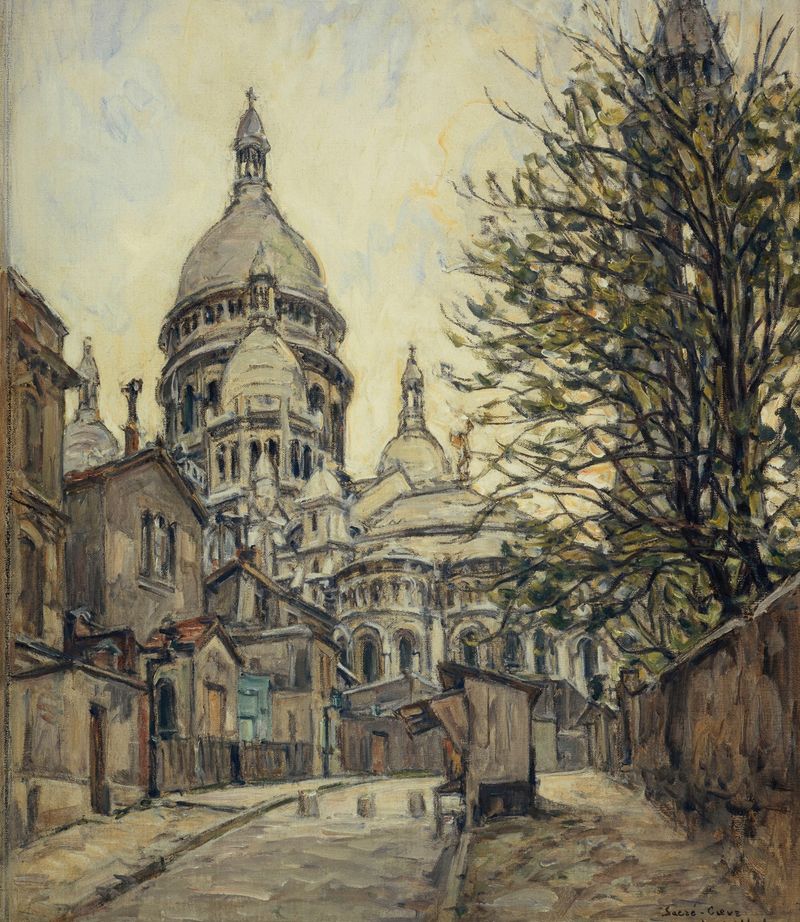
Le Sacré-Coeur à Montmartre.
Germain David-Nillet
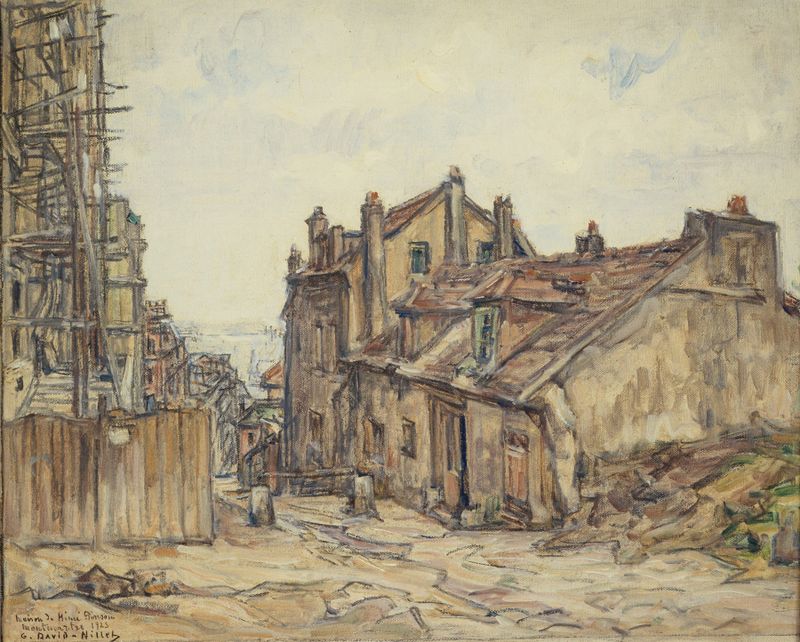
La Maison de Mimi Pinson à Montmartre
Germain David-Nillet

Travaux du métropolitain, à l’angle de la rue du faubourg Saint-Antoine et de la rue de Reuilly.
Germain David-Nillet
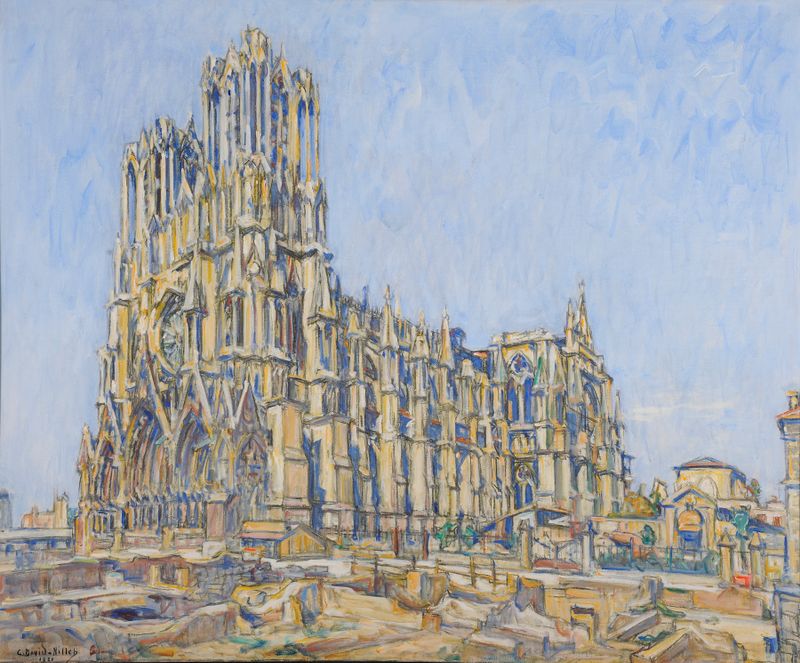
Cathédrale de Reims (côté sud)
Germain David-Nillet
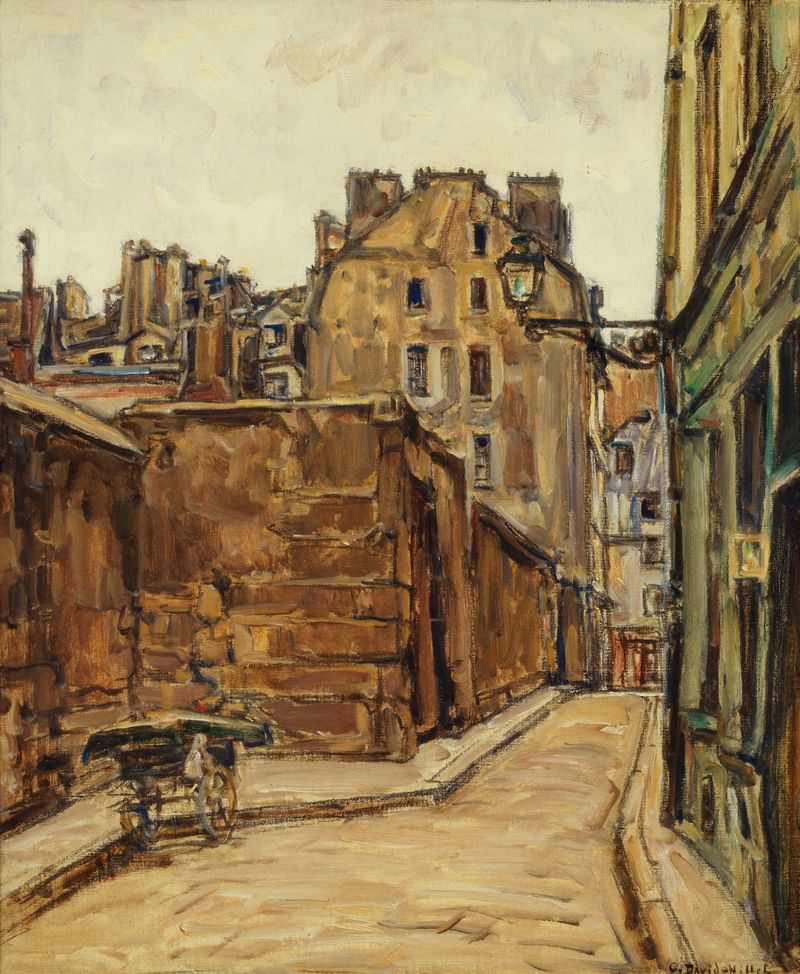
La rue Saint-Julien-le-Pauvre
Germain David-Nillet