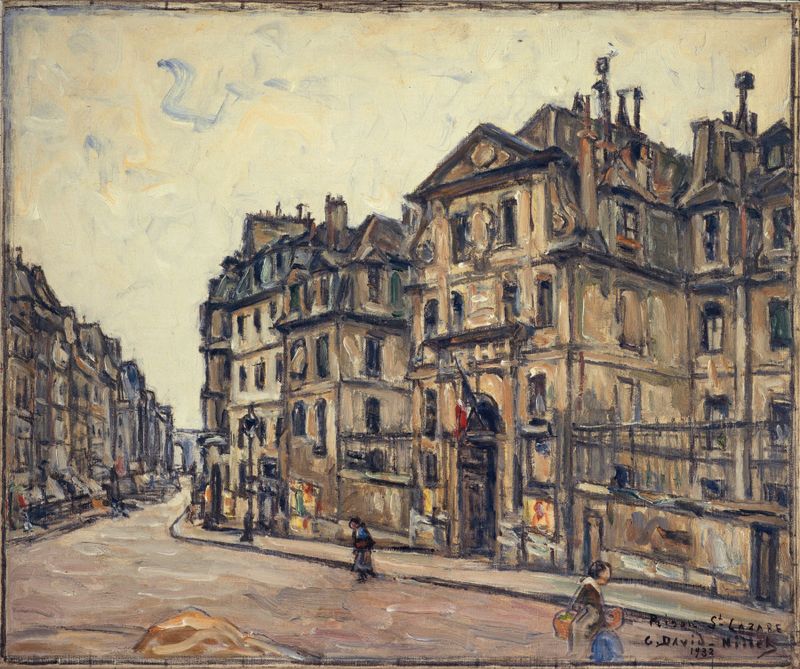
Travaux du métropolitain, à l’angle de la rue du faubourg Saint-Antoine et de la rue de Reuilly. — History & Facts
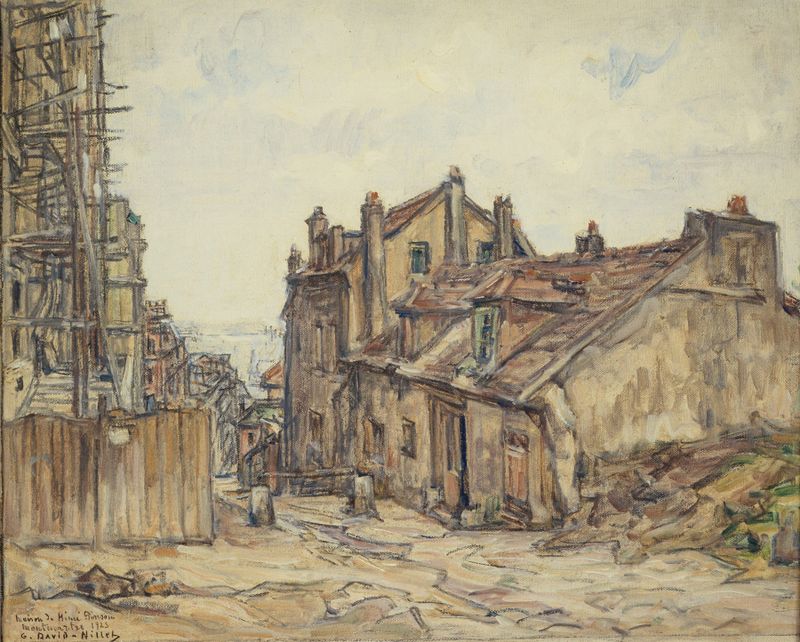
Can paint confess what words never could? In the bustling heart of Paris, a moment frozen in time reveals the intricate dance of human endeavor and urban transformation. Look to the center where a group of laborers, clad in worn work clothes, toil under the watchful gaze of a towering construction site. The juxtaposition of their labor against the delicate architecture surrounding them emphasizes the weight of progress. Notice how the muted palette of earthy tones contrasts with the shimmering light reflecting off the metal scaffolding, capturing an atmosphere ripe with both promise and strain.
Shadows elongate, suggesting the passing of time and the unwavering commitment of those who shape the city. Delve deeper into the scene’s emotional undertow: the weary expressions of the workers convey both determination and the burden of their task. The juxtaposition of their physical toil against the elegance of the Parisian architecture hints at a disconnect between aspiration and reality. It speaks to a broader narrative of industrialization—how dreams of modernity often come at the cost of individual sacrifice. In 1929, while living in Paris, Germain David-Nillet painted this piece against a backdrop of socio-economic shifts and the looming specter of the Great Depression.
As the world underwent rapid change, urban environments evolved, and with them, the lives of those who built them. This artwork not only captures a specific moment in time but also reflects the artist's keen observation of the human spirit within the relentless march of progress.