
La rue Saint-Julien-le-Pauvre — History & Facts
In a world teetering on the edge of change, the stillness of a moment captured invites us to find equilibrium amid chaos. Each brushstroke beckons us to look deeper, revealing the delicate balance between past and present, serenity and turmoil. Look to the center of the painting, where the soft glow of lamplight bathes the cobblestone street, drawing your eye to the weathered architecture that stands sentinel against time. Notice how the cool blues and grays of the buildings contrast sharply with the warm light, creating a visual harmony that grounds the scene.
The careful placement of shadows enhances the three-dimensionality of the street, inviting you to step into this intimate Parisian corner, as if beckoned by an unseen hand. Yet beneath this tranquil surface lies a tension that speaks volumes. The narrowness of the street suggests confinement, while the distant archway hints at escape and possibility. Each figure, whether a solitary passerby or a couple engaged in conversation, embodies a moment suspended in time, symbolizing the constant push and pull of life.
The painting’s quietude invites a reflection on the unseen narratives of those who traverse this space, capturing the complexity of human experience against the backdrop of an ever-evolving city. In 1925, the artist found himself immersed in a Paris rich with artistic innovation and social upheaval. Germain David-Nillet was at a pivotal point in his career, experimenting with the blending of realism and modernism. This work reflects not only his personal journey but also the broader evolution of art in a city where tradition met the burgeoning movements of the 20th century.
As the world around him transformed, his portrayal of urban life flourished, hinting at the delicate balance that art strives to maintain between observation and emotion.
More Artworks by Germain David-Nillet
Browse all →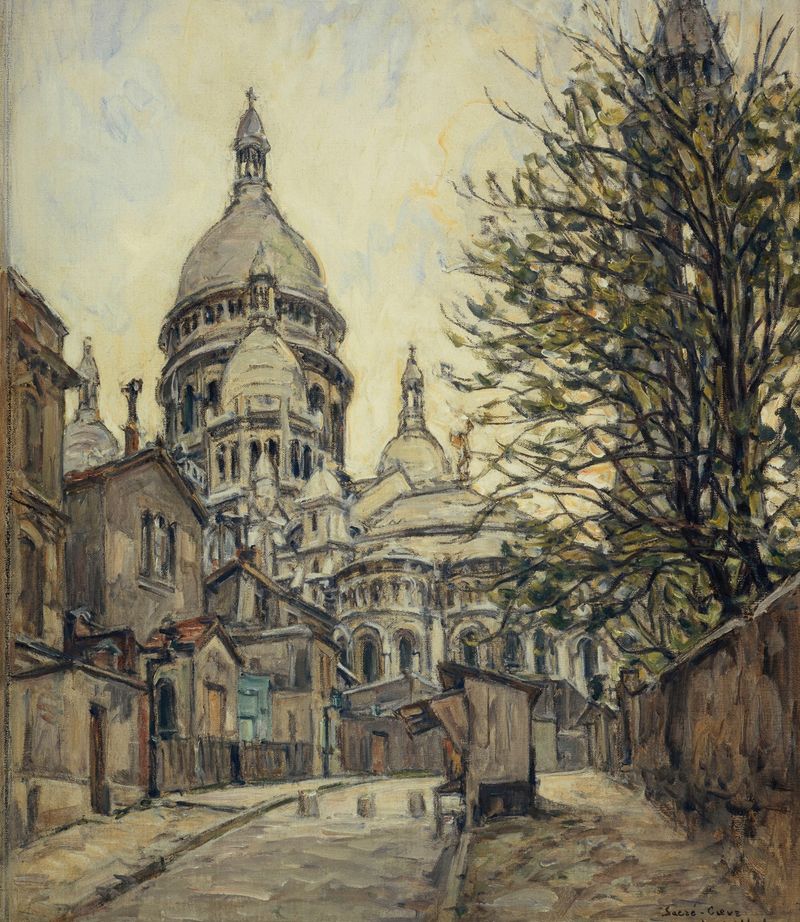
Le Sacré-Coeur à Montmartre.
Germain David-Nillet
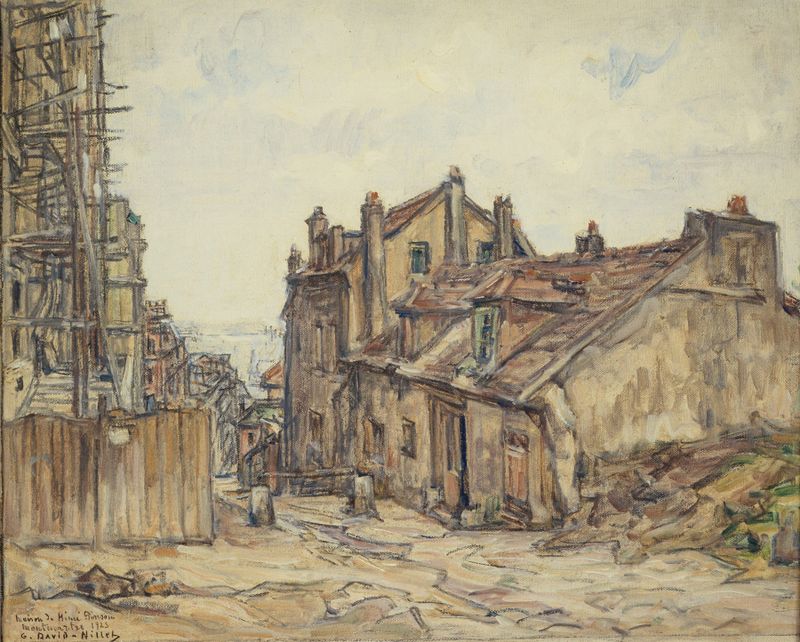
La Maison de Mimi Pinson à Montmartre
Germain David-Nillet

Travaux du métropolitain, à l’angle de la rue du faubourg Saint-Antoine et de la rue de Reuilly.
Germain David-Nillet
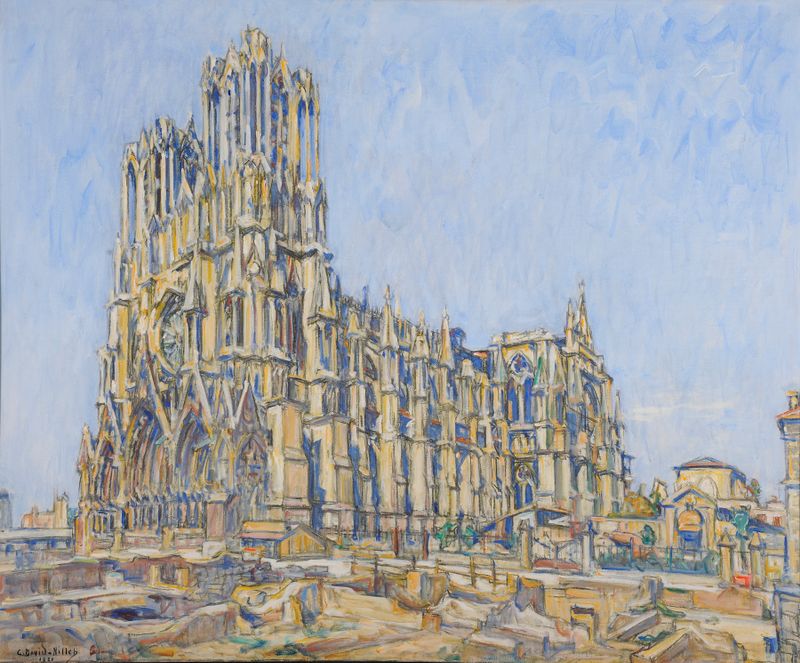
Cathédrale de Reims (côté sud)
Germain David-Nillet
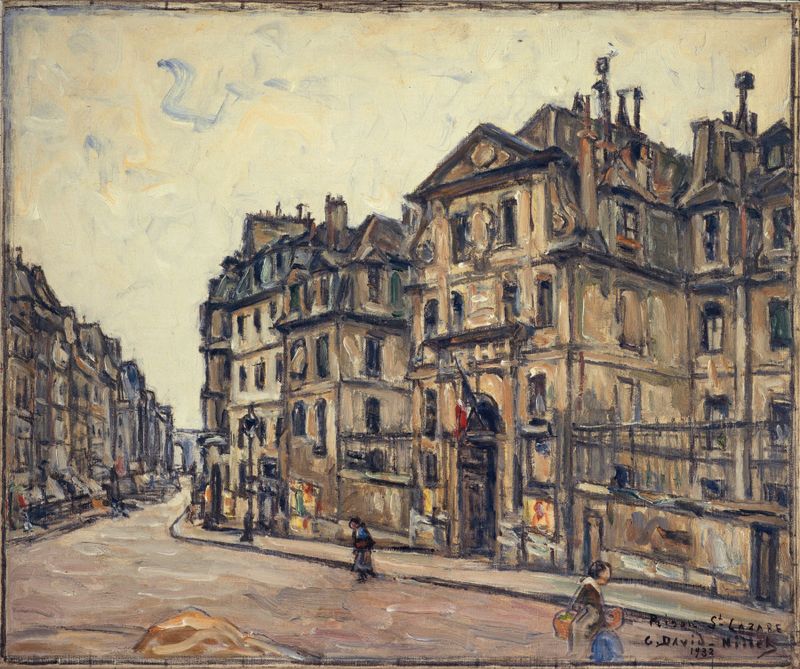
La Prison Saint-Lazare.
Germain David-Nillet
More Architecture Art
Browse all →
The statue of Liberty
Frédéric Auguste Bartholdi

View of Houses in Delft, Known as ‘The Little Street’
Johannes Vermeer

View of Houses in Delft, Known as ‘The Little Street’
Johannes Vermeer

The Cathedral in Rouen. The portal, Grey Weather
Claude Monet

The yellow house
Vincent van Gogh

The Church in Auvers-sur-Oise, View from the Chevet
Vincent van Gogh