
La Place De L’église — History & Facts
In the dance of light upon a canvas, the ephemeral whispers of moments lost are captured forever like echoes in the wind. Look closely at the shimmering reflections on the cobblestones in La Place De L’église. The artist's deft brushstrokes create a radiant interplay between light and shadow, guiding your gaze to the church that stands solemnly at the center. Notice how the warm tones of the sun-soaked buildings contrast with the cool shadows, evoking a sense of peace amidst the bustling life of the square.
The figures, small and understated, weave through this scene, their gestures suggesting stories of everyday existence. Delve deeper into the emotional landscape of this piece: the church, a symbol of permanence, looms over the transient activities of the townsfolk, representing a juxtaposition of the sacred and the mundane. The movement of light, both gentle and assertive, serves as a reminder of the passage of time, illuminating the fleeting nature of life while also evoking a sense of nostalgia. Each brushstroke invites the viewer to contemplate the harmony and tension between human existence and the eternal. In 1866, Jongkind painted this work while living in France, amidst the rise of Impressionism that was reshaping the landscape of art.
Captivated by the play of light in daily life, he sought to fuse realism with an impressionistic style, reflecting his own experiences and the changing world around him. This piece underscores a moment in time where beauty, memory, and the relentless flow of light converge in a vivid tableau.
More Artworks by Johan Barthold Jongkind
Browse all →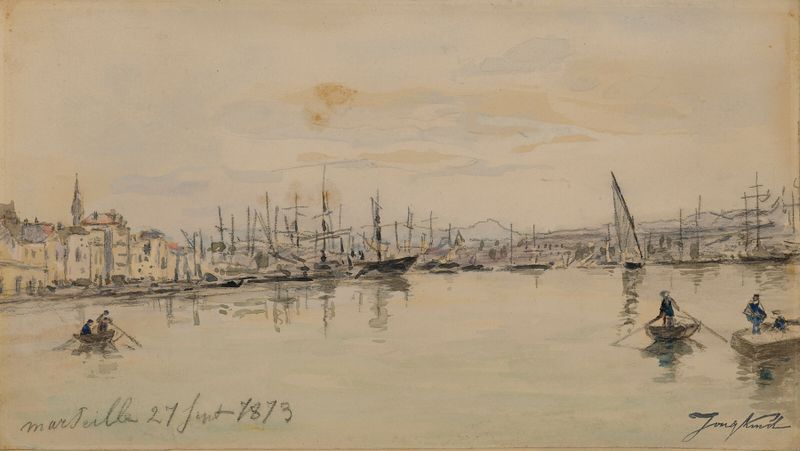
Le Port de Marseille
Johan Barthold Jongkind

Canal Saint-Martin
Johan Barthold Jongkind

Countryside near Brezins, between Grenoble and Vienne
Johan Barthold Jongkind

Notre-Dame vue du quai de la Tournelle
Johan Barthold Jongkind

Environs de Grenoble
Johan Barthold Jongkind

Clair de lune à Overschie (environs de Rotterdam)
Johan Barthold Jongkind

Port de Honfleur
Johan Barthold Jongkind
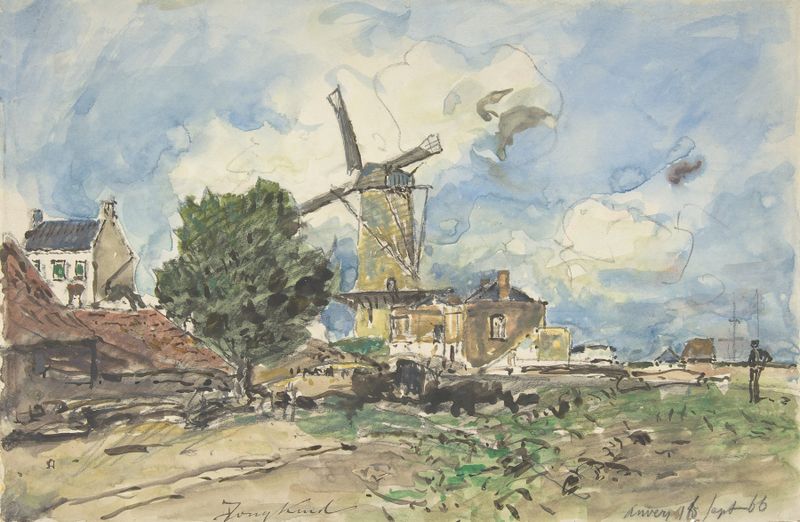
Wind Mill at Antwerp
Johan Barthold Jongkind

Le Havre
Johan Barthold Jongkind

The Church of Overschie
Johan Barthold Jongkind
More Architecture Art
Browse all →
The statue of Liberty
Frédéric Auguste Bartholdi

View of Houses in Delft, Known as ‘The Little Street’
Johannes Vermeer

View of Houses in Delft, Known as ‘The Little Street’
Johannes Vermeer

The Cathedral in Rouen. The portal, Grey Weather
Claude Monet

The yellow house
Vincent van Gogh

The Church in Auvers-sur-Oise, View from the Chevet
Vincent van Gogh