
La Place du Palais-Royal, au clair de lune — History & Facts
When did color learn to lie? In the soft glow of moonlight, an enchanting world unfolds, inviting us to question the truths hidden within its silken layers. Look to the left at the delicately illuminated Palais-Royal, its architecture both grand and intimate in the night’s embrace. Notice how the silvery tones of the moonlight wash over the cobblestones, reflecting a dance of shadows that pulse with life yet remain hauntingly still. The gentle brushstrokes evoke a serene atmosphere, while the palette juxtaposes deep blues and soft whites, creating an ethereal serenity that feels almost tangible. As you delve deeper into the scene, consider the figures cloaked in darkness, their outlines barely discernible against the luminous backdrop.
This contrast between light and shadow speaks to a yearning for connection, suggesting stories untold in the silence of the night. The stillness of the moment invites contemplation, portraying the tension between the vibrancy of life and the solitude often felt under moonlit skies. In 1765, Pierre-Antoine Demachy painted this work during a time when the Rococo movement was waning, and new artistic ideas were beginning to emerge in France. He was deeply engaged in the exploration of light and atmosphere, influenced by the picturesque landscapes of his contemporaries.
This period marked a transition in art, reflecting the complex emotional landscapes of its creators as they sought to capture the beauty and melancholy of everyday life.
More Artworks by Pierre-Antoine Demachy
Browse all →
Démolition de la Bastille, le 17 juillet 1789
Pierre-Antoine Demachy
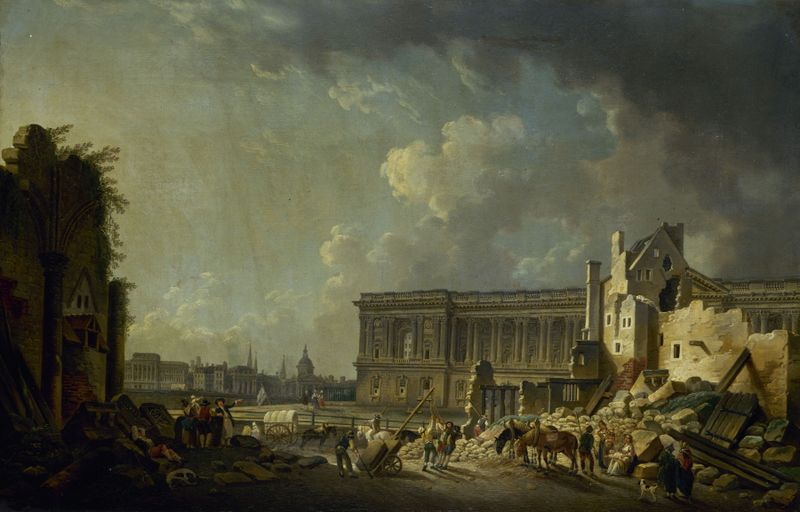
Dégagement de la colonnade du Louvre
Pierre-Antoine Demachy

La colonnade du Louvre, nouvellement dégagée
Pierre-Antoine Demachy
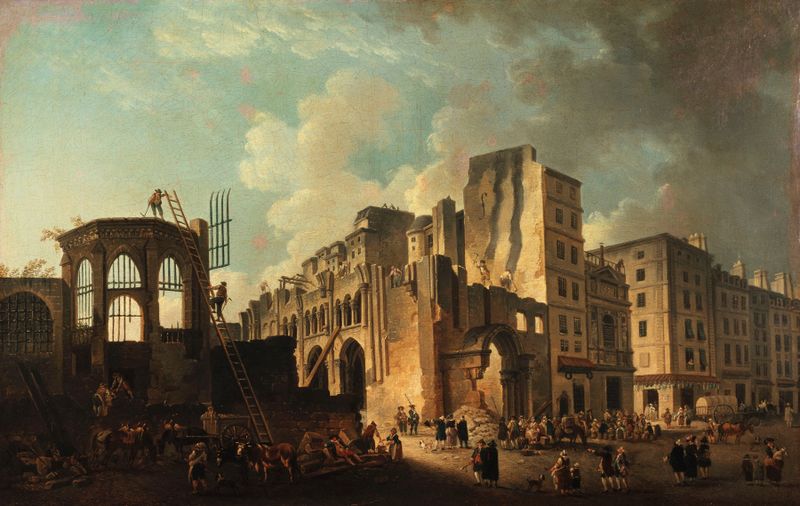
La démolition de l’église des Saints-Innocents, rue Saint-Denis
Pierre-Antoine Demachy
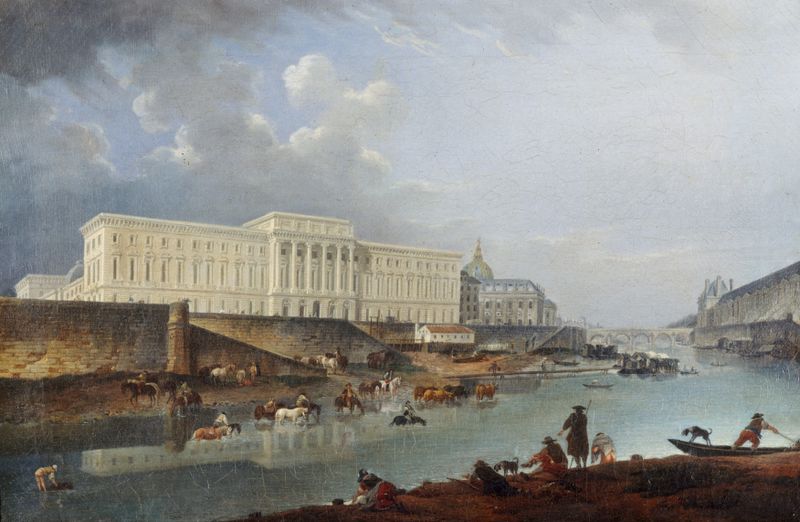
L’Hôtel de la Monnaie, le quai de Conti et la Seine, vus de la pointe de la Cité
Pierre-Antoine Demachy

Dégagement de la colonnade du Louvre
Pierre-Antoine Demachy

L’Hôtel de la Monnaie et le Louvre, vus du Pont-Neuf, vers 1800
Pierre-Antoine Demachy
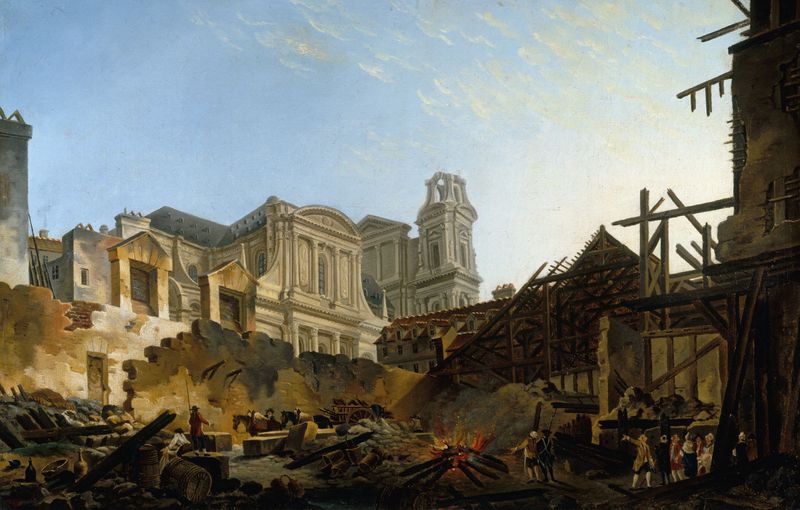
La foire Saint-Germain après l’incendie de la nuit du 16 au 17 mars 1762
Pierre-Antoine Demachy

La Foire Saint-Germain pendant l’incendie (nuit du 16 au 17 mars 1762)
Pierre-Antoine Demachy
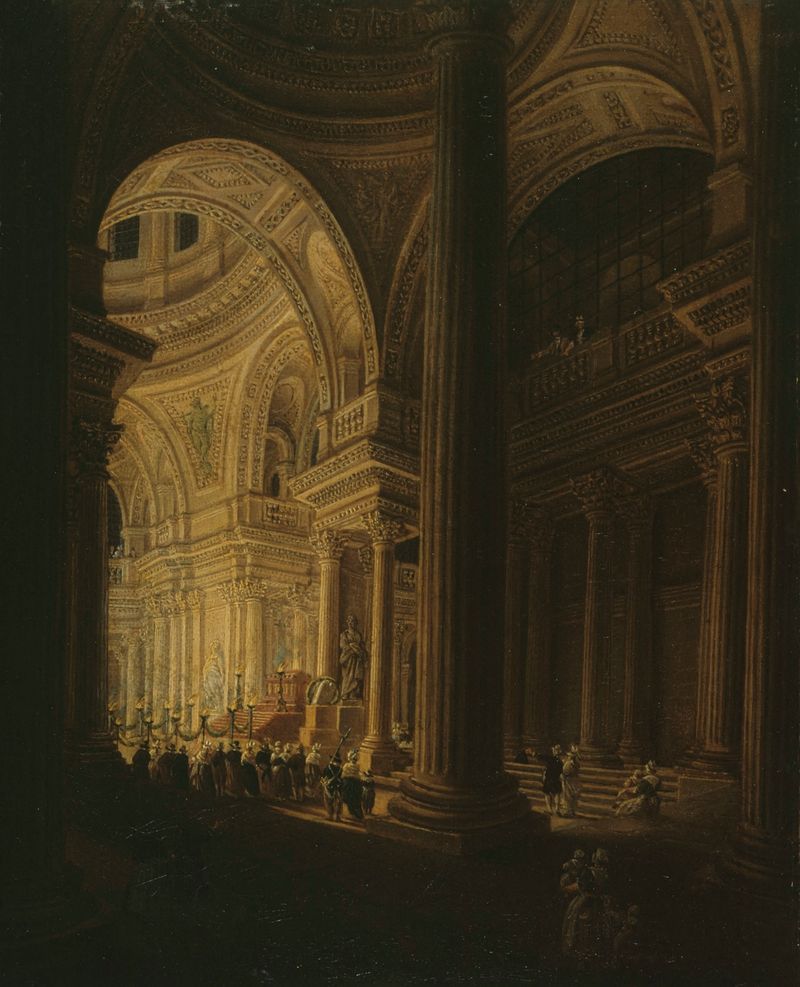
Le sarcophage de Jean-Jacques Rousseau, exposé au Panthéon (20 vendémiaire an III – 11 octobre 1794)
Pierre-Antoine Demachy
More Architecture Art
Browse all →
The statue of Liberty
Frédéric Auguste Bartholdi

View of Houses in Delft, Known as ‘The Little Street’
Johannes Vermeer

View of Houses in Delft, Known as ‘The Little Street’
Johannes Vermeer

The Cathedral in Rouen. The portal, Grey Weather
Claude Monet

The yellow house
Vincent van Gogh

The Church in Auvers-sur-Oise, View from the Chevet
Vincent van Gogh