
La Récolte du Sable — History & Facts
Every brushstroke is a heartbeat remembered. In La Récolte du Sable, the quiet yet poignant act of gathering sand transforms into a powerful meditation on loss and remembrance, inviting us into a world where grief and beauty intertwine. Look to the center of the canvas, where the figures labor under an expansive sky. Their silhouettes, intricately detailed yet somewhat blurred, suggest a fleeting moment in time, as if they may dissolve into the landscape at any moment.
The soft hues of earth tones dominate the scene, creating a somber atmosphere, while the textured brushwork evokes the tactile sensation of sand slipping through fingers, emphasizing the transience of existence. The interplay of shadow and light reveals an emotional tension within the work. The workers’ stooped postures contrast with their determined expressions, hinting at the burden of their task. This contrast between effort and the natural world evokes themes of resilience amidst sorrow—a collective memory of the earth's gifts and the weight of loss that accompanies them.
The horizon, merging seamlessly with the sky, suggests a boundary between the earthly and the ethereal, a reminder of the impermanence of life itself. Created in 1887, this piece emerged during a time of significant evolution in French art, as the Impressionist movement was flourishing. Auguste Louis Lepère, deeply influenced by his contemporaries yet carving his own path, sought to capture the essence of everyday life through a lens of emotional depth. The scene reflects his personal struggles and the broader societal changes, encapsulating a moment that resonates with both historical significance and universal human experience.
More Artworks by Auguste Louis Lepère
Browse all →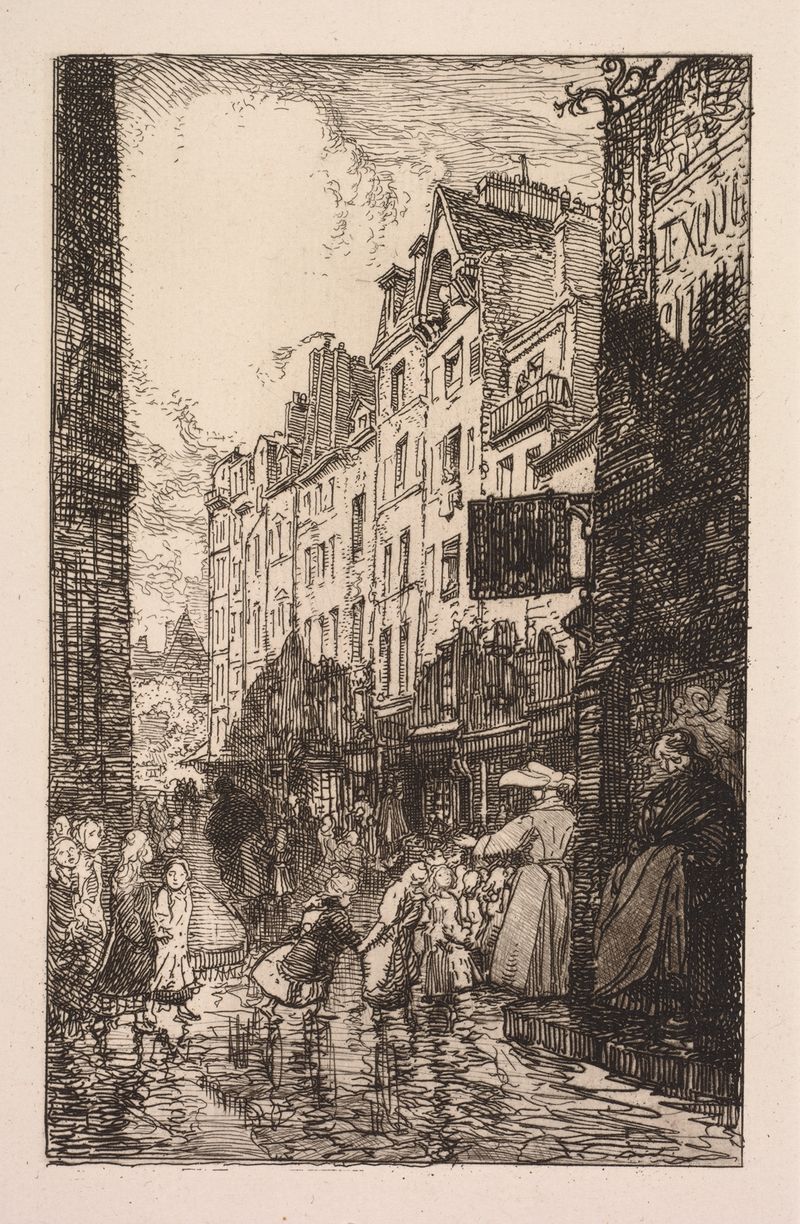
La Rue des Prêtres Saint-Séverin
Auguste Louis Lepère
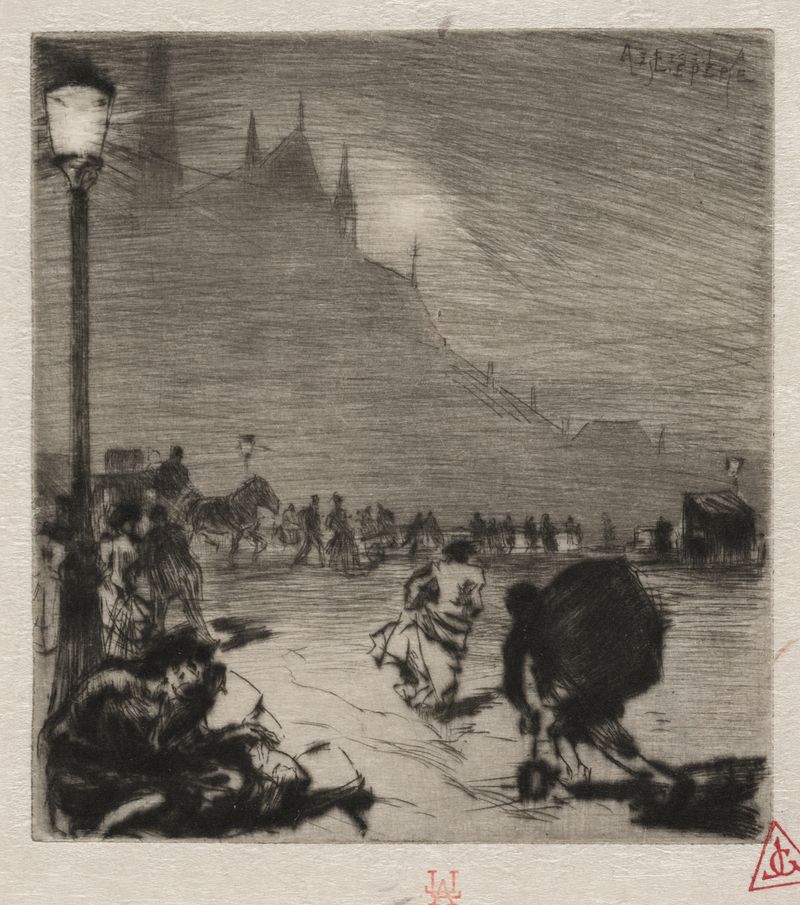
Au Coin du Pont-aux-Doubles
Auguste Louis Lepère
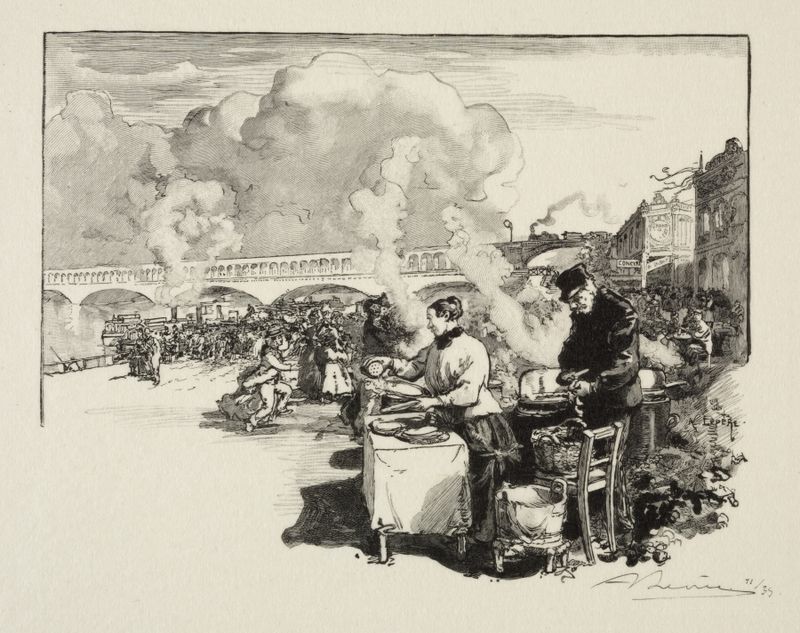
Debarcadère des bateaux-omnibus
Auguste Louis Lepère

La Seine, au quai de la Rapée
Auguste Louis Lepère
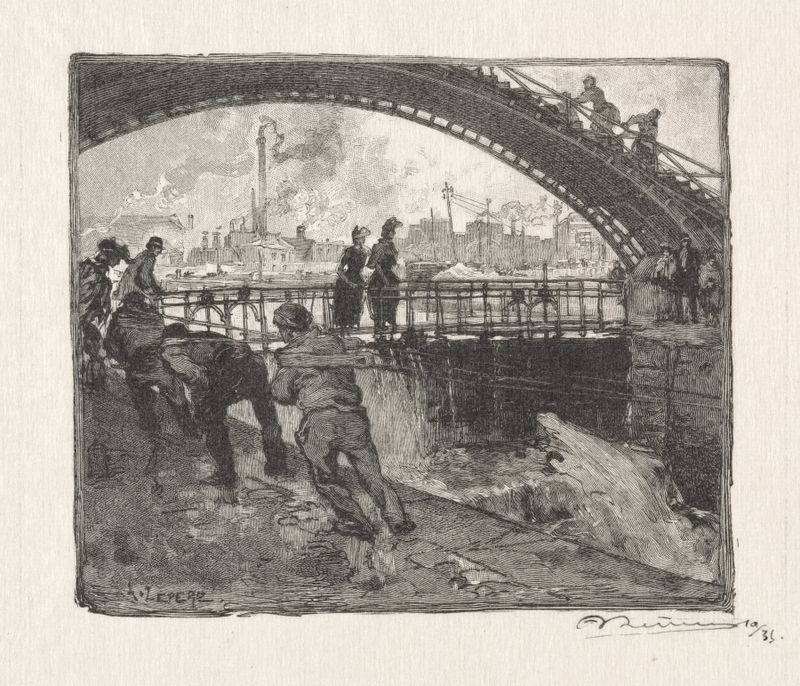
L’Ecluse du Canal St. Martin
Auguste Louis Lepère

Le Boulevard Montmartre, le Soir
Auguste Louis Lepère

Une Chasse au Mont Gérard
Auguste Louis Lepère
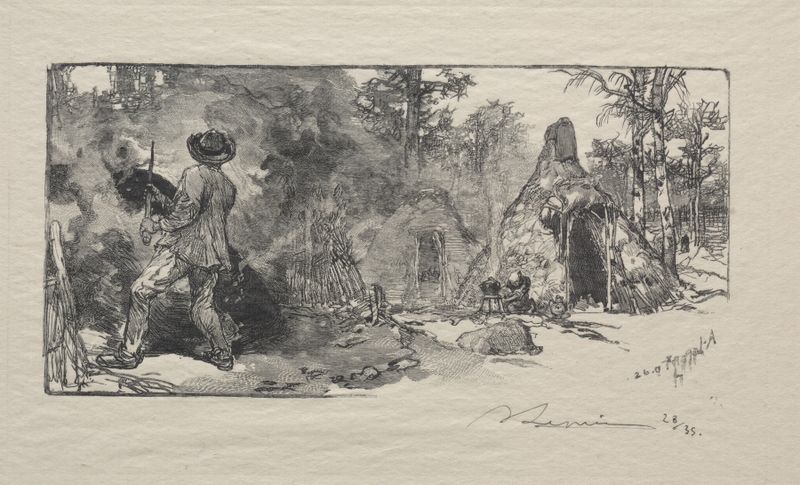
Les Charbonniere
Auguste Louis Lepère
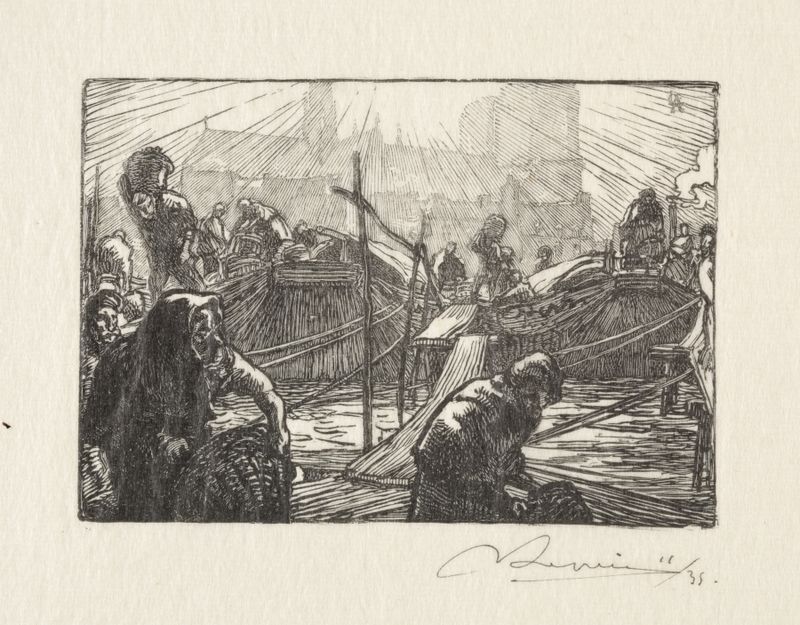
Notre Dame vue du Marché aux pommes
Auguste Louis Lepère

Le Palais des Arts Liberaux, Intèrieur
Auguste Louis Lepère





