
La rue Brise-miche et l’abside de St-Merry — History & Facts
Can paint confess what words never could? In the stillness of La rue Brise-miche et l’abside de St-Merry, a palpable sense of loss envelops the viewer, whispering the echoes of a world that once thrived. Look to the left, where the cobblestones glisten beneath a muted sky, each brushstroke capturing the weary texture of the street. Your gaze then follows the soft rise of the abside of St-Merry, its silhouette both grand and sorrowful, casting elongated shadows over the remnants of everyday life. The artist's palette strikes a delicate balance between earthy tones and subtle blues, evoking a melancholic beauty that envelops the scene, hinting at both nostalgia and abandonment. As you engage with the details, notice the figures in the distance, their forms nearly ghost-like—mere silhouettes in a landscape steeped in time.
This interplay of presence and absence invites reflection on the passage of life, suggesting stories untold and memories faded. The juxtaposition of the sturdy architecture against the ethereal figures embodies a quiet tension, a reminder of what is lost as the world continues to shift and change around it. In 1906, Charles Jouas created this work during a period of personal and artistic exploration in Paris, a city grappling with rapid modernization and change. The artist was known for his evocative depictions of urban life, often focusing on the melancholic beauty inherent in everyday scenes.
His approach during this time was deeply influenced by the Symbolist movement, which sought to convey emotional truths beyond mere representation.
More Artworks by Charles Jouas
Browse all →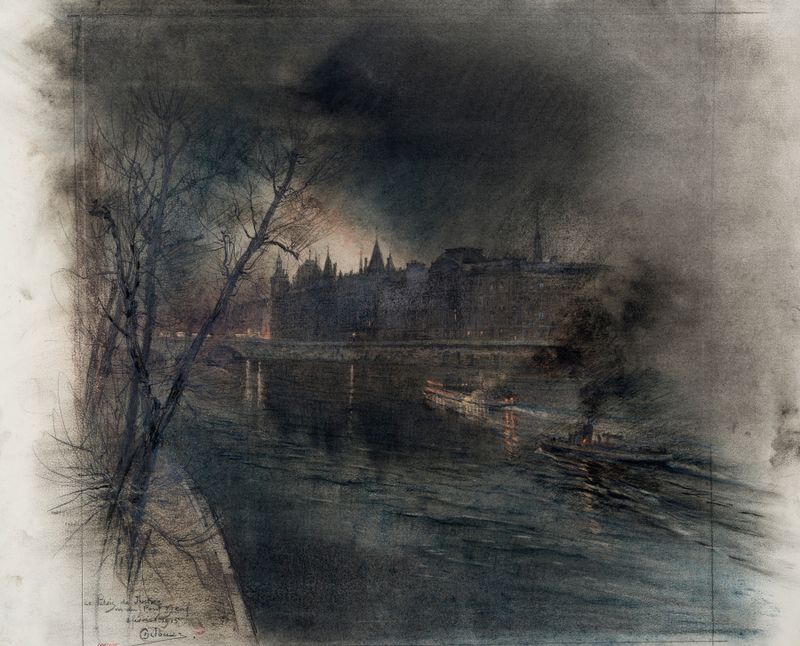
Le Palais de Justice vu du Pont-Neuf
Charles Jouas
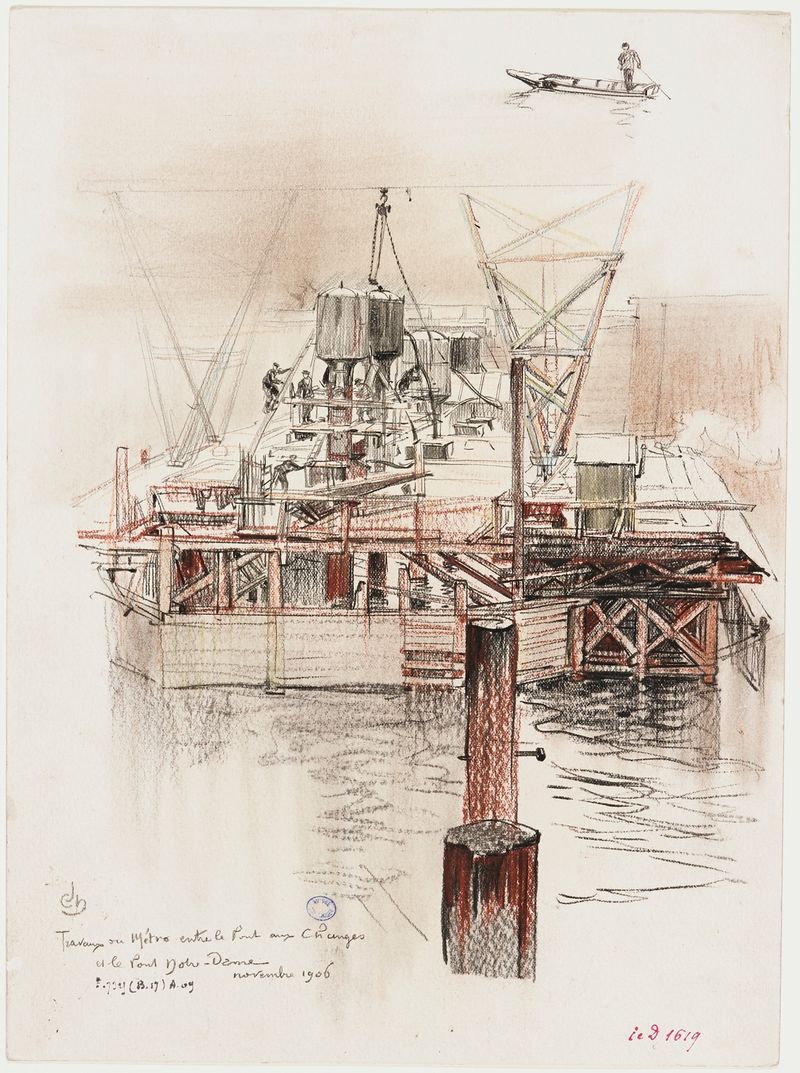
Travaux du métro entre le pont au Change et le pont Notre Dame
Charles Jouas
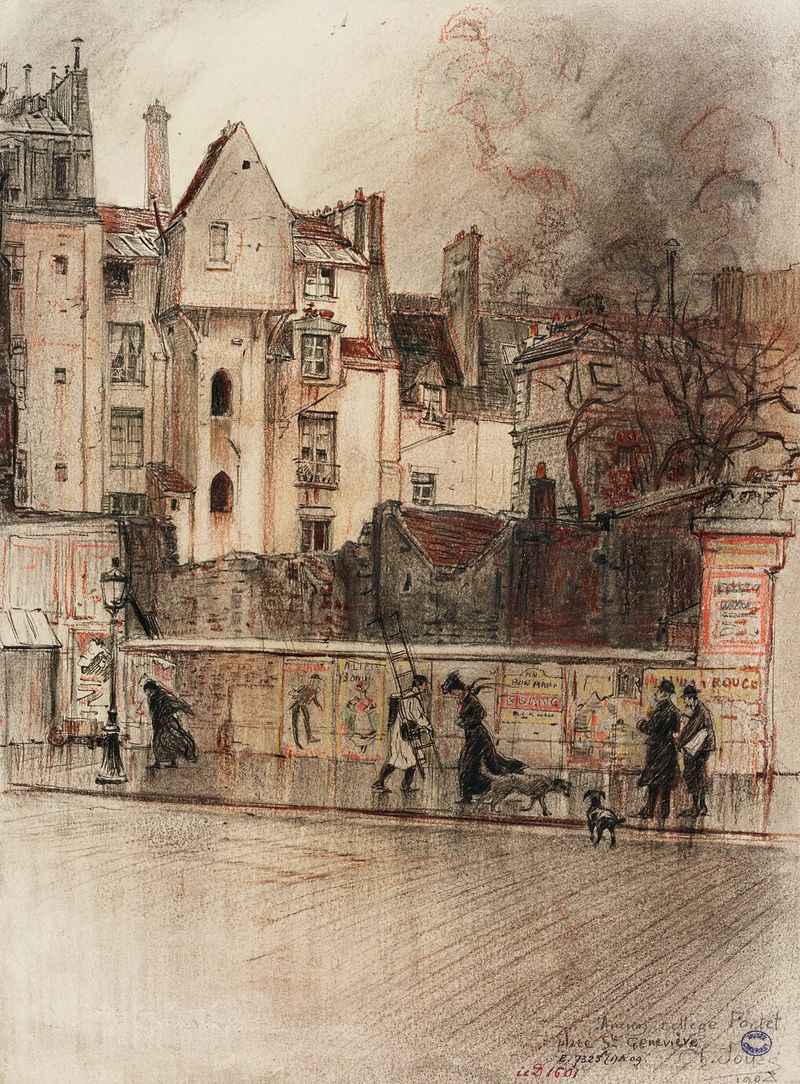
La tour de Calvin (ancien collège de Fortet), place Sainte Geneviève
Charles Jouas

Travaux du métro entre le pont au Change et le pont Notre Dame
Charles Jouas
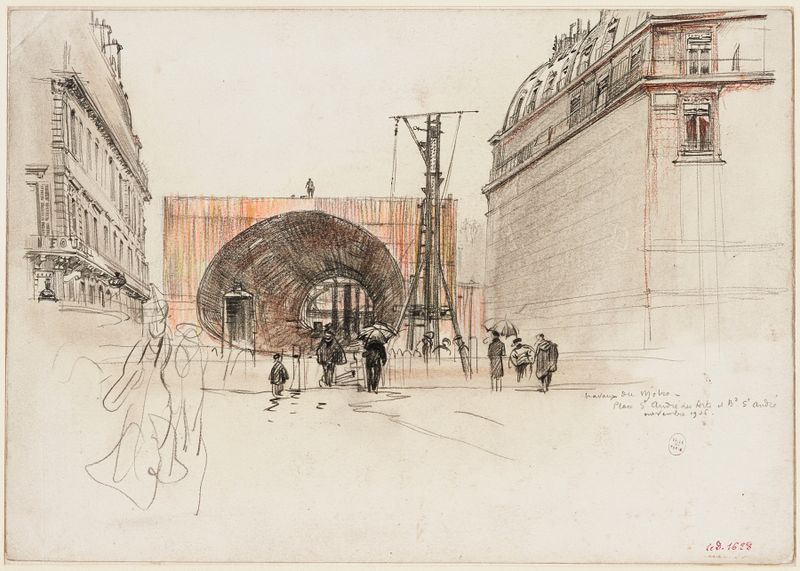
Travaux du métropolitain rue Danton et boulevard Saint-André (le caisson), 6ème aarondissement, Paris
Charles Jouas
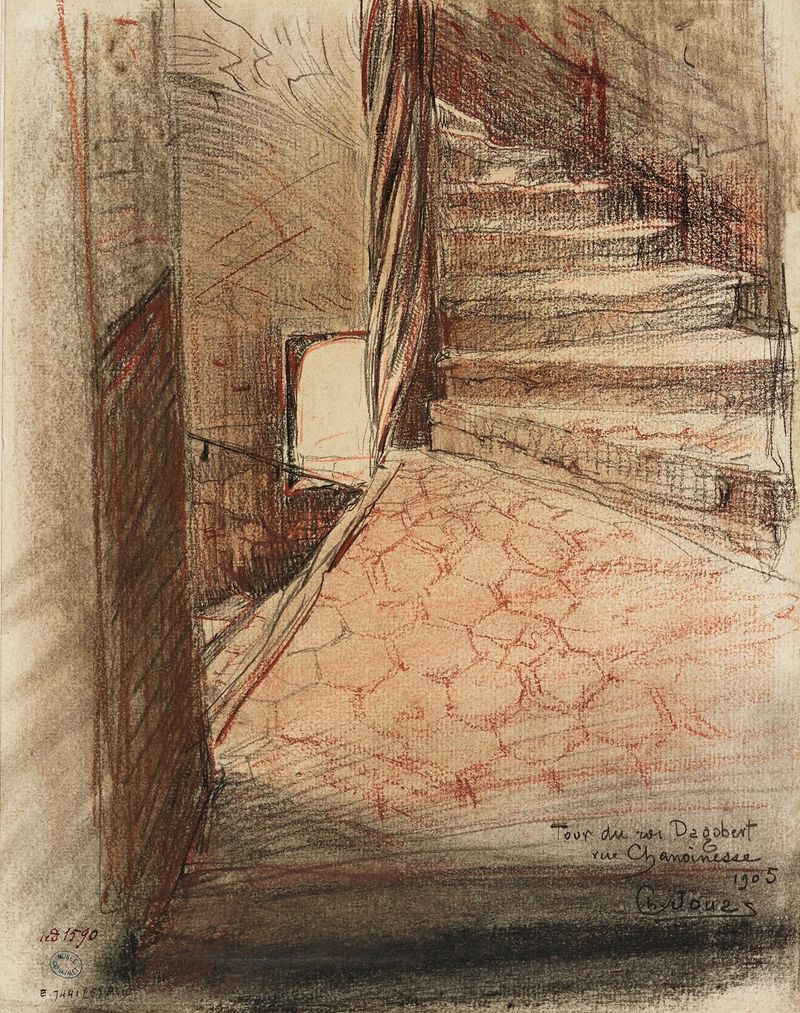
Escalier de la tour Dagobert, rue Chanoinesse
Charles Jouas

Escalier intérieur, 16 rue du Cloître Notre-Dame
Charles Jouas

L’escalier de la rue des Barres
Charles Jouas
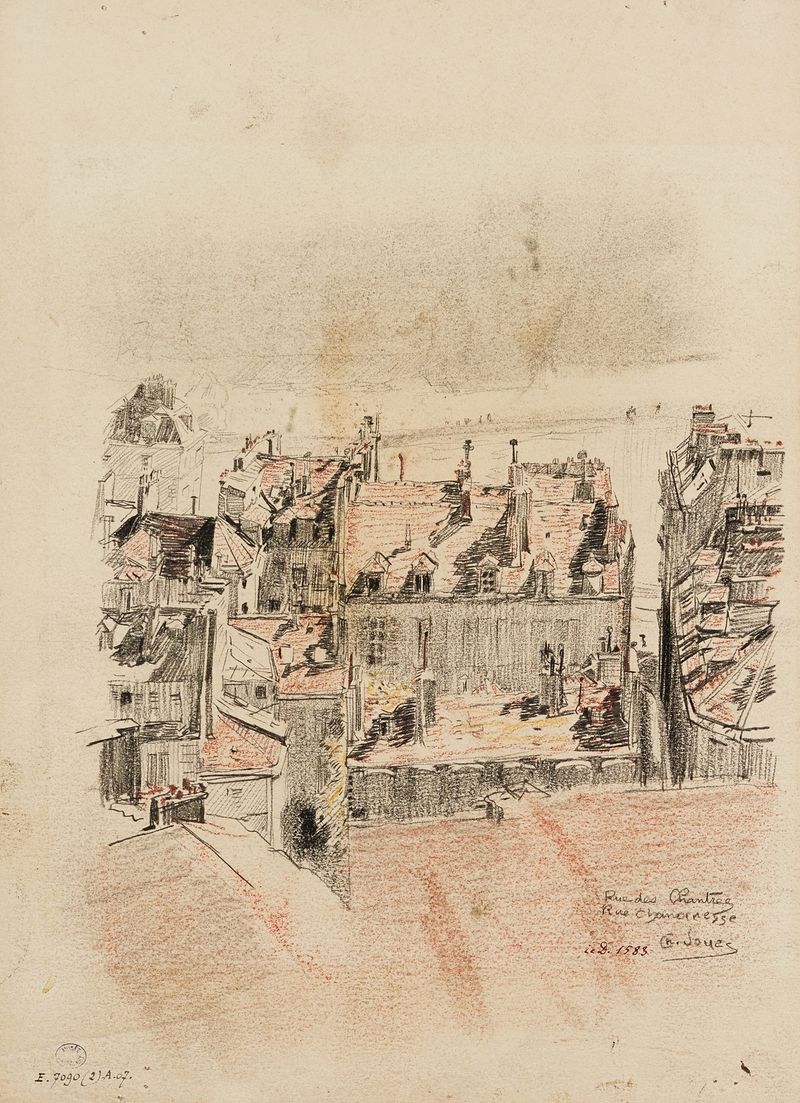
Rue des Chantres et rue Chanoinesse
Charles Jouas

Rue Grenier sur l’Eau
Charles Jouas





