
La Siesta O Escena Pompeyana — History & Facts
In La Siesta O Escena Pompeyana, we see a tranquil scene filled with soft colors and classical architecture. The painting features a couple resting under a shaded area, surrounded by lush greenery and ornate columns. The warm tones of the sunlight create a serene atmosphere, enhancing the intimacy of the moment.
The figures are elegantly dressed, reflecting the fashion of the time. The painting is executed in oil on canvas, showcasing Alma-Tadema's skill in capturing intricate details. The brushwork is smooth, allowing for a realistic depiction of textures, particularly in the clothing and foliage. The composition is balanced, drawing the viewer's eye to the couple while also highlighting the surrounding environment.
The use of light and shadow adds depth to the scene. Lawrence Alma-Tadema was known for his depictions of classical themes and settings, often inspired by ancient Rome and Greece. La Siesta O Escena Pompeyana reflects his fascination with the past and his ability to recreate it with vivid detail. An interesting fact about this work is that it was created during a time when Alma-Tadema was gaining recognition for his unique style, which combined realism with romanticized historical narratives.
More Artworks by Lawrence Alma-Tadema

The Roses of Heliogabalus
Lawrence Alma-Tadema

A Juggler
Lawrence Alma-Tadema
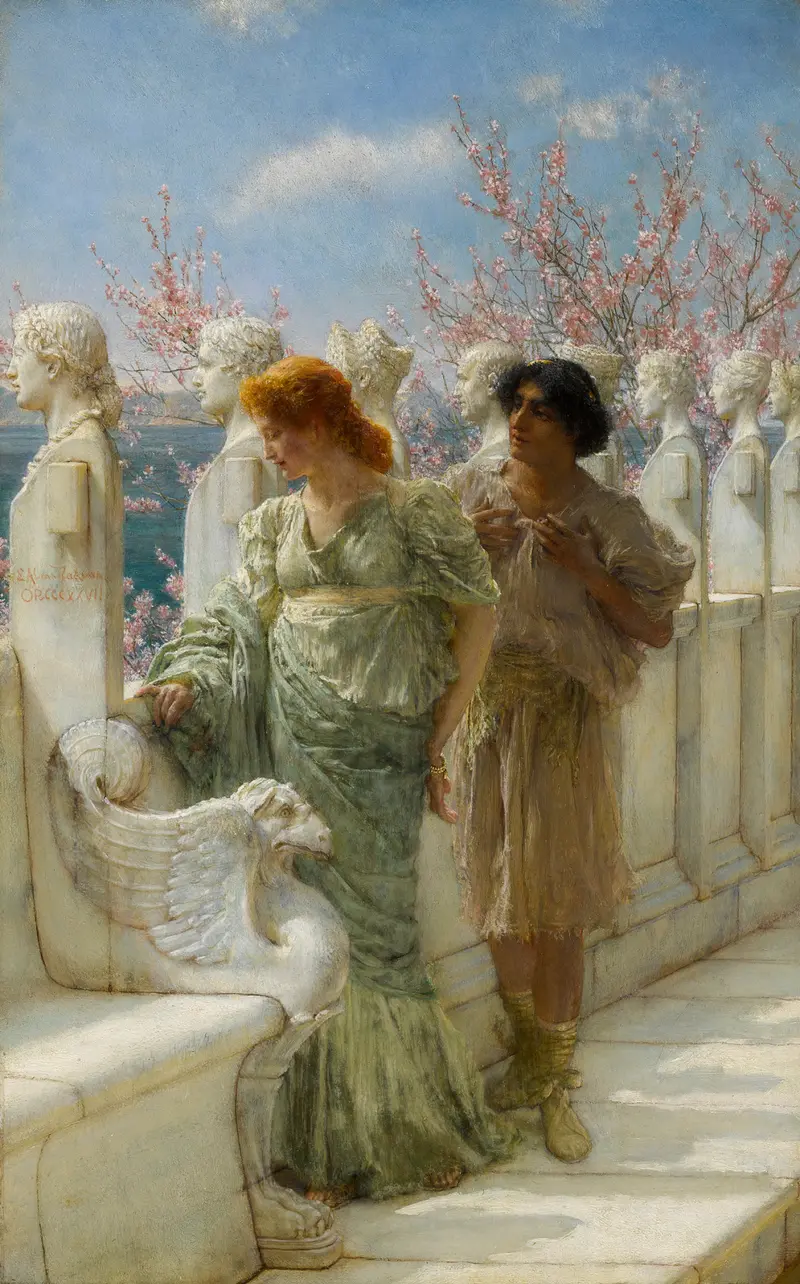
Past And Present Generations
Lawrence Alma-Tadema
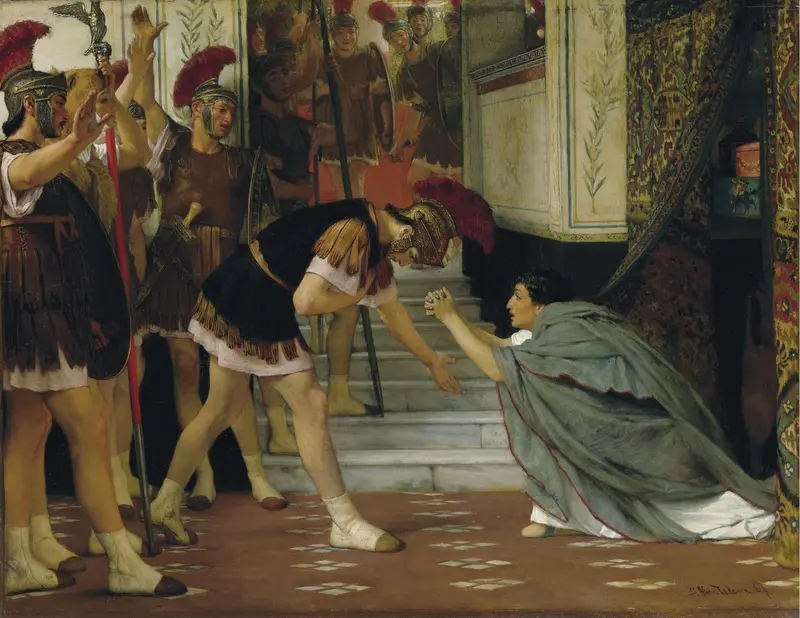
Proclaiming Claudius Emperor, Opus XlVIII
Lawrence Alma-Tadema
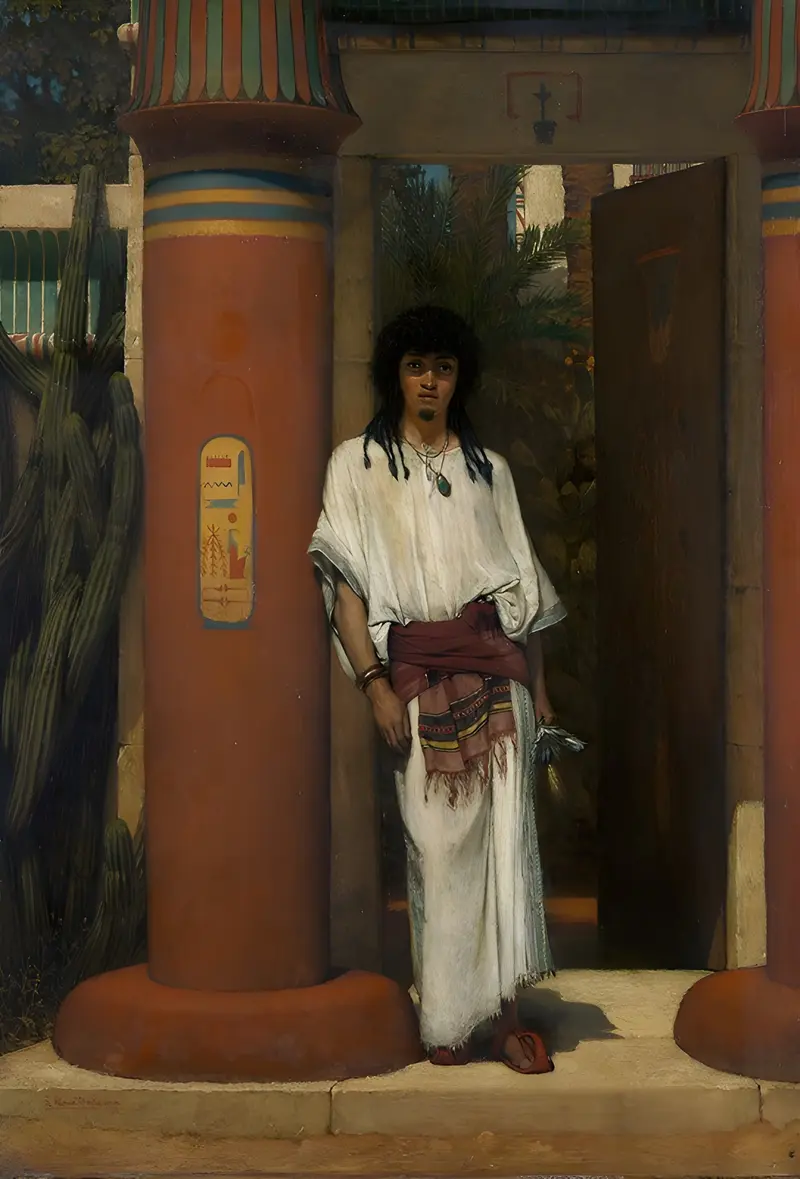
An Egyptian in a Doorway
Lawrence Alma-Tadema
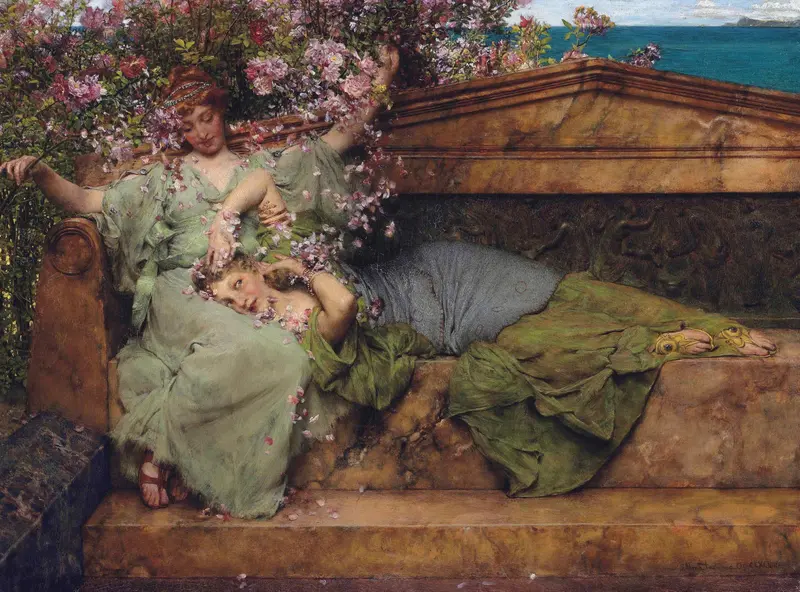
In A Rose Garden
Lawrence Alma-Tadema
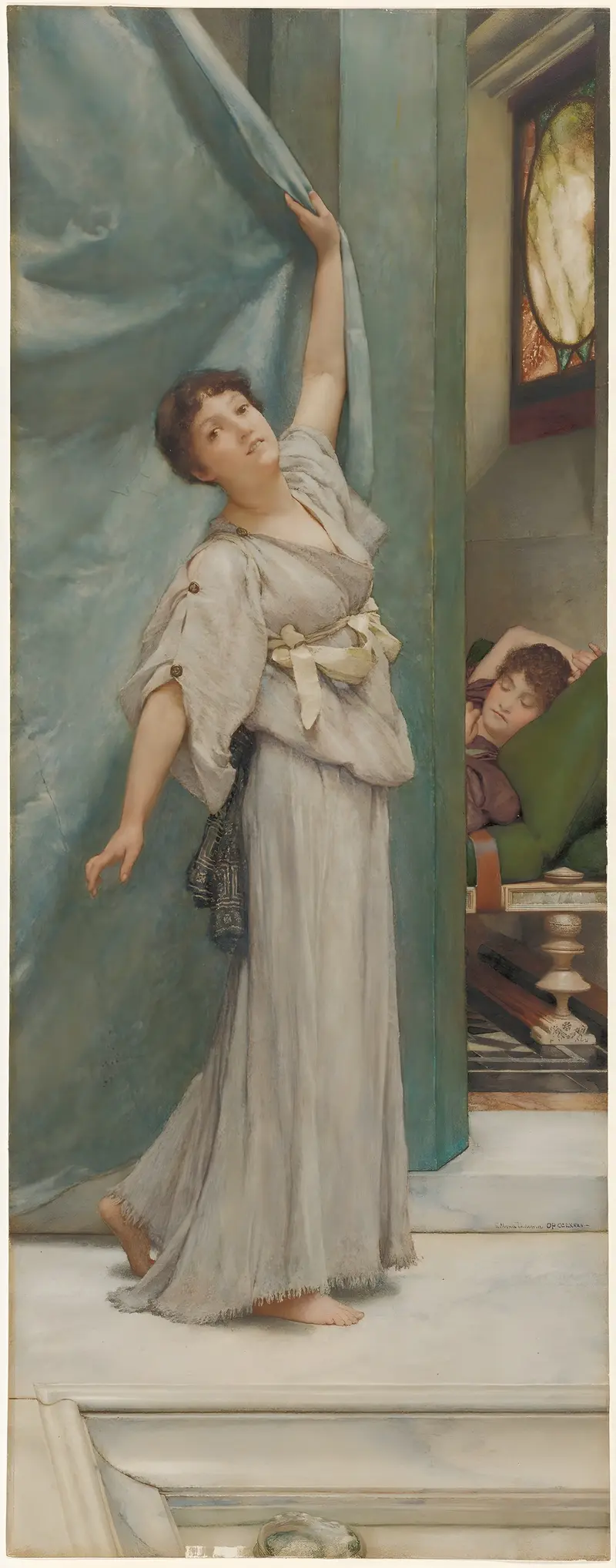
Midday Slumbers
Lawrence Alma-Tadema
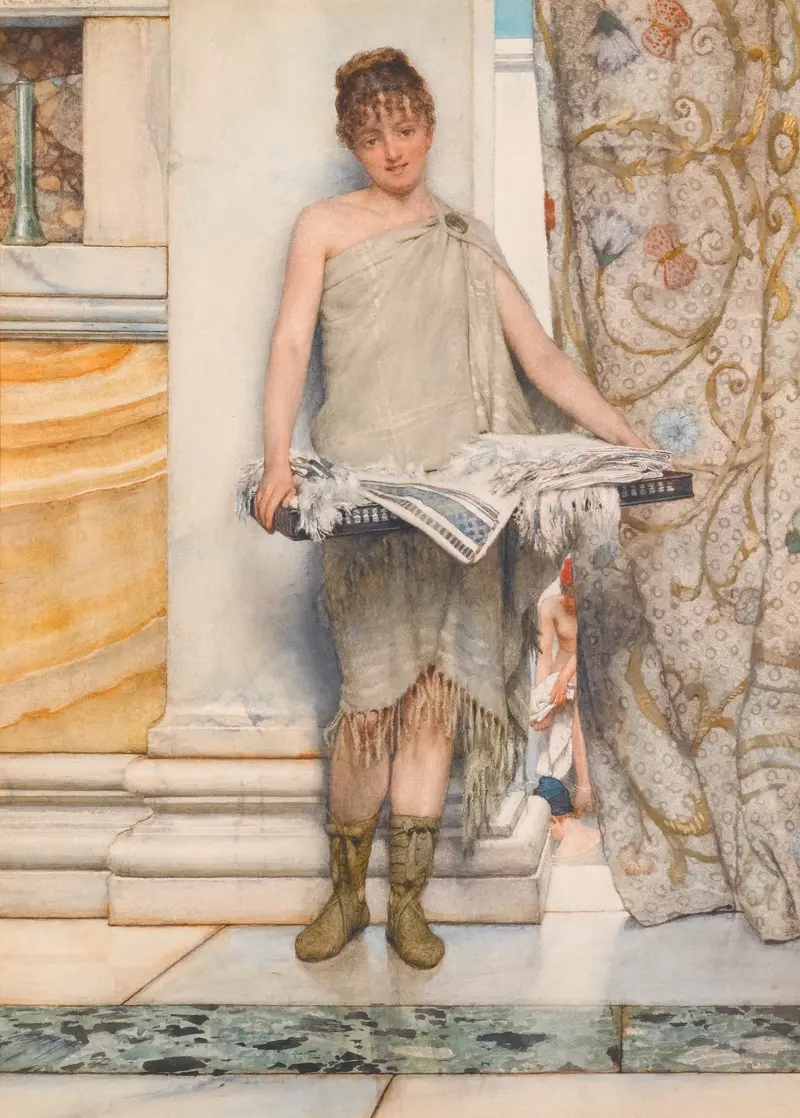
A Balneatrix
Lawrence Alma-Tadema
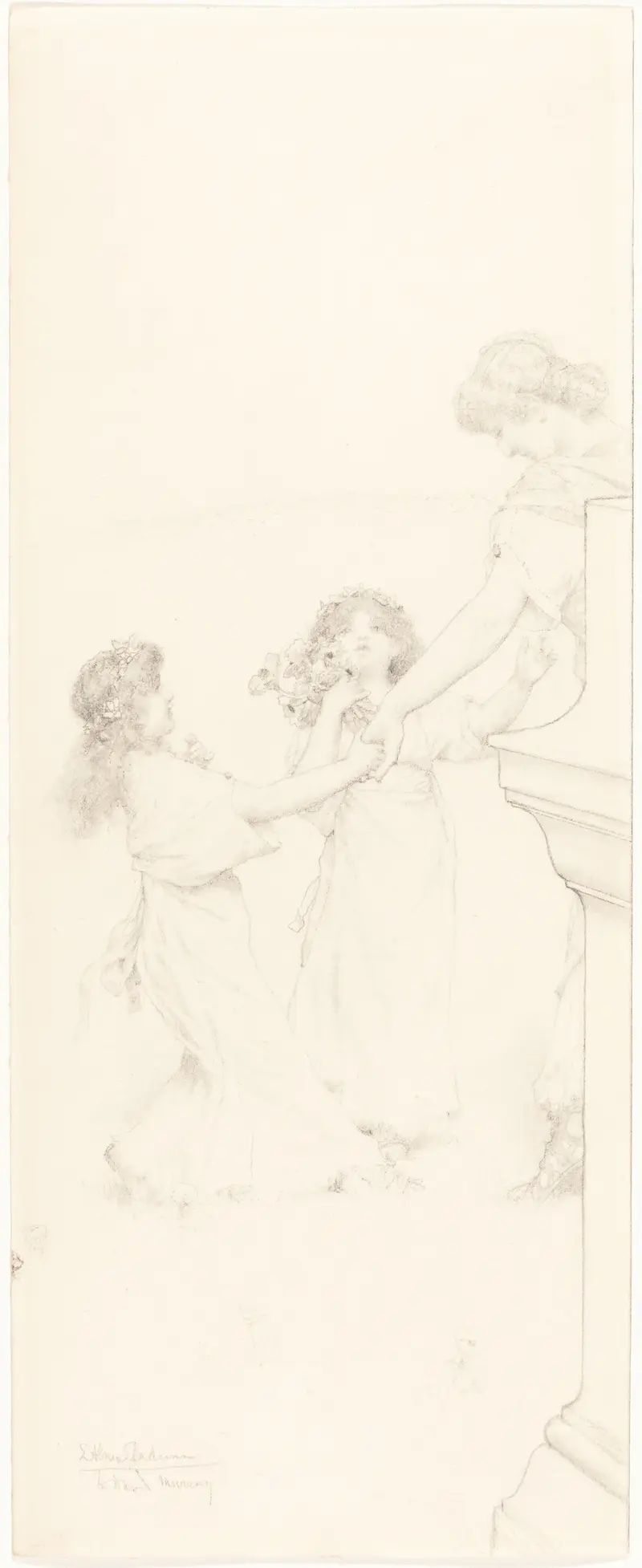
A Dance in Spring
Lawrence Alma-Tadema
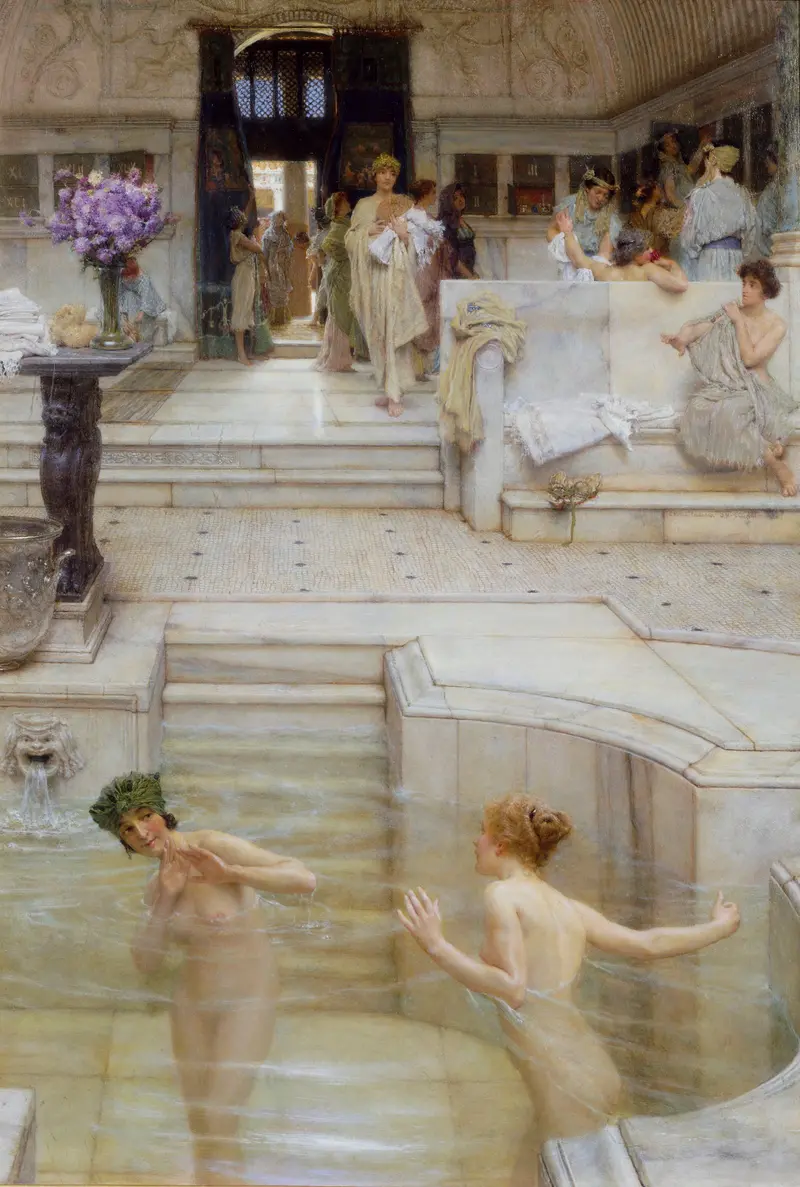
A Favourite Custom
Lawrence Alma-Tadema
More Genre Scene Art

Banquet of the Officers of the St George Civic Guard
Frans Hals

Rembrandt and Saskia in the Scene of the Prodigal Son
Rembrandt van Rijn

Bal du moulin de la Galette
Pierre-Auguste Renoir

Quadrille at the Moulin Rouge
Henri de Toulouse-Lautrec

A Burial at Ornans
Gustave Courbet

When Will You Marry?
Paul Gauguin