
La Tour de Nesle et le Louvre — History & Facts
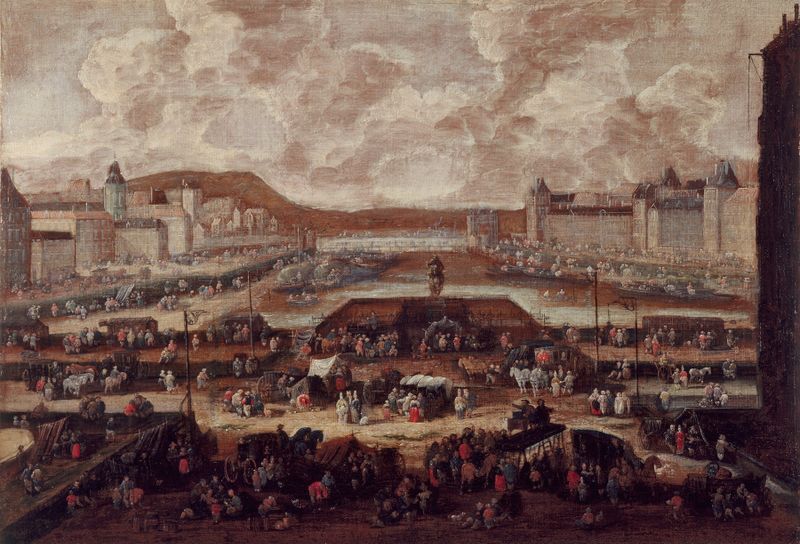
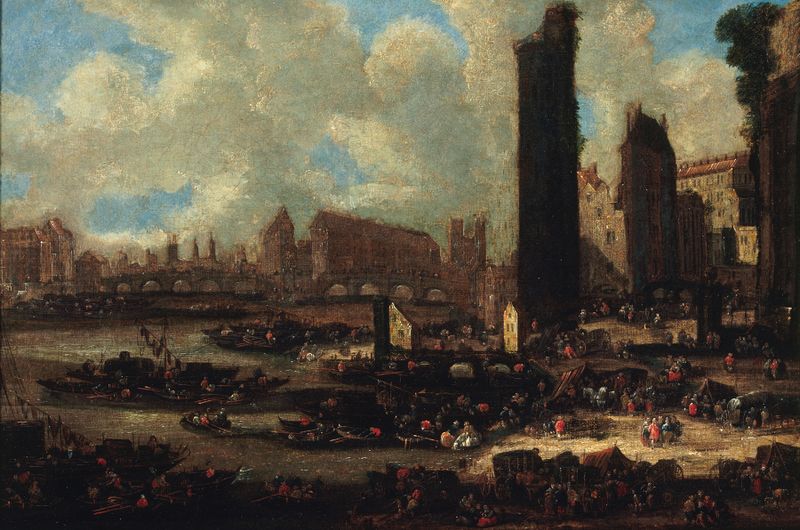
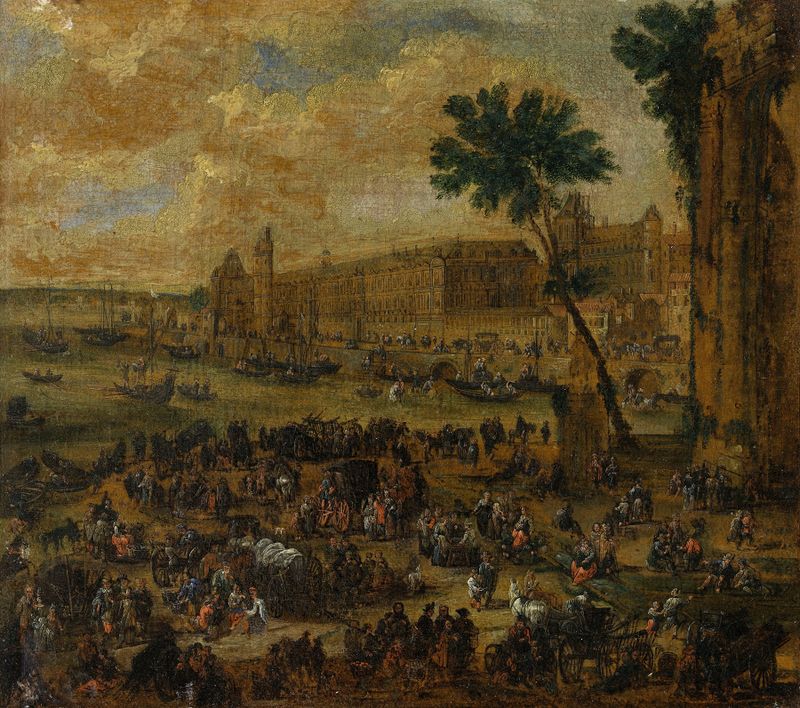
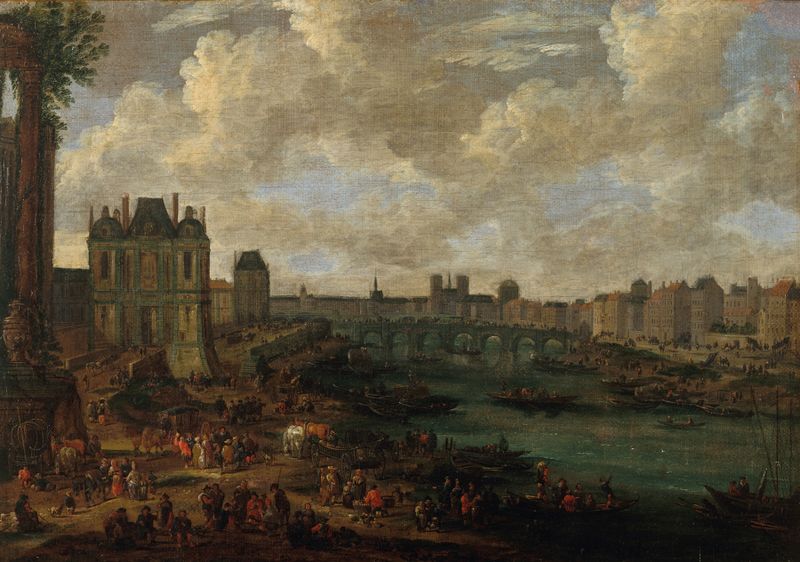
This sentiment echoes through the layers of La Tour de Nesle et le Louvre, where history meets the brushstrokes of memory, capturing the essence of a moment suspended in the fabric of time. Look to the center of the canvas, where the imposing silhouettes of the towers stretch upward against a horizon kissed by twilight. Notice the gentle interplay of light and shadow, the golden hues that linger in the evening sky, casting a nostalgic glow upon the ancient stones. The artist employs a deft hand with chiaroscuro, utilizing deep blues and warm ambers to create a sense of depth, drawing the viewer's eye into a timeless dialogue between the past and present. As you delve deeper, observe the intricate details, like the weathered textures of the stone, each mark telling a story of resilience.
The presence of the river reflects a duality—both a boundary and a bridge, symbolizing the passage of time that connects the once-great structures with the fleeting moments of life. There lies an emotional tension between the grandeur of the architecture and the encroaching dusk, hinting at the inevitable decay and the stories lost to time. Pieter Casteels painted this work in 1685, during a period marked by the Baroque movement's flourish in Europe. Living in Paris, he was surrounded by the burgeoning art scene, yet this specific piece serves as a contemplative reflection on the city’s historical legacy, capturing the juxtaposition of its architectural splendor with the relentless march of time.
Casteels infused his canvases with a profound sense of nostalgia, inviting viewers to pause and reflect on what remains as the world evolves around them.
More Artworks by Pieter Casteels
Browse all →
More Architecture Art
Browse all →
The statue of Liberty
Frédéric Auguste Bartholdi

View of Houses in Delft, Known as ‘The Little Street’
Johannes Vermeer

View of Houses in Delft, Known as ‘The Little Street’
Johannes Vermeer

The Cathedral in Rouen. The portal, Grey Weather
Claude Monet

The yellow house
Vincent van Gogh

The Church in Auvers-sur-Oise, View from the Chevet
Vincent van Gogh