Le Pont-Neuf, la Cité, la Tour et la Porte de Nesle — History & Facts
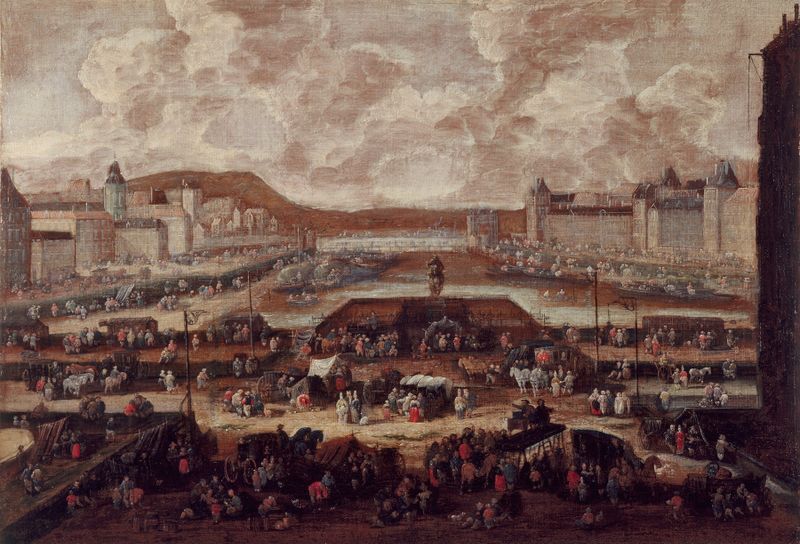
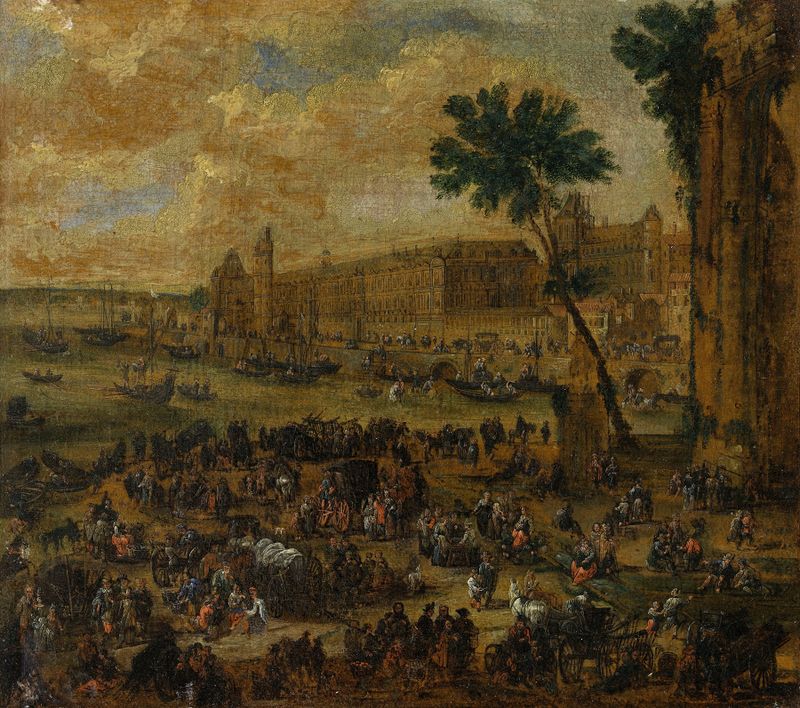
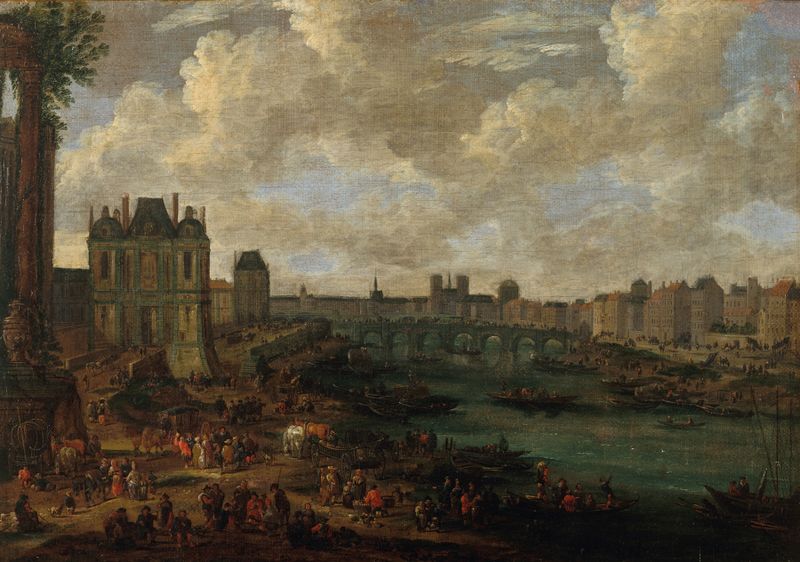
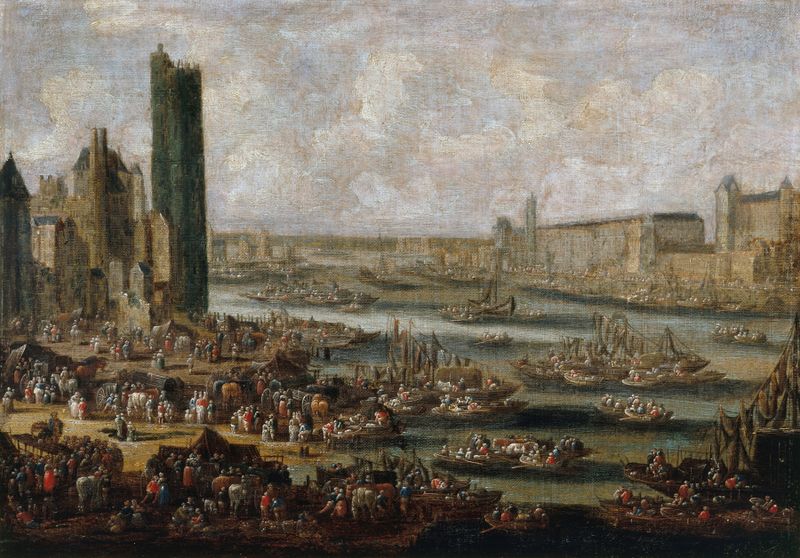
Can paint confess what words never could? In Le Pont-Neuf, la Cité, la Tour et la Porte de Nesle, longing permeates the canvas, whispering tales of a Paris caught between the past and its fleeting present. Look to the foreground, where the iconic arch of the Pont-Neuf stands resolutely, a bridge not only of stone but of time itself. The delicate touch of the artist’s brush reveals the subtle interplay of light and shadow, each ripple of water reflecting the soft luminosity of the sky. Notice how the warm hues blend seamlessly into cooler tones, creating a harmony that draws the eye toward the bustling activity of figures crossing the bridge and the distant silhouettes of the Cité and the Porte de Nesle, framed within the tranquil embrace of the Seine. Beneath the surface, the painting conveys a deeper emotional landscape, portraying the juxtaposition of movement against the stillness of the river.
The bridge serves as a metaphor for connection, while the distant buildings symbolize both shelter and isolation. Here, the figures appear momentarily engaged but ultimately absorbed in their thoughts, embodying the interplay of longing and the fleeting nature of human experience—a fleeting glance at what was and what might never be. Pieter Casteels painted this work in 1685 while living in Paris, a city thriving with artistic innovation and cultural exchange. At this time, he was influenced by the Baroque movement, where the grandeur of architecture coupled with the delicate beauty of landscapes became a canvas for expressing human emotions.
The world was transforming, much like the city around him, and his brush recorded not just a scene, but a poignant moment of existence in a rapidly changing world.