Le Pont-Neuf, la Seine et le Louvre — History & Facts
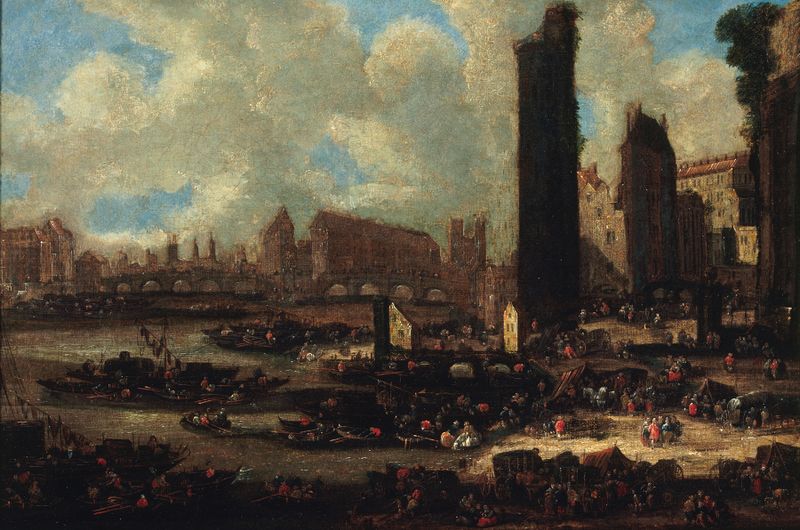
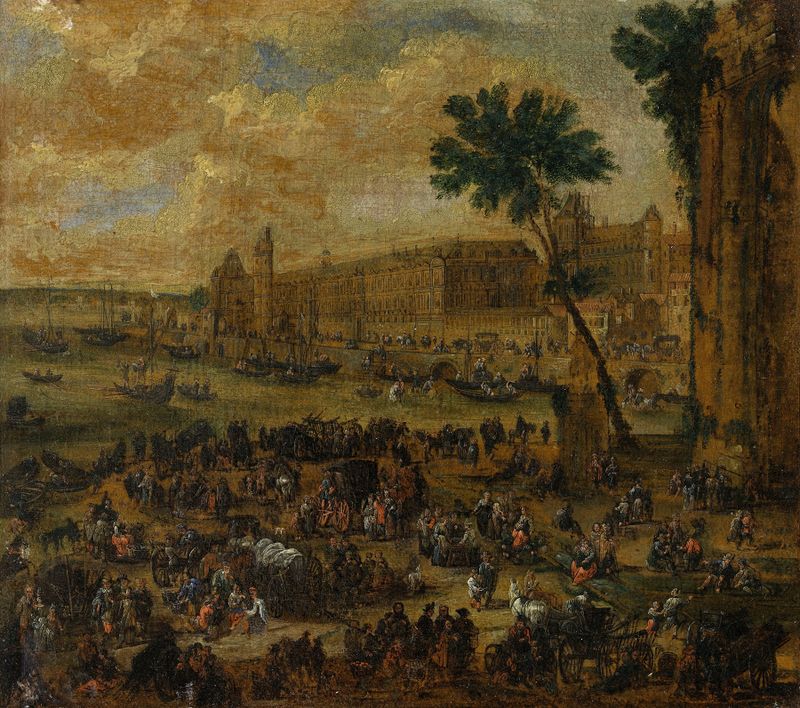
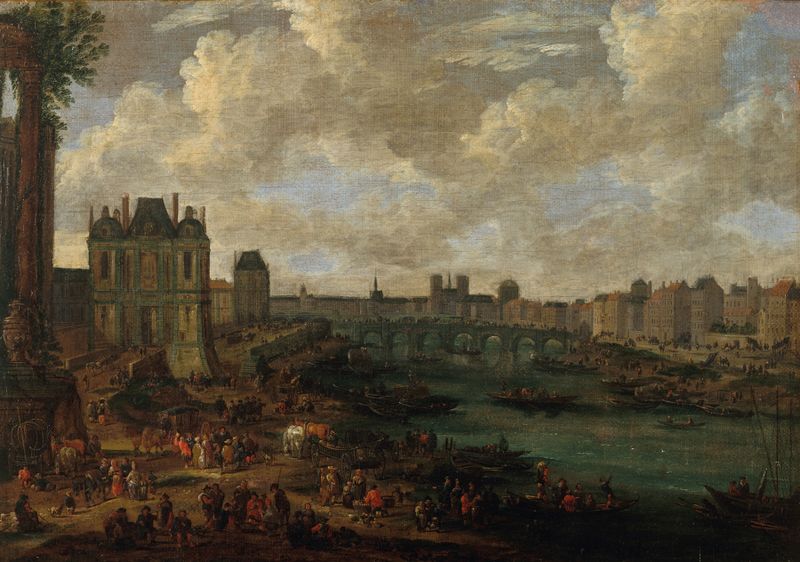
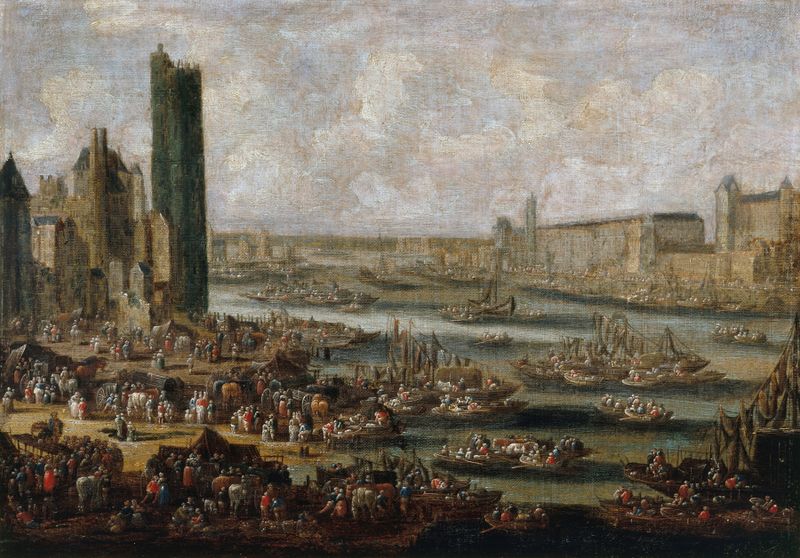
Can beauty exist without sorrow? In Le Pont-Neuf, la Seine et le Louvre, Pieter Casteels invites us to ponder this question as we gaze upon a Parisian landscape steeped in transcendent grace. Look to the left at the delicately rendered bridge, its arching stonework cradled by the flowing Seine. The figures meandering across the bridge draw the eye, clad in period attire, their movements lending a sense of life to the canvas. Notice how the warm glow of the setting sun casts golden hues across the water, illuminating the scene with an ethereal quality, while deep shadows emphasize the architectural elegance of the Louvre in the background, creating a compelling tension between light and dark. Within this picturesque setting lies an emotional depth.
The tranquil flow of the river suggests a passage of time, a gentle reminder of the ephemeral nature of beauty. The juxtaposition of the bustling figures against the grand, silent architecture evokes a sense of longing—a desire to transcend the mundane and reach for something greater. Each brushstroke whispers stories of lives intertwined with the historical fabric of Paris, hinting at the undercurrents of joy and sorrow that accompany the city’s beauty. Casteels painted this work in 1670 while living in France, a period marked by the flourishing of Baroque art and the exploration of perspective and light.
As artistic movements evolved, he sought to capture the essence of a city in transition, reflecting the grandeur of Paris amidst the complexities of daily life, forever leaving his mark on the landscape of art.