
La tour Saint-Jacques, reprise par les troupes versaillaises — History & Facts
Where does light end, and longing begin? In the heart of La tour Saint-Jacques, reprise par les troupes versaillaises, a poignant illusion emerges, revealing the fragile boundary between hope and despair. Look to the center of the composition where the iconic tower rises, bathed in a soft, golden light that contrasts sharply with the somber gray tones of the surrounding architecture. The gentle brushstrokes give life to the clouds swirling overhead, while the marching troops at the base create a stark tension, their rigid postures evoking a sense of urgency. Notice how Boulanger utilizes light to guide the viewer’s gaze, illuminating the tower as a symbol of resilience amidst an encroaching darkness. As you immerse yourself further, consider the emotional depth beneath the surface.
The tower, sturdy yet solitary, stands witness to the juxtaposition of military might and the fragile remnants of peace. The figures below appear small and distant, embodying the weight of their historical moment. This blend of grandeur and vulnerability encapsulates not only the physical landscape but the emotional terrain of a nation grappling with its identity. In the aftermath of the Franco-Prussian War, Gustave Boulanger painted this work in 1871 while living in Paris, a city struggling to redefine itself.
These tumultuous times saw the rise of various artistic movements, and Boulanger, influenced by realism and romanticism, sought to capture the spirit of a beleaguered society facing change. His exploration of themes like resilience and illusion invites viewers to reflect on the complex interplay between light and shadow, both in art and in life.
More Artworks by Gustave Boulanger
Browse all →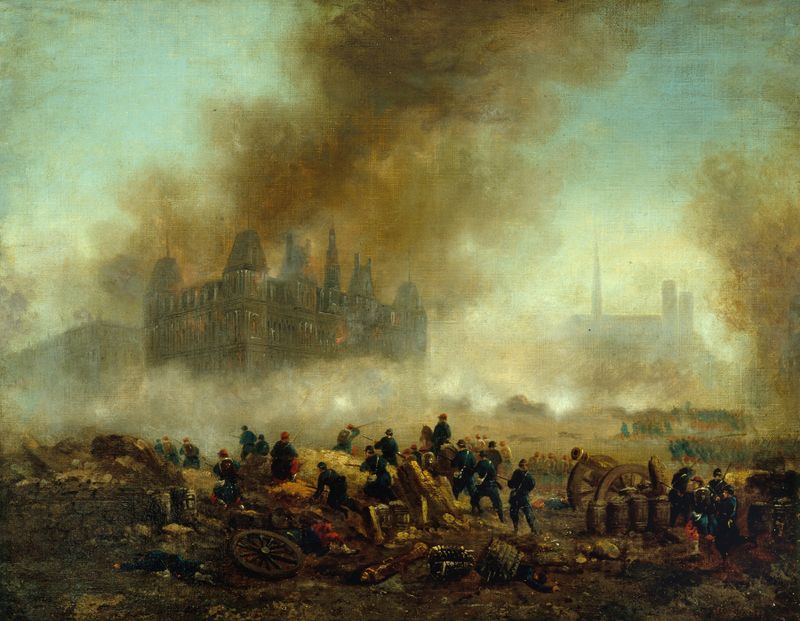
L’Hôtel de Ville incendié, assailli par les troupes de Versailles
Gustave Boulanger
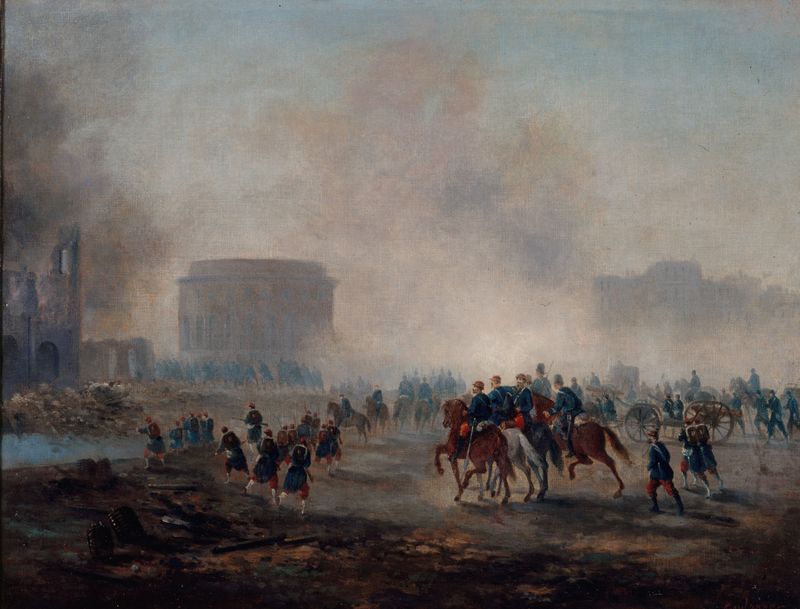
La Rotonde de la Villette cernée par les troupes versaillaises
Gustave Boulanger

Épisode de la Commune, place de la Concorde
Gustave Boulanger
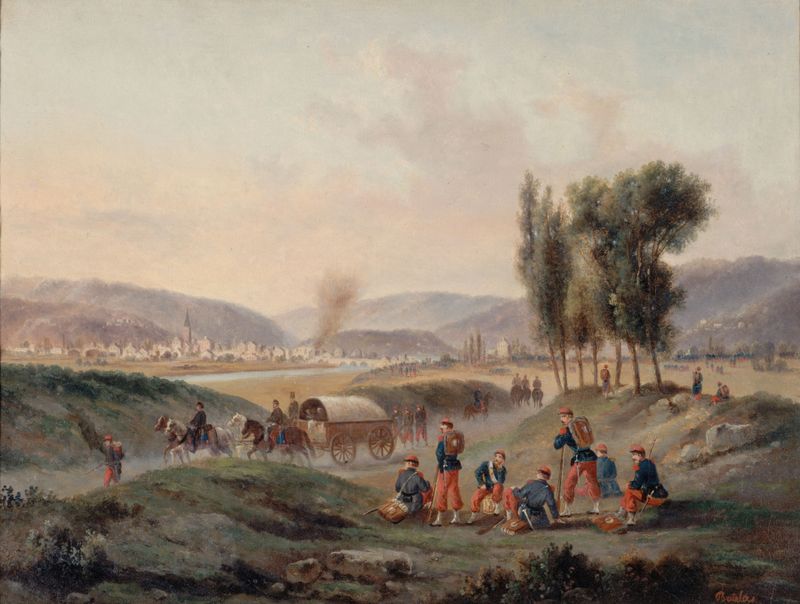
Sarrebruck après la bataille, le 5 août 1870
Gustave Boulanger
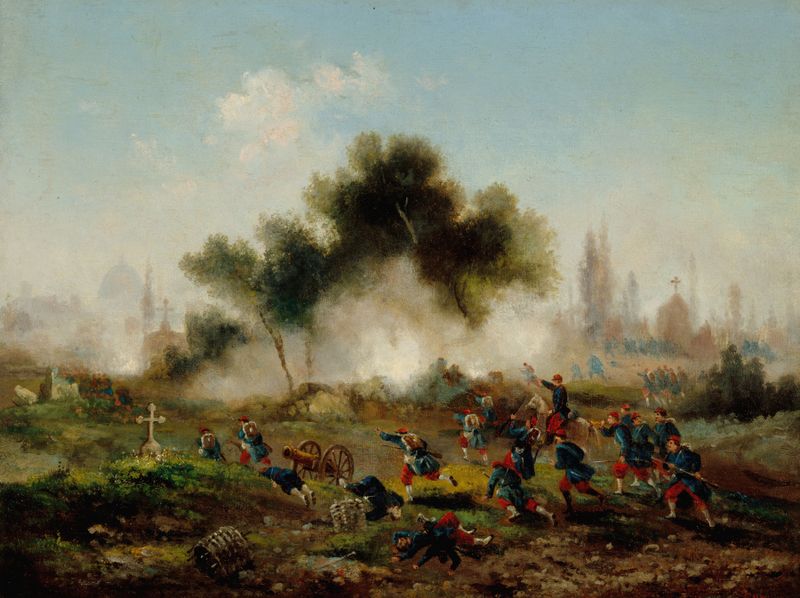
Assaut d’un cimetière par les troupes régulières, mai 1871
Gustave Boulanger
More Architecture Art
Browse all →
The statue of Liberty
Frédéric Auguste Bartholdi

View of Houses in Delft, Known as ‘The Little Street’
Johannes Vermeer

View of Houses in Delft, Known as ‘The Little Street’
Johannes Vermeer

The Cathedral in Rouen. The portal, Grey Weather
Claude Monet

The yellow house
Vincent van Gogh

The Church in Auvers-sur-Oise, View from the Chevet
Vincent van Gogh