
L’Hôtel de Ville incendié, assailli par les troupes de Versailles — History & Facts
Can paint confess what words never could? In the vivid strokes of history, emotions spill forth, entwining with the unspoken truths of our past. Look to the center of the canvas, where the Hôtel de Ville rises, engulfed in fiery hues that echo both destruction and defiance. The chaotic brushwork captures the frenetic energy of the scene, with soldiers animated in a whirlwind of action, their uniforms contrasting sharply against the deep, charred reds and yellows of the flames. Notice how the light flickers, illuminating the faces of the bystanders—fear, anger, and determination etched into their features, drawing the viewer into a moment that feels both ephemeral and monumental. The painting resonates with layers of tension; it's not just the physical assault on the building but a reflection of social upheaval.
The juxtaposition of warm, destructive flames against the cold stone architecture becomes a metaphor for the clash between authority and revolution. The frantic gestures of the figures suggest a narrative that extends beyond the immediate scene, hinting at the collective struggle for identity and power. A deeper reflection reveals the shadows of loss and hope intertwined, making the viewer question the very nature of progress amidst chaos. In 1871, amid the turmoil of the Paris Commune, Boulanger captured this poignant moment while living in Paris, where the city was both a battleground and a crucible for radical ideas.
The aftermath of the Franco-Prussian War had left the nation reeling, and the artist was intensely aware of the dramatic shifts in society. His work reflects a critical historical juncture when art transformed into a powerful medium for political commentary, a voice for the voiceless amidst the clamor of conflict.
More Artworks by Gustave Boulanger
Browse all →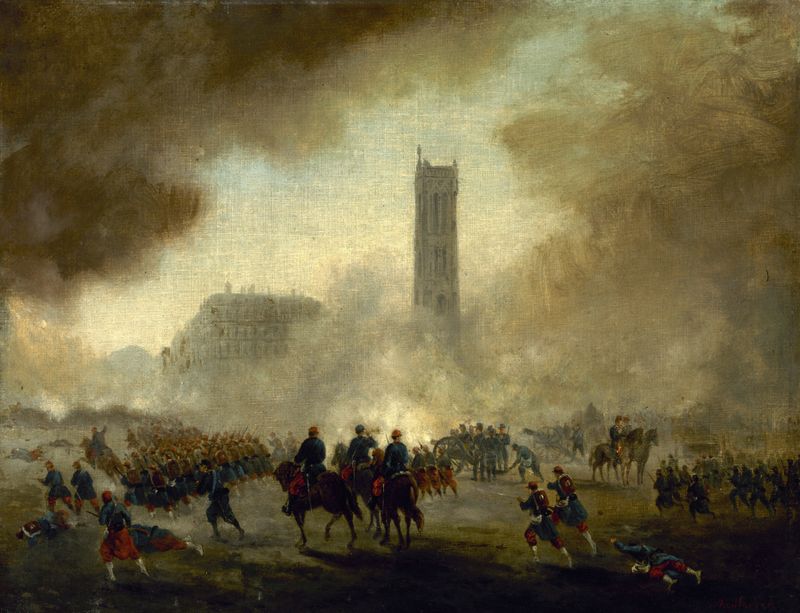
La tour Saint-Jacques, reprise par les troupes versaillaises
Gustave Boulanger
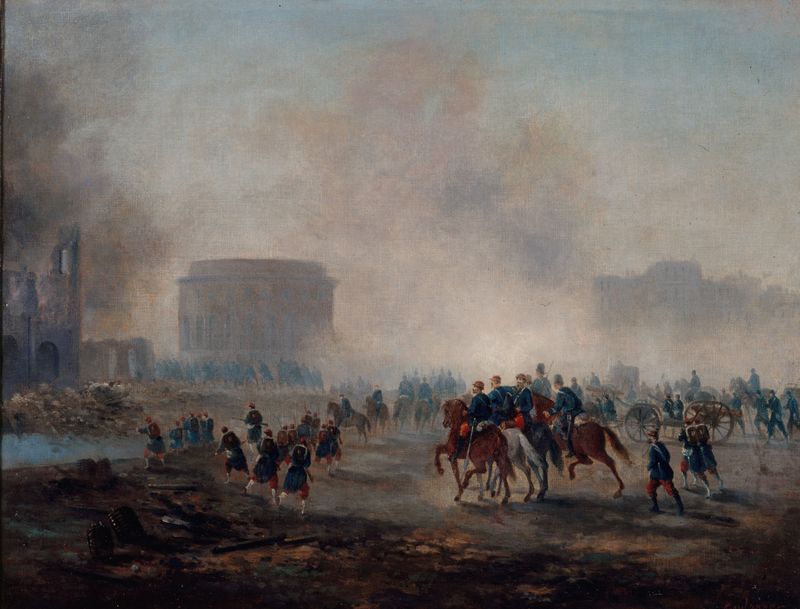
La Rotonde de la Villette cernée par les troupes versaillaises
Gustave Boulanger

Épisode de la Commune, place de la Concorde
Gustave Boulanger
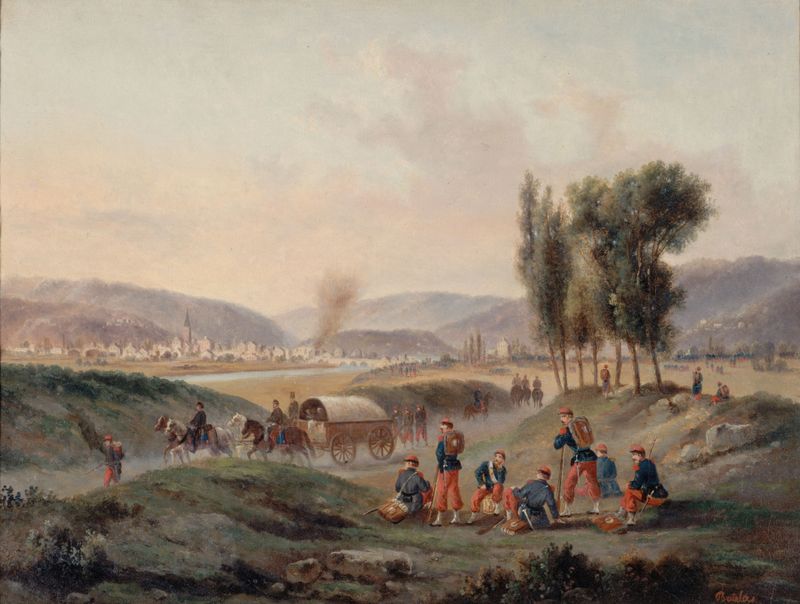
Sarrebruck après la bataille, le 5 août 1870
Gustave Boulanger
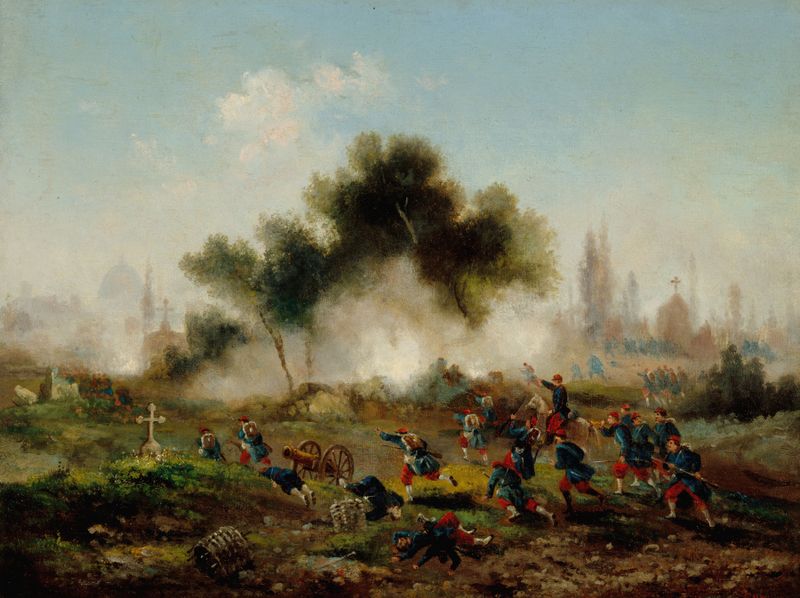
Assaut d’un cimetière par les troupes régulières, mai 1871
Gustave Boulanger
More Historical Art
Browse all →
The Night Watch Militia Company of District II under the Command of Captain Frans Banninck Cocq
Rembrandt van Rijn

Lincoln Memorial
Henry Bacon

The Third of May 1808
Francisco de Goya

Isaac and Rebecca, Known as ‘The Jewish Bride’
Rembrandt van Rijn

The Charge of the Mamelukes (1814)
Francisco de Goya

De vier ruiters van de apocalyps
Albrecht Dürer