
La Rotonde de la Villette cernée par les troupes versaillaises — History & Facts
Can beauty exist without sorrow? As La Rotonde de la Villette cernée par les troupes versaillaises unfurls before us, we are confronted by the haunting juxtaposition of elegance and turmoil, a visual exploration of divinity amid devastation. Focus first on the rotunda’s grandeur, its classical architecture standing resolute against a backdrop marred by the chaos of conflict. Notice how the painter skillfully contrasts warm tones of ochre and gold in the building’s facade with the encroaching shadows cast by the soldiers. The figures, rendered with meticulous detail, convey a sense of urgency and despair as they encircle the serene structure, creating a tension that hangs palpably in the air. In this composition, the rotunda symbolizes an ideal of beauty and civilization, while the troops represent the harsh realities of war.
The interplay between light and shadow serves as a metaphor for hope and despair, suggesting that even in moments of sorrow, there exists an enduring beauty. Each soldier’s posture reveals a spectrum of emotion—resolve, fear, and confusion—mirroring the collective psyche grappling with loss and the desire for peace. Gustave Boulanger painted this work in 1871, during the aftermath of the Franco-Prussian War and the Paris Commune. Living in France amidst political upheaval and social strife, Boulanger sought to capture the complexity of his time through art.
His approach reflected a broader movement within the art world to confront the realities of human experience, revealing a deep connection not only to the aesthetic but also to the profound emotional undercurrents of existence.
More Artworks by Gustave Boulanger
Browse all →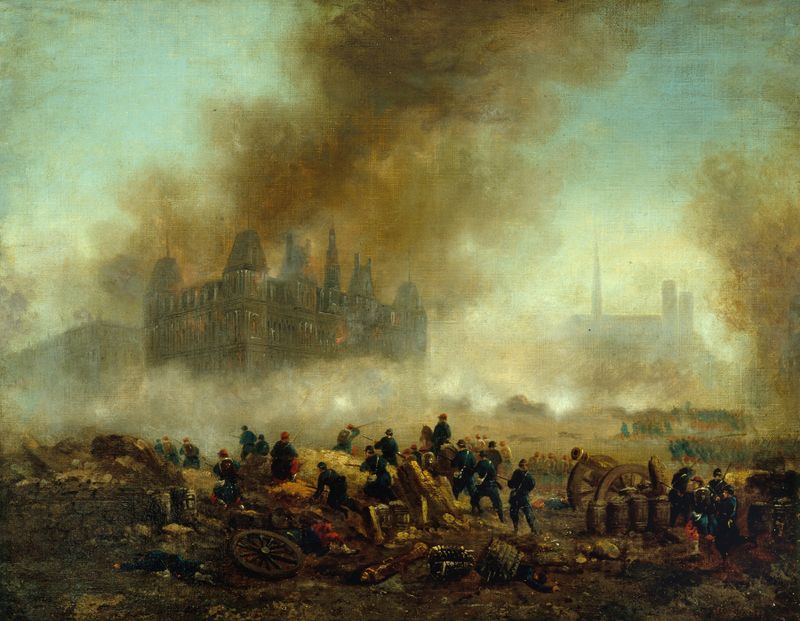
L’Hôtel de Ville incendié, assailli par les troupes de Versailles
Gustave Boulanger
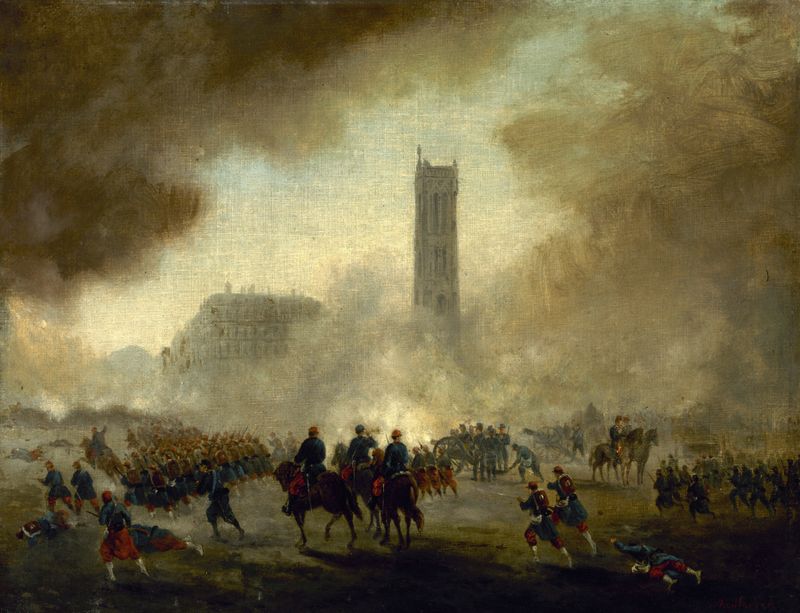
La tour Saint-Jacques, reprise par les troupes versaillaises
Gustave Boulanger

Épisode de la Commune, place de la Concorde
Gustave Boulanger
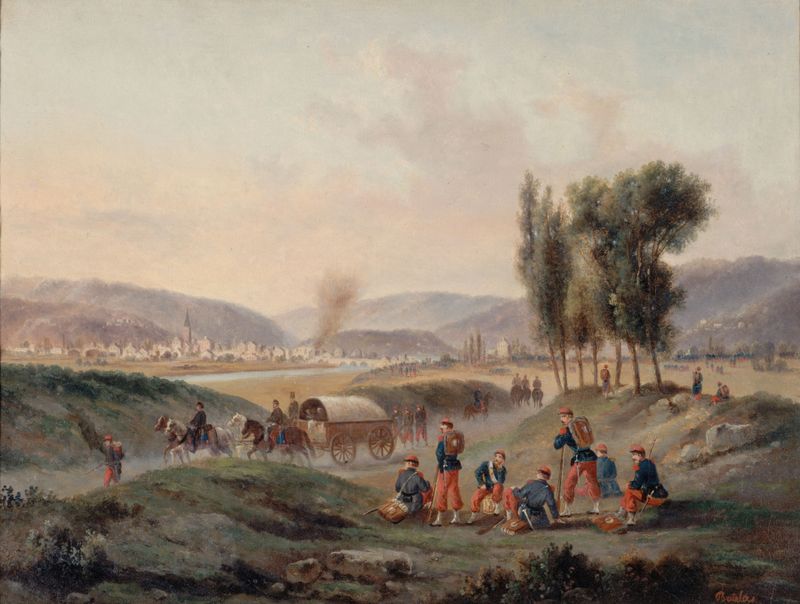
Sarrebruck après la bataille, le 5 août 1870
Gustave Boulanger
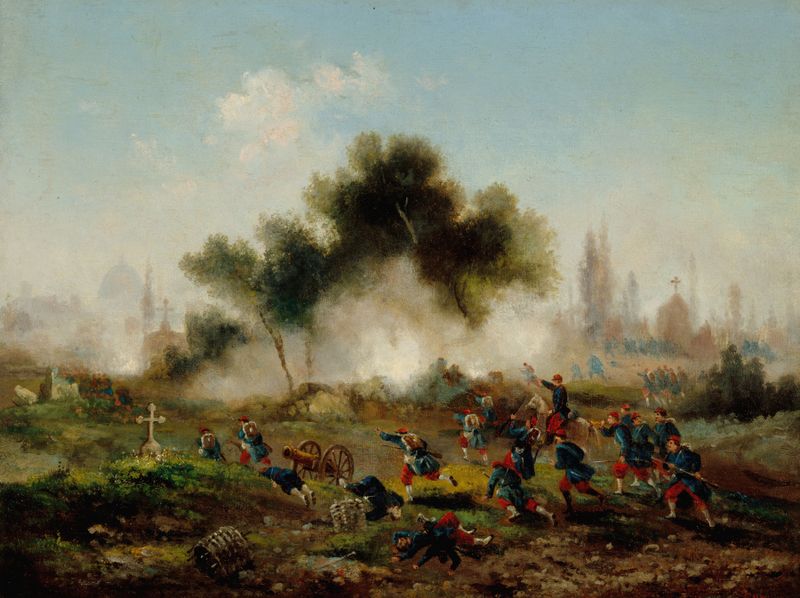
Assaut d’un cimetière par les troupes régulières, mai 1871
Gustave Boulanger
More Historical Art
Browse all →
The Night Watch Militia Company of District II under the Command of Captain Frans Banninck Cocq
Rembrandt van Rijn

Lincoln Memorial
Henry Bacon

The Third of May 1808
Francisco de Goya

Isaac and Rebecca, Known as ‘The Jewish Bride’
Rembrandt van Rijn

The Charge of the Mamelukes (1814)
Francisco de Goya

De vier ruiters van de apocalyps
Albrecht Dürer