
Sarrebruck après la bataille, le 5 août 1870 — History & Facts
In Sarrebruck après la bataille, le 5 août 1870, the artist unveils a moment steeped in balance, transformed from the ravages of war into a tableau of poignant beauty. Look to the foreground, where soldiers, weary and spent, recline against an earthy backdrop, their postures both relaxed and tense. The interplay of light and shadow highlights the contours of their faces, each a story etched in flesh. Notice how the warm, muted palette of ochres and browns contrasts with the cool blues in the distant horizon, creating a sense of depth that draws the viewer into this somber yet serene landscape. Hidden beneath the surface chaos lie emotional tensions that resonate deeply.
The juxtaposition of the soldiers' fatigue with the calmness of the landscape speaks to the duality of destruction and tranquility. The scattered remnants of battle—uniforms, weapons—intertwine with the unyielding nature around them, suggesting that life, even in the wake of turmoil, persists and finds a way to harmonize with loss. This delicate balance evokes a feeling of melancholic hope, inviting reflection on the human condition amidst conflict. In 1870, as the Franco-Prussian War raged, Gustave Boulanger was in Paris, painting amidst a turbulent landscape of shifting political climates and societal upheaval.
This work emerged during a time when artists were grappling with themes of modernity and the impact of war on human lives. Boulanger sought to encapsulate the psychological aftermath of battle, using his brush to depict not just the physical remnants but the emotional landscape left in its wake.
More Artworks by Gustave Boulanger
Browse all →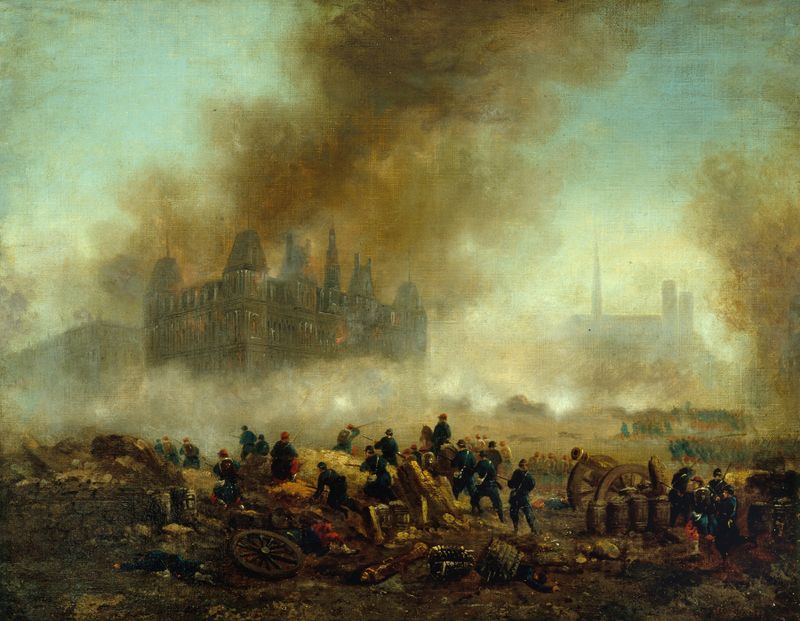
L’Hôtel de Ville incendié, assailli par les troupes de Versailles
Gustave Boulanger
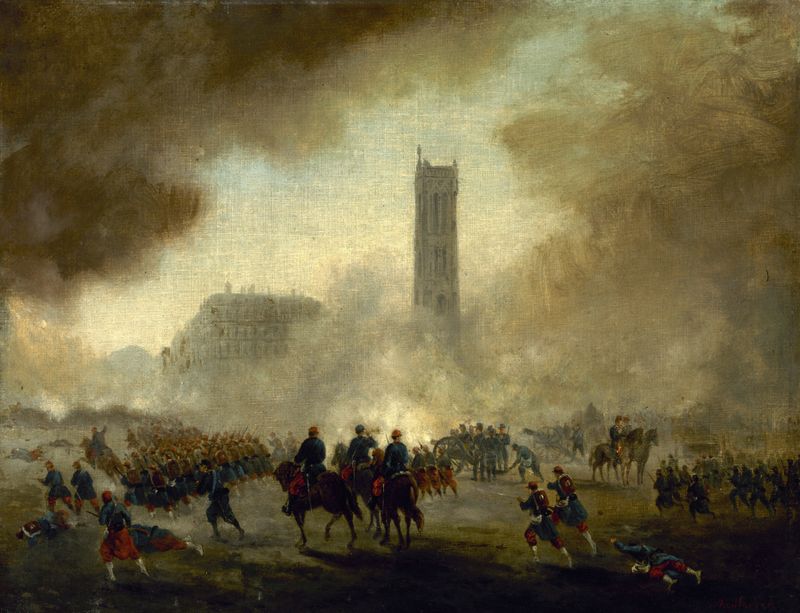
La tour Saint-Jacques, reprise par les troupes versaillaises
Gustave Boulanger
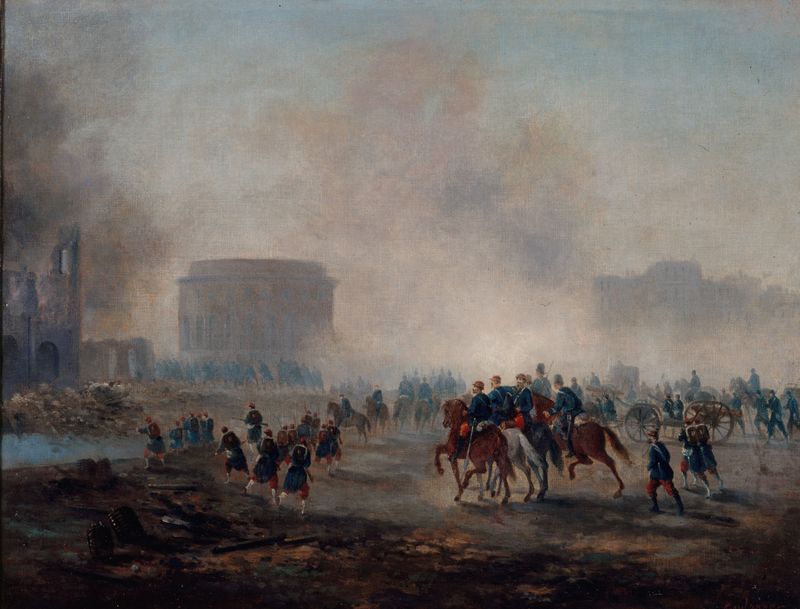
La Rotonde de la Villette cernée par les troupes versaillaises
Gustave Boulanger

Épisode de la Commune, place de la Concorde
Gustave Boulanger
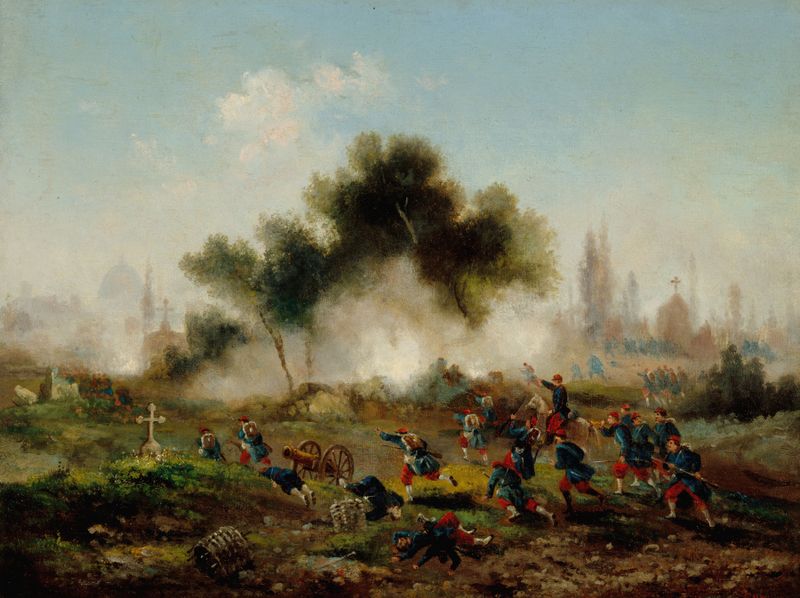
Assaut d’un cimetière par les troupes régulières, mai 1871
Gustave Boulanger
More Historical Art
Browse all →
The Night Watch Militia Company of District II under the Command of Captain Frans Banninck Cocq
Rembrandt van Rijn

Lincoln Memorial
Henry Bacon

The Third of May 1808
Francisco de Goya

Isaac and Rebecca, Known as ‘The Jewish Bride’
Rembrandt van Rijn

The Charge of the Mamelukes (1814)
Francisco de Goya

De vier ruiters van de apocalyps
Albrecht Dürer