
Assaut d’un cimetière par les troupes régulières, mai 1871 — History & Facts
When did color learn to lie? The vibrant hues that dance across the canvas whisper of life, yet they betray a deeper decay, an unsettling tension between beauty and brutality. In this artwork, a confrontation unfolds, hinting at the fragility of existence amidst chaos. Look to the center, where soldiers, clad in vivid uniforms, march with purpose. Their rigid forms contrast sharply with the soft, muted tones of the surrounding tombstones, which seem to weep under the weight of history.
Notice the interplay of light and shadow: rays pierce through the veil of clouds, illuminating the struggle and despair etched on the faces of both the living and the dead. This juxtaposition of bold colors and somber subject matter invites contemplation on the nature of conflict. Boulanger captures not just a battle but a mourning, as the crumbling gravestones serve as silent witnesses to the violence of humanity. The juxtaposition of life’s vivacity against the stark reality of death evokes a haunting narrative.
Each brushstroke carries the weight of loss, suggesting the inevitability of decay even amidst fervent passion and ambition. This emotional complexity invites the viewer to grapple with the dualism of existence — the relentless march of time and the remnants of memory. In 1871, Boulanger painted this work during a turbulent period in France, shortly after the Paris Commune's suppression. The clash between tradition and modernity echoed through the art world, reflected in his decision to tackle historical themes with a dramatic flair.
As Europe grappled with the aftermath of war, Boulanger sought to capture the weight of history, crafting narratives that resonate with the viewer long after the paint has dried.
More Artworks by Gustave Boulanger
Browse all →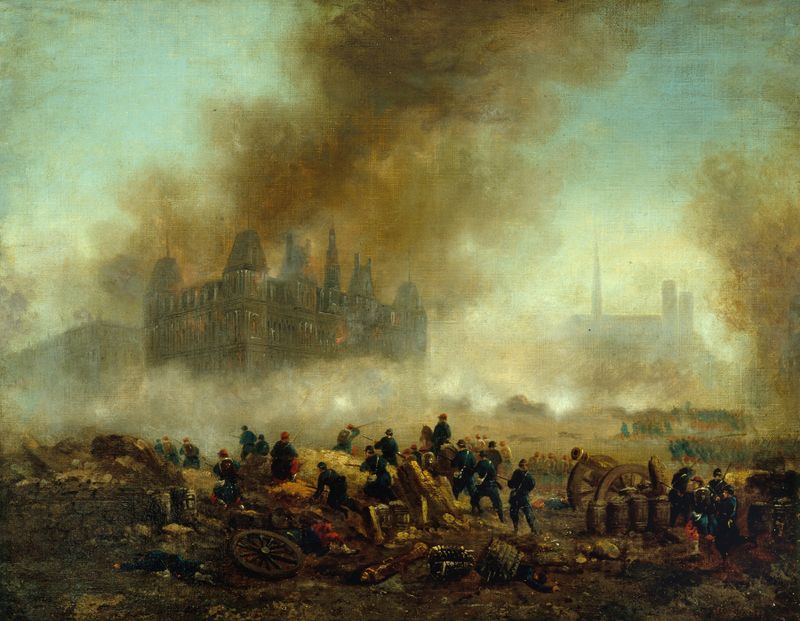
L’Hôtel de Ville incendié, assailli par les troupes de Versailles
Gustave Boulanger
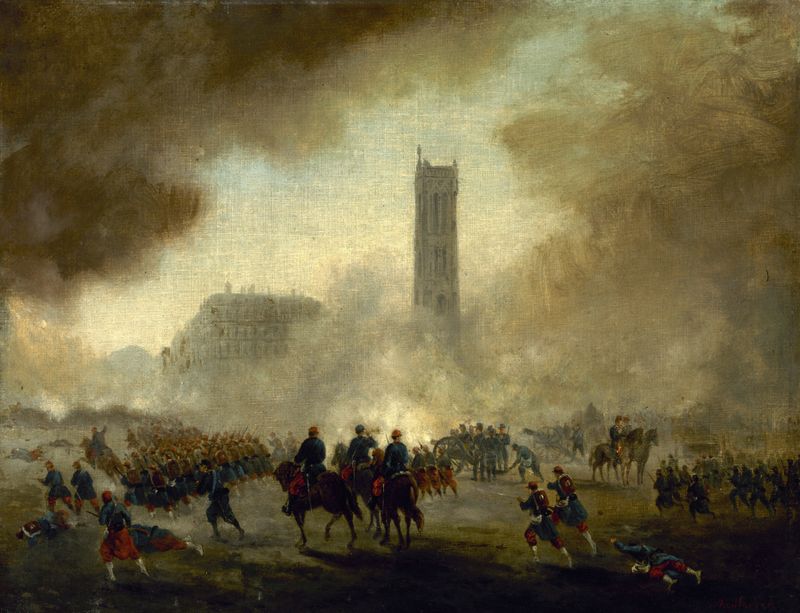
La tour Saint-Jacques, reprise par les troupes versaillaises
Gustave Boulanger
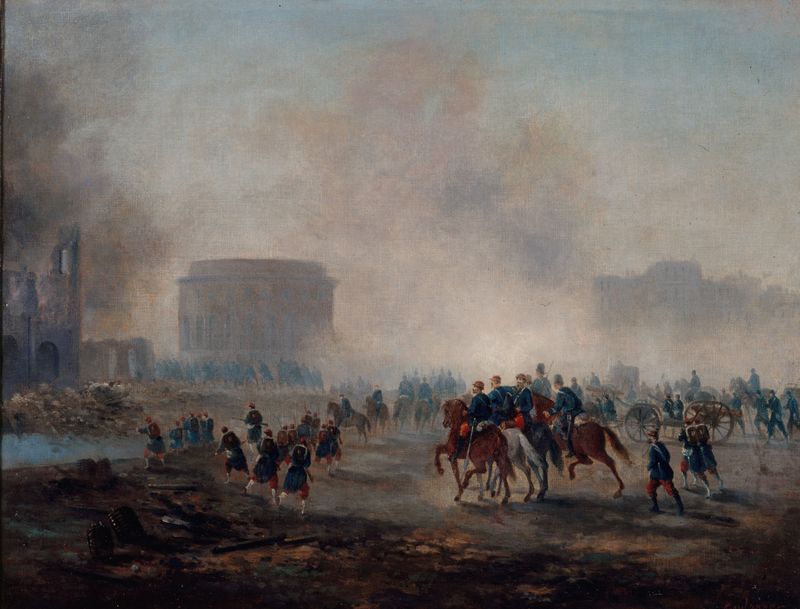
La Rotonde de la Villette cernée par les troupes versaillaises
Gustave Boulanger

Épisode de la Commune, place de la Concorde
Gustave Boulanger
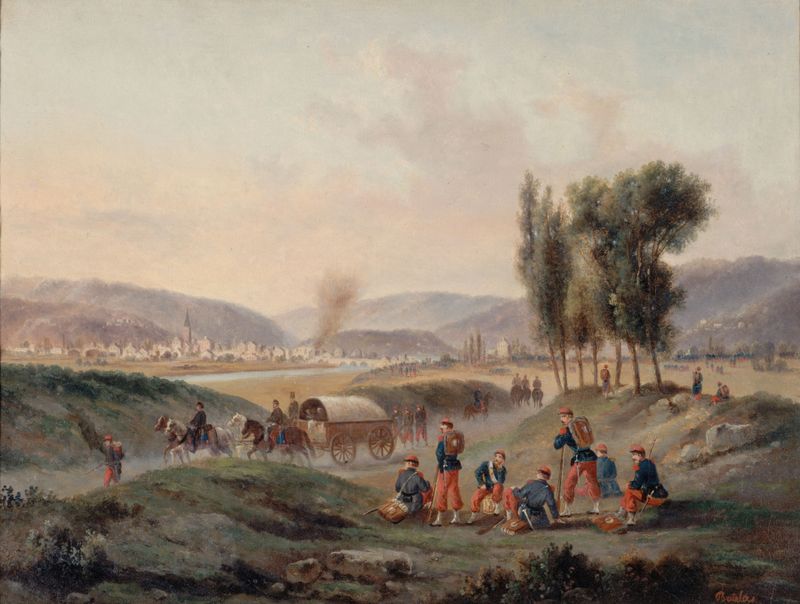
Sarrebruck après la bataille, le 5 août 1870
Gustave Boulanger
More Historical Art
Browse all →
The Night Watch Militia Company of District II under the Command of Captain Frans Banninck Cocq
Rembrandt van Rijn
Lincoln Memorial
Henry Bacon
The Third of May 1808
Francisco de Goya

Isaac and Rebecca, Known as ‘The Jewish Bride’
Rembrandt van Rijn
The Charge of the Mamelukes (1814)
Francisco de Goya

De vier ruiters van de apocalyps
Albrecht Dürer