
L’Abreuvoir at Pont Marie — History & Facts
What if beauty was never meant to be finished? In L’Abreuvoir at Pont Marie, movement dances across the canvas, suggesting an eternal flow, a moment suspended yet always in transition. Look to the left where the water glistens, the gentle ripples inviting your gaze deeper into the scene. Notice how the figures, lost in quiet conversation, seem to blend into the landscape, their soft lines contrasting against the bold strokes of the trees above. The use of muted browns and greens, punctuated with hints of blue, creates a harmonious balance that reflects both serenity and the pulse of life at the riverbank. Delve deeper into the nuances: the juxtaposition of the static trees against the dynamic figures hints at the tension between man and nature.
The way the sunlight dapples through the leaves evokes a sense of passing time, while the flowing water symbolizes continuity. This dance between stillness and motion embodies a fleeting moment that feels both intimate and universally relatable, as if each brushstroke captures a heartbeat of existence. In 1912, Lepère painted this scene while residing in Paris, a time marked by a burgeoning interest in Impressionism and the exploration of urban life. Artists were beginning to break away from traditional forms, embracing spontaneity and a focus on modernity.
For Lepère, this painting represented not just a location but an emotional landscape, a reflection of the world around him and his desire to capture its essence in perpetual motion.
More Artworks by Auguste Louis Lepère
Browse all →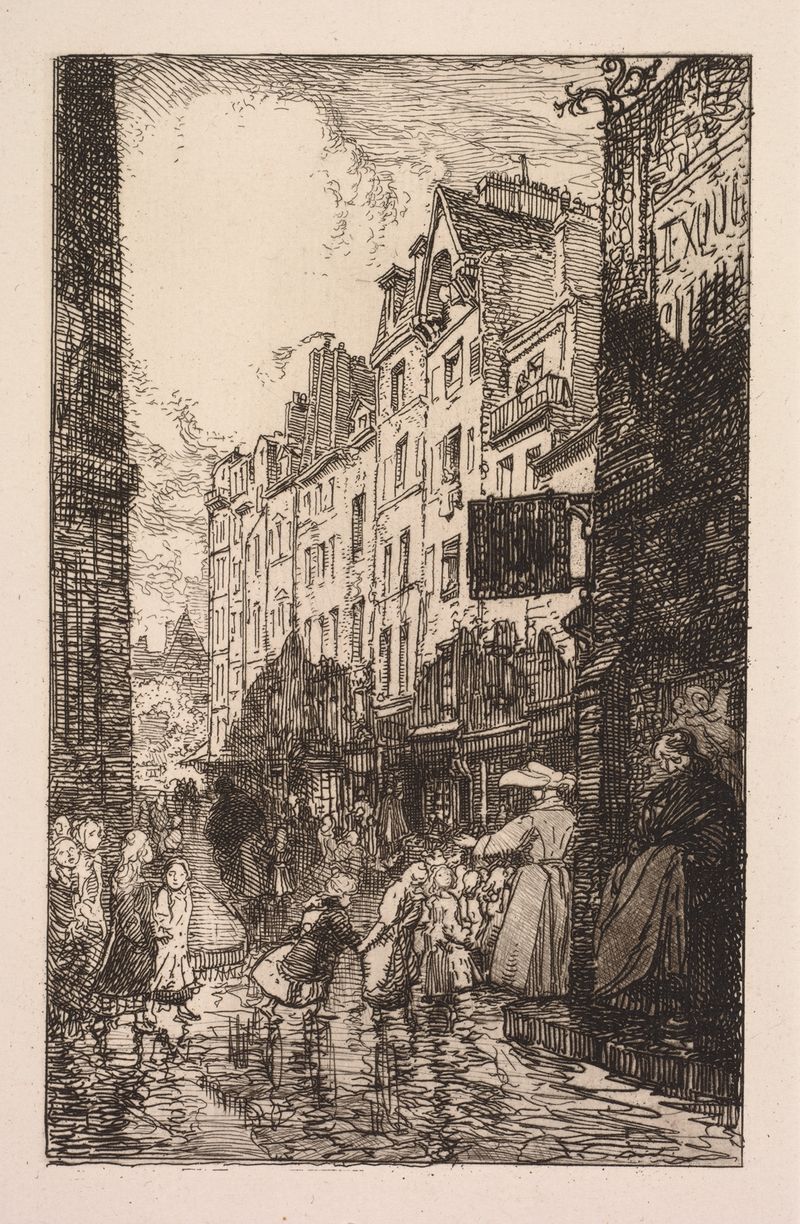
La Rue des Prêtres Saint-Séverin
Auguste Louis Lepère
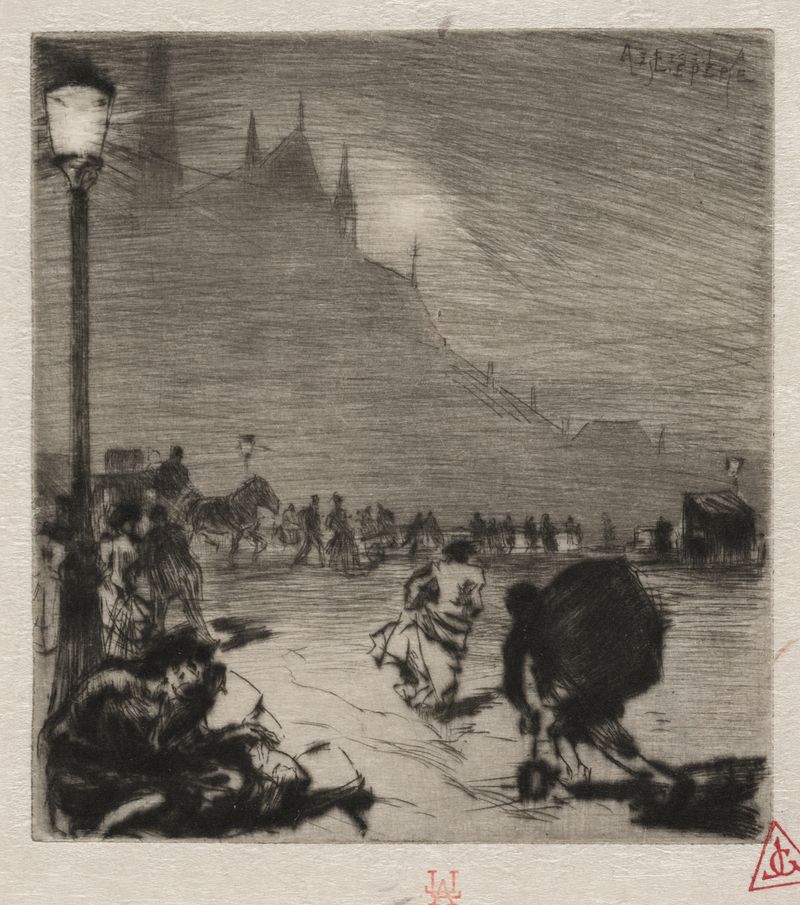
Au Coin du Pont-aux-Doubles
Auguste Louis Lepère
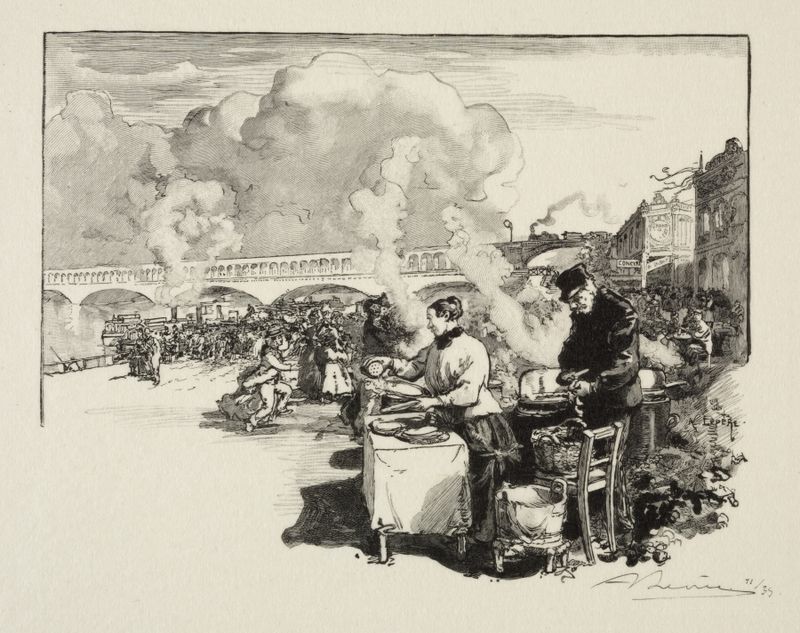
Debarcadère des bateaux-omnibus
Auguste Louis Lepère

La Seine, au quai de la Rapée
Auguste Louis Lepère
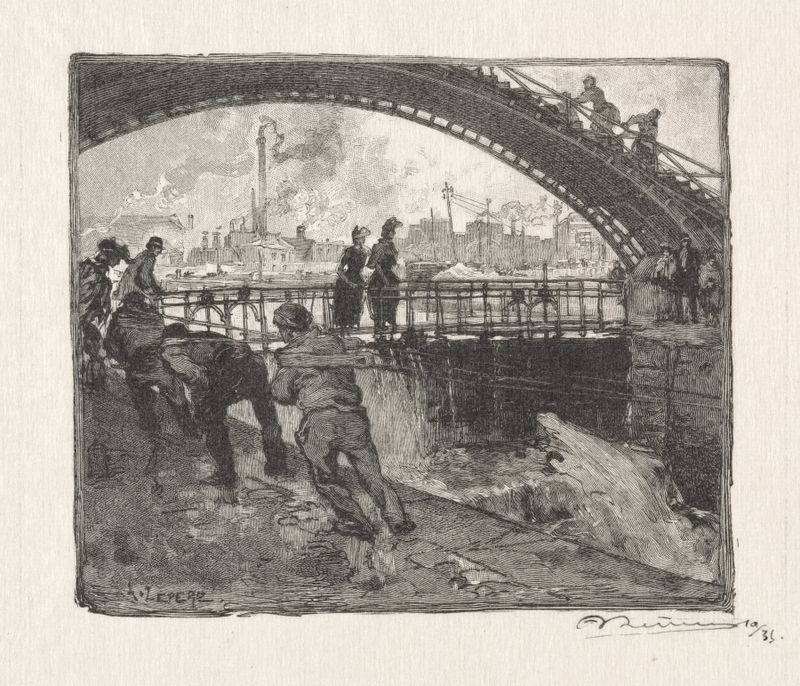
L’Ecluse du Canal St. Martin
Auguste Louis Lepère

Le Boulevard Montmartre, le Soir
Auguste Louis Lepère

Une Chasse au Mont Gérard
Auguste Louis Lepère
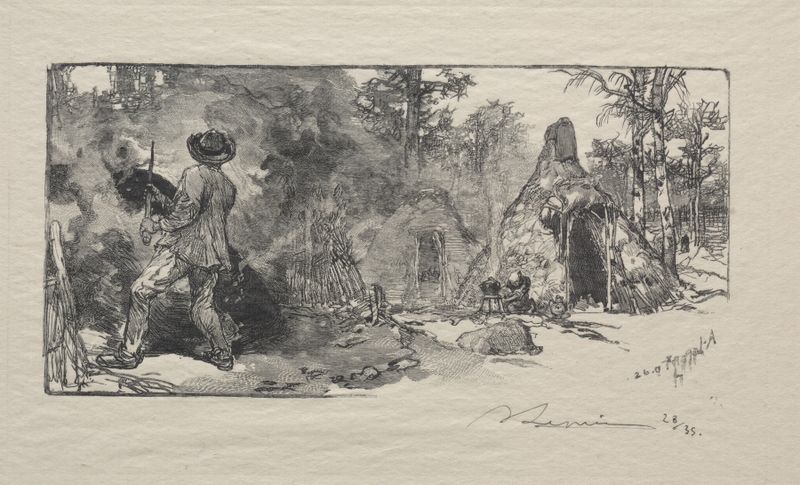
Les Charbonniere
Auguste Louis Lepère
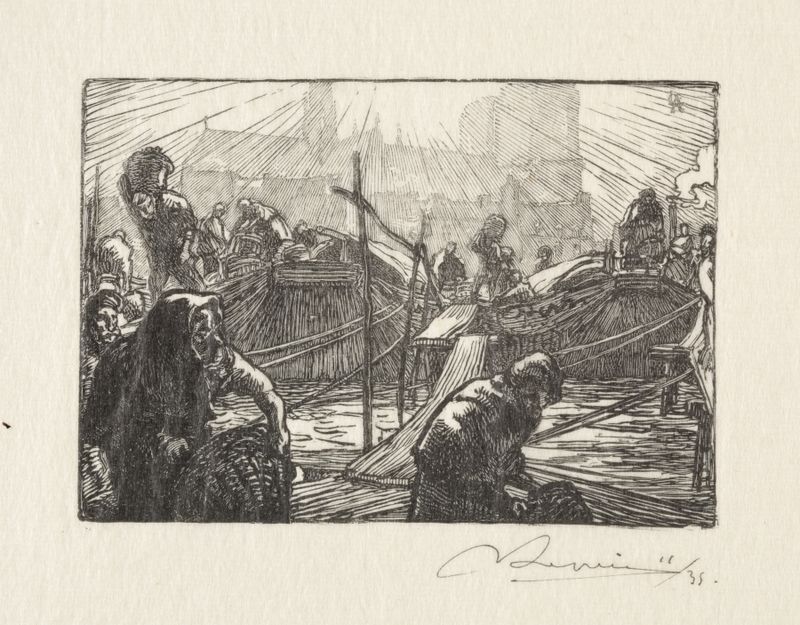
Notre Dame vue du Marché aux pommes
Auguste Louis Lepère

Le Palais des Arts Liberaux, Intèrieur
Auguste Louis Lepère





