
L’Abreuvoir au Point St. Louis — History & Facts
Can beauty exist without sorrow? In L’Abreuvoir au Point St. Louis, the delicate interplay of light and shadow suggests that beauty often springs from the fragments of loss and renewal. Look to the lower left, where the gentle curve of the water's edge invites your gaze. The soft blues and greens, interspersed with dappled sunlight, create a serene reflection that dances upon the surface.
Notice how the vibrant strokes capture the bustling life of the scene—the figures by the water, engaged in their daily tasks, seem almost ethereal against the backdrop of an awakening nature. The composition flows seamlessly, leading one's eye across the canvas while the balanced brushwork whispers of a moment both fleeting and eternal. Yet, as tranquil as it appears, the painting breathes an undertone of melancholy. The figures, portrayed in muted earth tones, carry a weight that hints at untold stories—of labor, of longing, of life's cyclical nature.
The lush greenery surrounding the water symbolizes rebirth, a stark contrast to the inevitable passage of time reflected in the serene water, suggesting that joy and sorrow coexist in the tapestry of existence. In 1902, while living in France, Auguste Louis Lepère was immersed in the artistic fervor of the turn of the century. His work was characterized by a strong connection to nature and an exploration of the everyday life around him, indicative of the Impressionist movement's legacy. This period of his life was marked by both personal growth and a broader societal shift, as artists began to embrace the beauty found in the commonplace and the profound emotions that accompany them.
More Artworks by Auguste Louis Lepère
Browse all →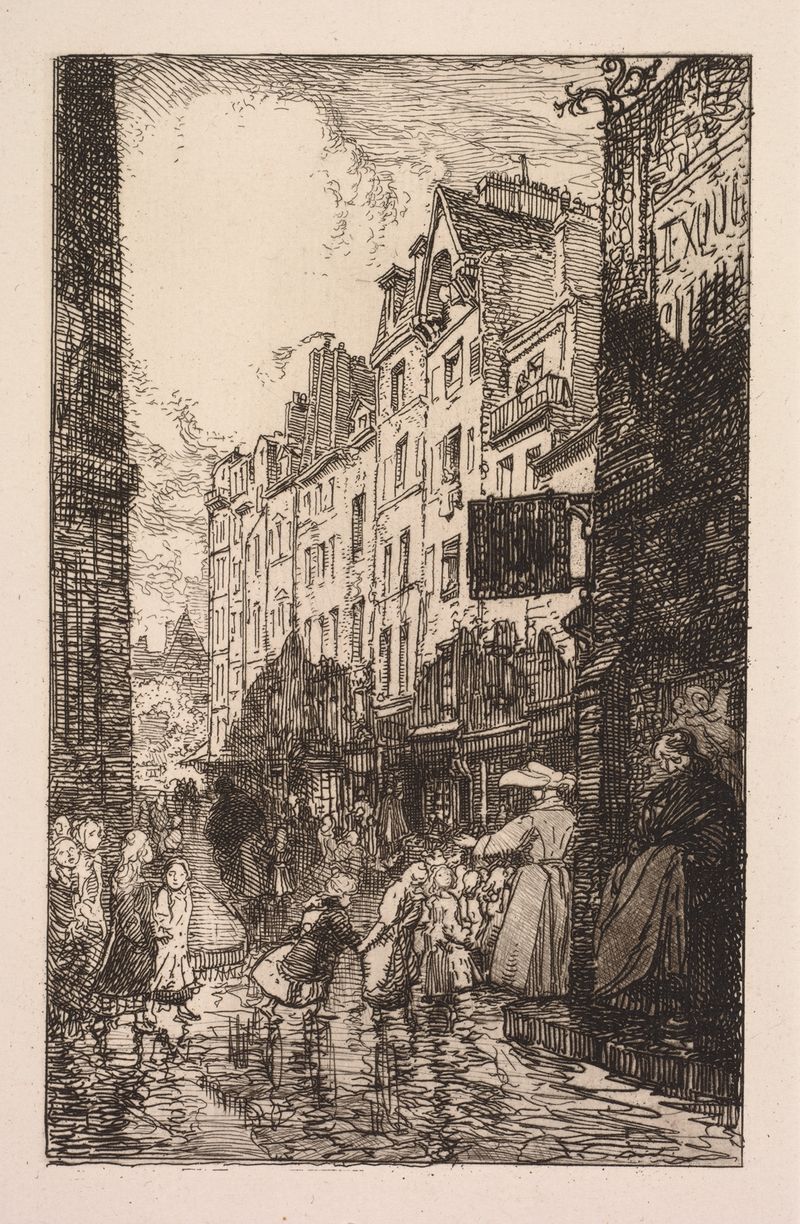
La Rue des Prêtres Saint-Séverin
Auguste Louis Lepère
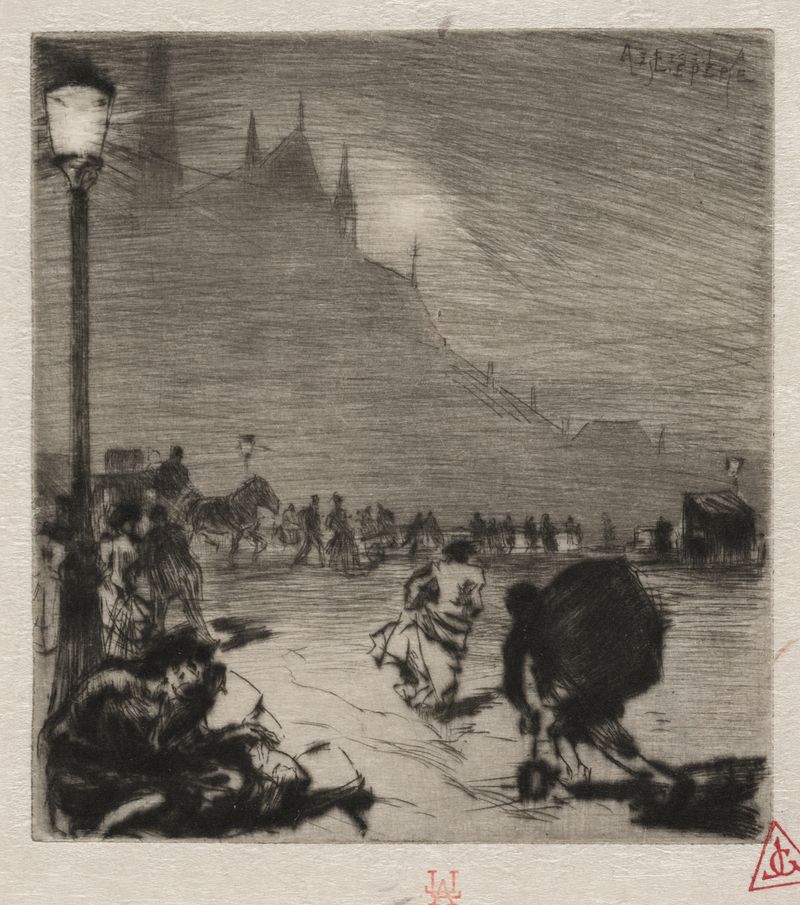
Au Coin du Pont-aux-Doubles
Auguste Louis Lepère
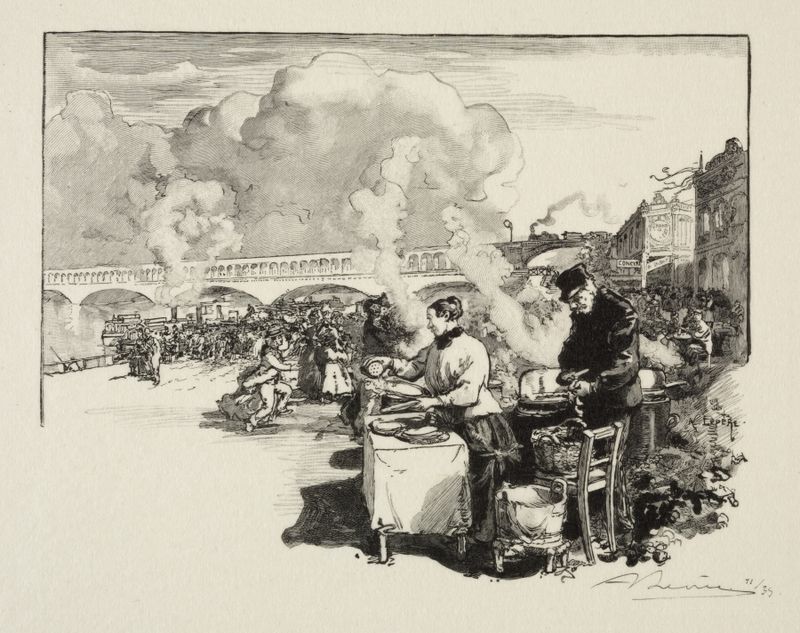
Debarcadère des bateaux-omnibus
Auguste Louis Lepère

La Seine, au quai de la Rapée
Auguste Louis Lepère
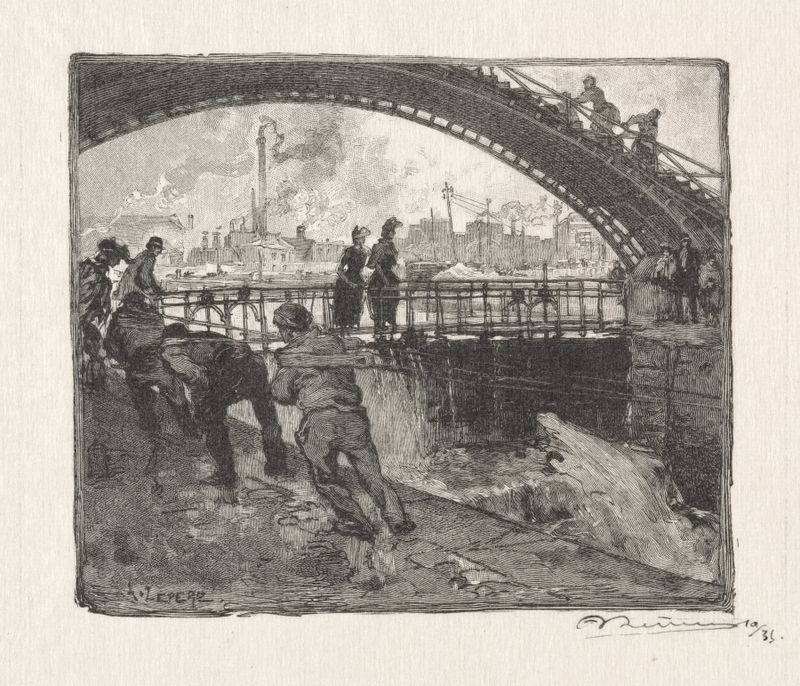
L’Ecluse du Canal St. Martin
Auguste Louis Lepère

Le Boulevard Montmartre, le Soir
Auguste Louis Lepère

Une Chasse au Mont Gérard
Auguste Louis Lepère
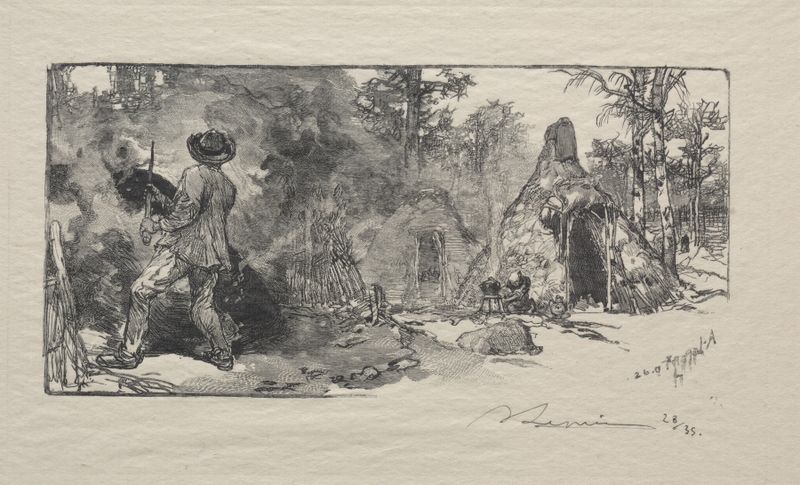
Les Charbonniere
Auguste Louis Lepère
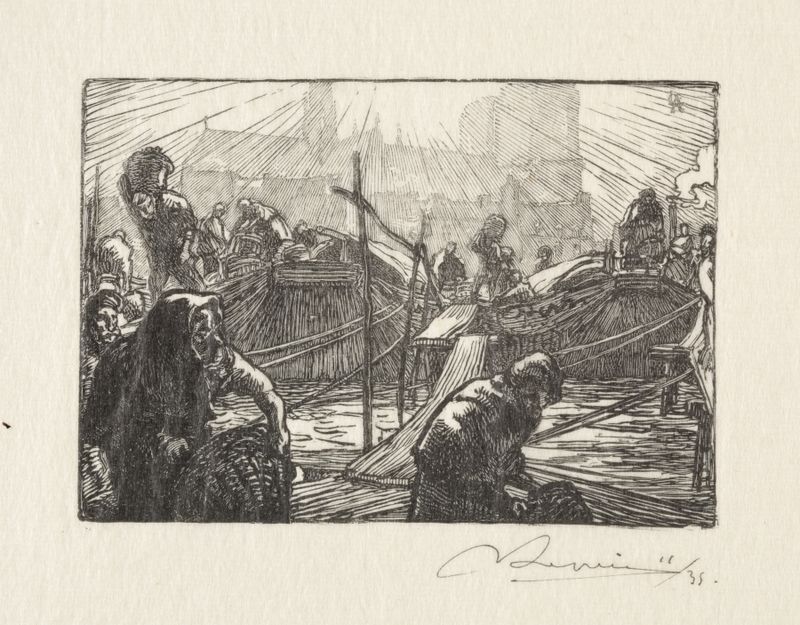
Notre Dame vue du Marché aux pommes
Auguste Louis Lepère

Le Palais des Arts Liberaux, Intèrieur
Auguste Louis Lepère





