
Lady with a Letter — History & Facts
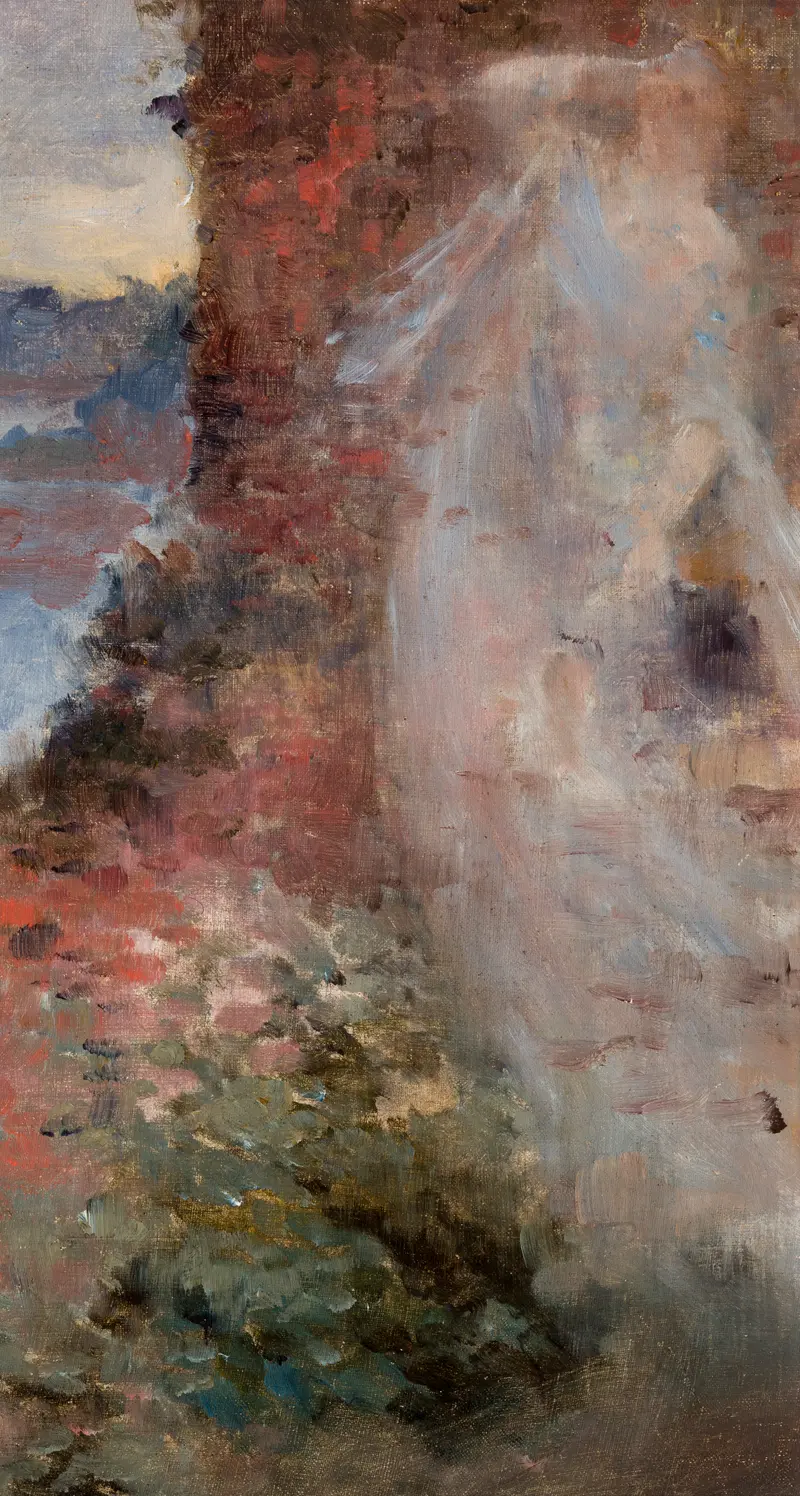
What draws the eye first in Lady with a Letter by Apolinary Kotowicz is the quiet drama of a private moment, caught in the hush before revelation. The young woman’s gaze is gentle but intent, her lips just touched by a knowing smile as she lifts the letter, its edge catching the light like a secret about to be shared. The painter leads us through a world of textures: the luminous skin, the soft fall of her garment, the rich, enveloping reds behind her.
Every brushstroke seems to weigh the importance of the letter—its contents hidden from us, but its emotional charge written across her poised expression and delicate grip. Works like this, intimate and inward-facing, flourished in the late nineteenth century, when artists and their patrons grew fascinated by the subtle theater of daily life and private feeling. Portraits and genre scenes often served as tokens of affection or status, sometimes commissioned, sometimes painted for the open market, and always reflecting the shifting boundaries of public and private in a rapidly modernizing world. Lady with a Letter now resides in the National Museum in Kraków, a quiet testament to the era’s fascination with the inner lives of women and the silent power of correspondence.
As you look, consider what the letter might hold—and how the painter invites us to share, if only for a moment, in the mystery of another’s anticipation.
More Artworks by Apolinary Kotowicz
More Genre Scene Art

Banquet of the Officers of the St George Civic Guard
Frans Hals

Rembrandt and Saskia in the Scene of the Prodigal Son
Rembrandt van Rijn

Bal du moulin de la Galette
Pierre-Auguste Renoir

Quadrille at the Moulin Rouge
Henri de Toulouse-Lautrec

A Burial at Ornans
Gustave Courbet

When Will You Marry?
Paul Gauguin