Lake and Causeway — History & Facts
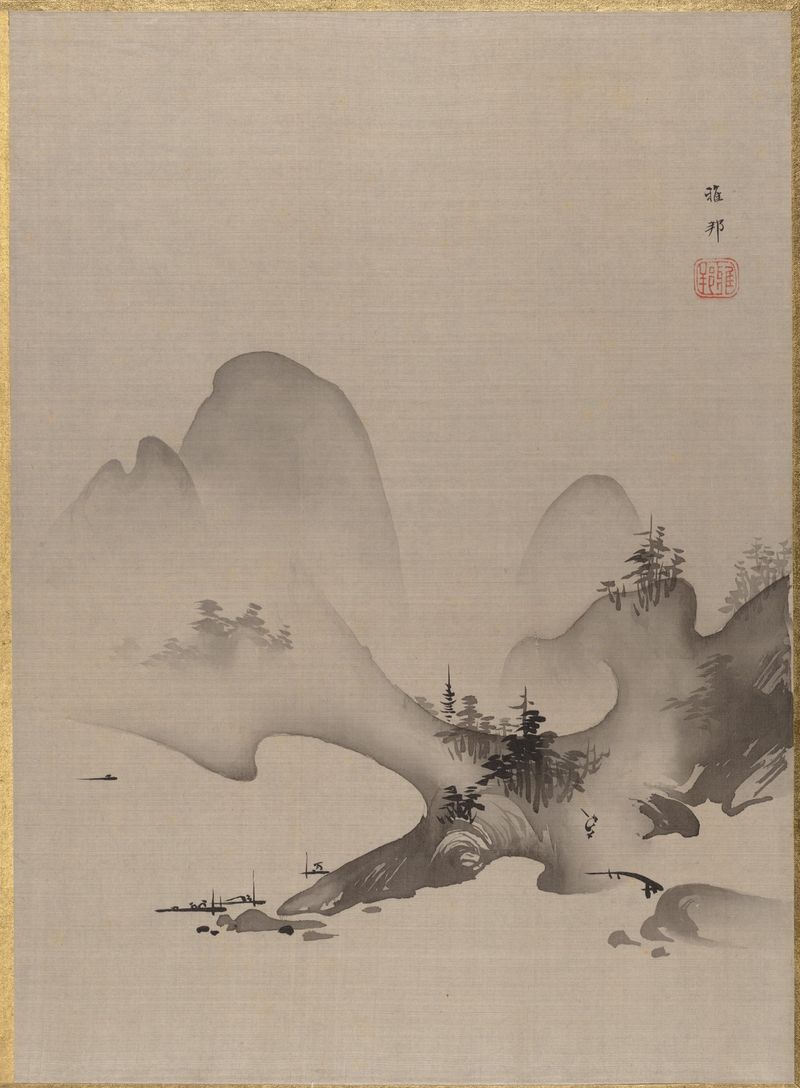
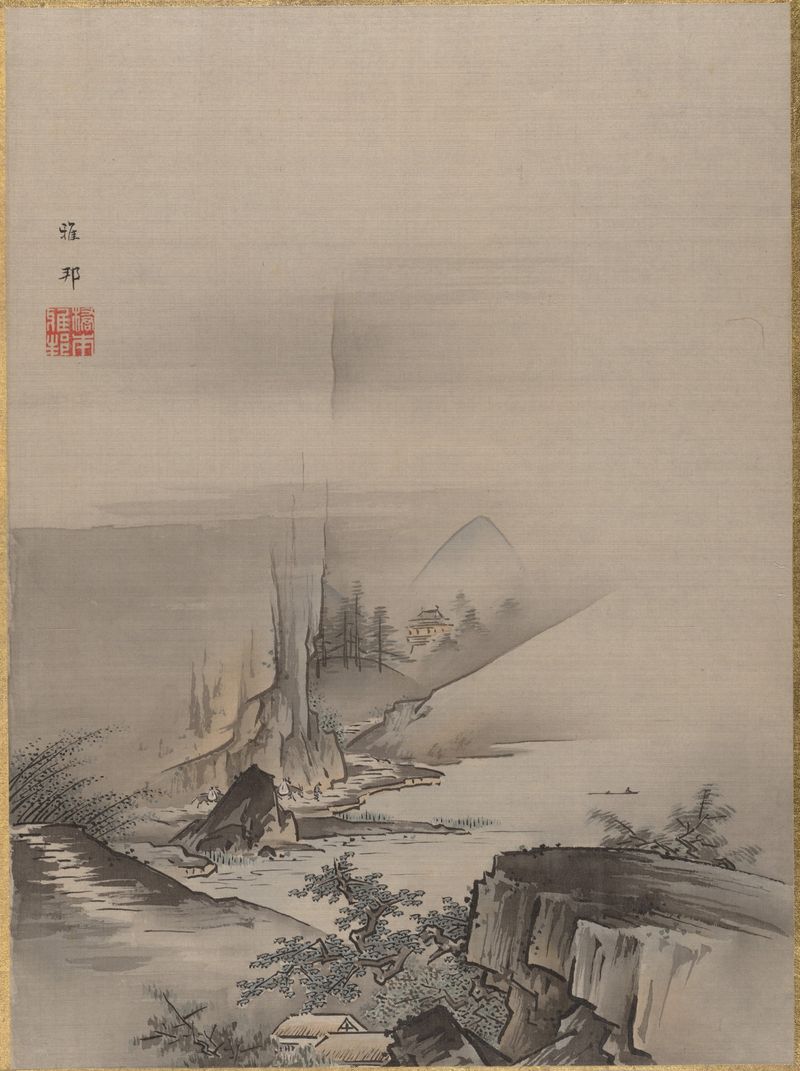
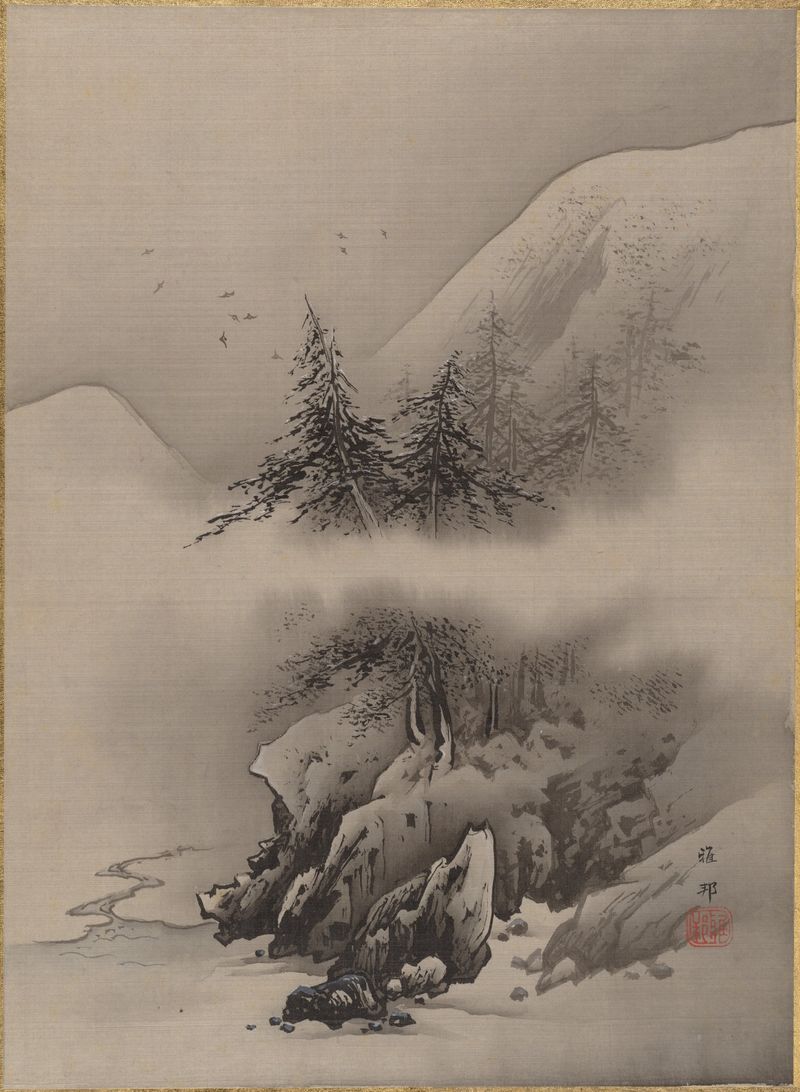
Did the painter know this moment would outlive them? The tranquil balance of nature captured in this artwork invites viewers to consider the fleeting essence of time and beauty. Look to the serene expanse of water, which dominates the canvas, reflecting the sky's soft hues. The causeway stretches elegantly across the painting, guiding the eye from the foreground into the distance, where lush trees meet the horizon. Notice how Gahō's delicate brushwork brings life to the foliage, with dappled greens and golds illustrating the play of sunlight.
The composition feels perfectly poised, each element harmonizing to evoke a sense of calm and contemplation. Yet, beneath the surface lies an emotional tension. The stillness of the lake contrasts with the vibrant life teeming just beyond the water’s edge—a reminder of nature’s cyclical beauty and inherent transience. The structure of the causeway suggests human intervention, symbolizing the delicate balance between civilization and the wild, hinting at the persistent struggle to coexist with nature.
This balance evokes a yearning for permanence in a world defined by change. During the late 19th century, Gahō created this work while living in Japan, a time when traditional art forms were being influenced by Western techniques. He sought to bridge this gap, integrating new perspectives while honoring his cultural heritage. The artwork stands as a testament to his mastery of balance—both in composition and in the dialogue between tradition and innovation that characterized his artistic journey during this transformative period.