Snow Landscape — History & Facts
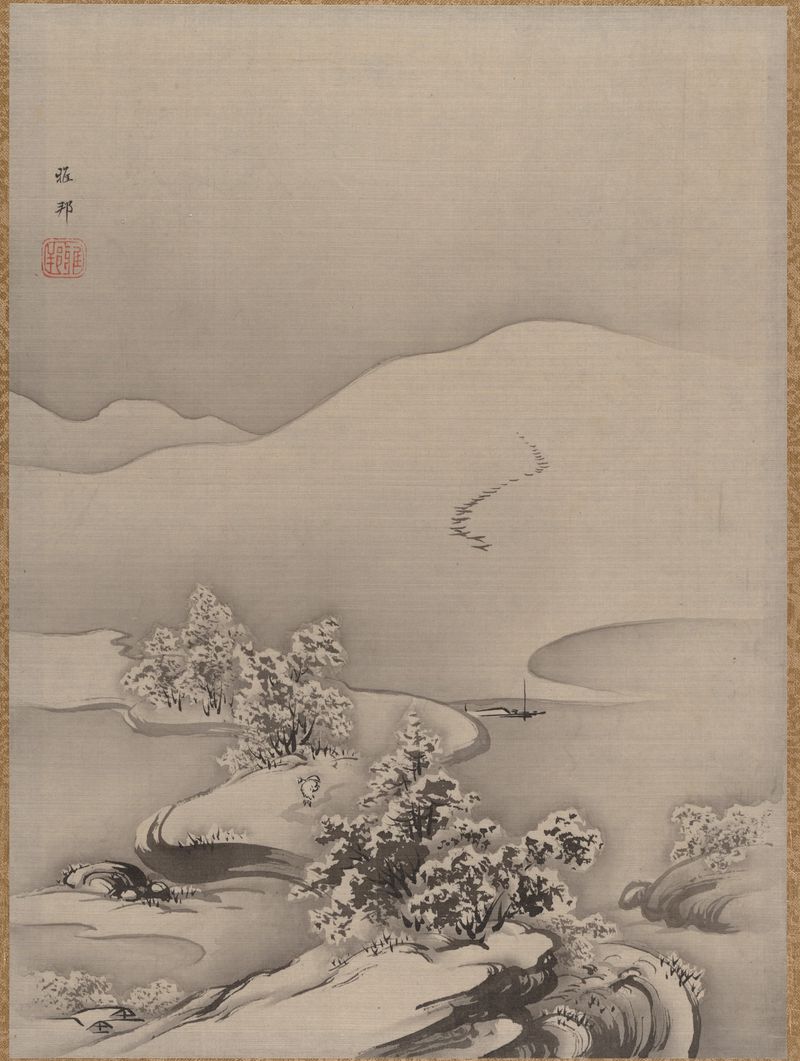
In the stillness of a snow-covered landscape, the weight of tranquility bears down, inviting reflection on the delicate balance of nature and emotion. Look to the center of the canvas, where pale whites and soft blues create a serene expanse of snow, inviting the viewer to step into its icy embrace. Notice how subtle brushwork defines the shadows, as they play across the surface, offering depth to the otherwise uniform blanket. The horizon line, gently rising and falling, draws the eye to the distant mountains, where muted tones of gray hint at a chilling majesty, while the sparse, lone trees on either side frame the scene, grounding it in an elegant simplicity. Within this quiet setting, tension lingers in the contrasting elements of coldness and warmth—each flake of snow represents both isolation and a deep-rooted sense of peace.
The absence of human presence echoes the theme of solitude, prompting contemplation on the balance between man and nature. The understated palette amplifies this emotional landscape, creating a harmonious dialogue between the tranquil scenery and the viewer's inner thoughts. Created between 1885 and 1889, this piece emerged during a transformative period for its creator. Hashimoto Gahō, a prominent figure in the Nihonga movement, sought to blend traditional Japanese techniques with modern influences.
At this time, Japan was undergoing rapid change, embracing Western art while yearning to maintain its cultural identity—Snow Landscape serves as a testament to this delicate equilibrium.