Lake Scene with Fisherman — History & Facts
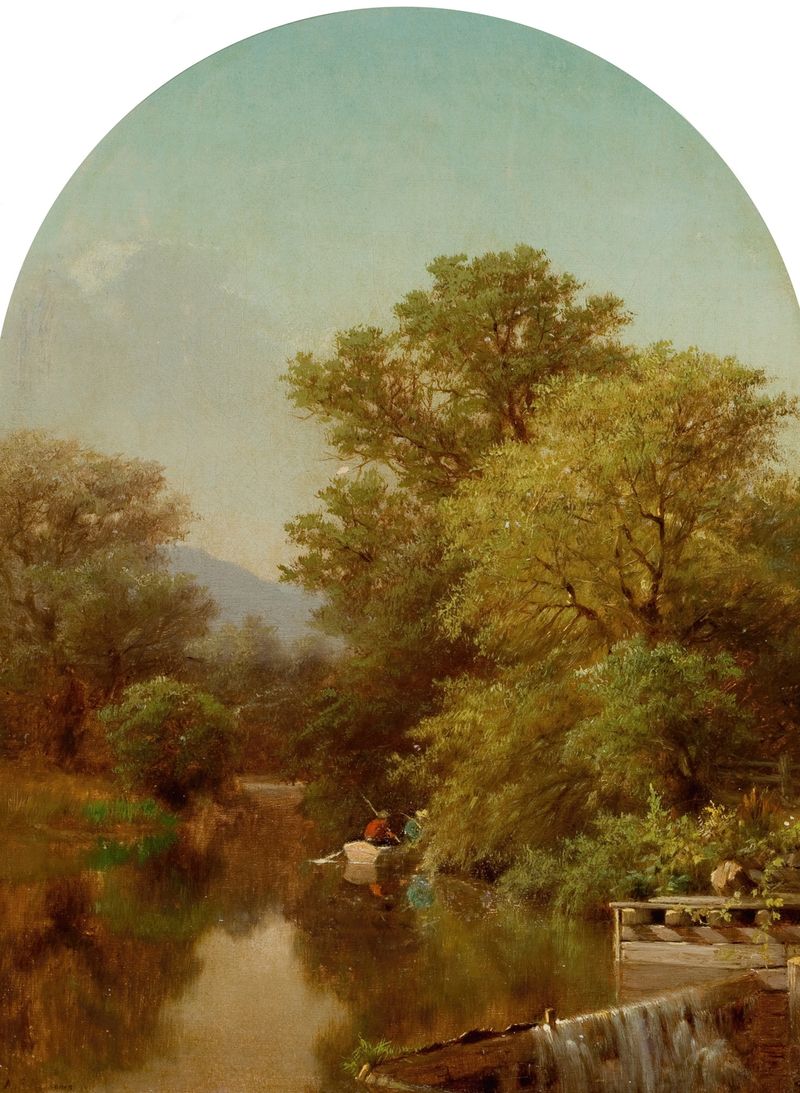
In the stillness of a moment, dreams intermingle with reality, capturing the essence of life that often eludes our grasp. The gentle rippling of water, the whisper of a breeze, and the figure of a lone fisherman become an echo of serenity, inviting contemplation of both solitude and connection. Focus on the tranquil expanse of water that dominates the foreground, reflecting the subtle hues of dusk, where soft blues and greens blend seamlessly. Look closely at the figure casting his line; his posture speaks of patience, a gesture imbued with purpose.
The delicate brushwork and warm light highlight the fisherman, rendering him almost ethereal as he melds into the landscape, suggesting a harmony between man and nature that transcends time. Yet, beneath this peaceful exterior lies an undercurrent of tension—the fisherman’s solitude hints at both the joy and loneliness found in such quiet pursuits. The surrounding trees, poised like silent watchers, stand as witnesses to a life that unfolds in solitary moments, while the distant mountains loom, suggesting challenges and dreams just out of reach. This interplay of light and shadow invites viewers to ponder the weight of existence amidst the fleeting nature of time and memory. In 1864, when this work was painted, Albert Fitch Bellows was immersed in the vibrant art scene of America’s burgeoning realism.
Living in the midst of the Civil War, he sought solace in nature, reflecting its beauty through his art. It was a time when artists were beginning to turn their focus away from historical subjects to the everyday experiences that shaped their lives, marking a pivotal shift in the narrative of American art.