Sunday in New England — History & Facts
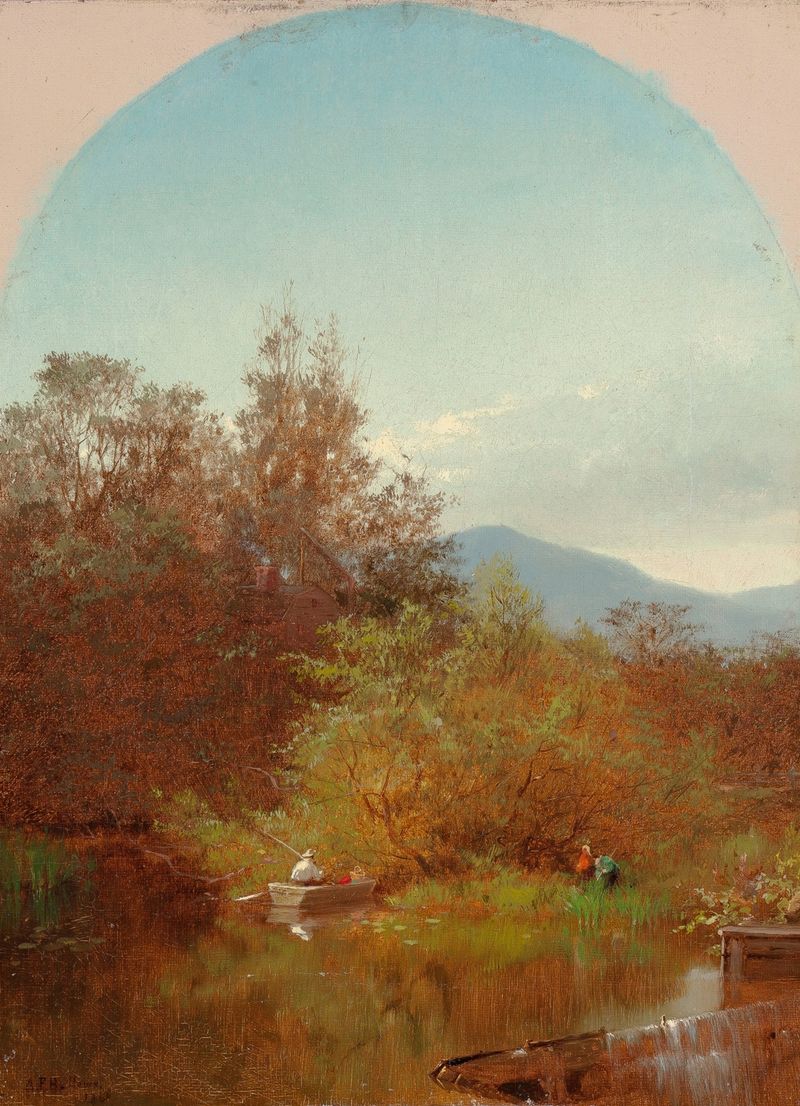
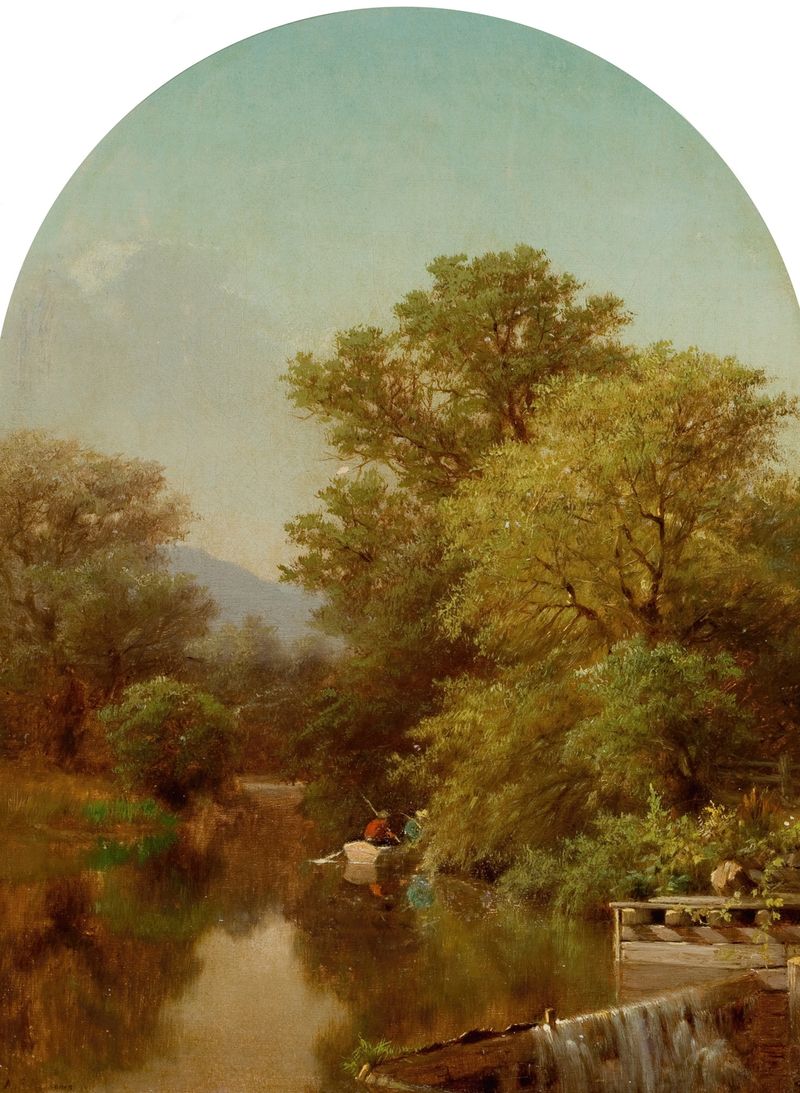
Such is the delicate dance of existence captured within the stillness of a Sunday afternoon. It speaks to the fragility of life's moments, where nature breathes softly against the backdrop of human activity, suggesting that beauty often lies in the unnoticed nuances. Look to the foreground where a tranquil river meanders, its surface shimmering with the soft hues of greens and blues. Notice how the sunlight spills onto the water, casting a gentle glow that illuminates the figures engaging in quiet leisure.
The composition dances between the vibrancy of the landscape and the delicate brushwork that evokes both the serenity of the day and the fleeting nature of time itself. The figures, though relaxed, seem suspended in contemplation, hinting at the complexities of human experience amid the simplicity of the scene. The contrast of warmth in the sunlit areas against the cool shadows reflects not only the physical environment but also the emotional landscape—inviting reflection on both the joy and solitude found in moments of stillness. Each detail, from the flowering trees to the rippling water, contributes to a sense of tranquility, yet also a poignant reminder of life's ephemeral beauty. Created around 1876, the work emerges from a period where the American art scene was grappling with newfound subjectivity and a growing appreciation for landscape painting.
Bellows, during this time, was immersed in the exploration of light and color, striving to reflect the American experience in nature. This piece stands as a testament to his artistic evolution, resonating with both contemporary and future viewers through its exploration of fragility and the ephemeral nature of life.