
Landhuis en park onder de sneeuw — History & Facts
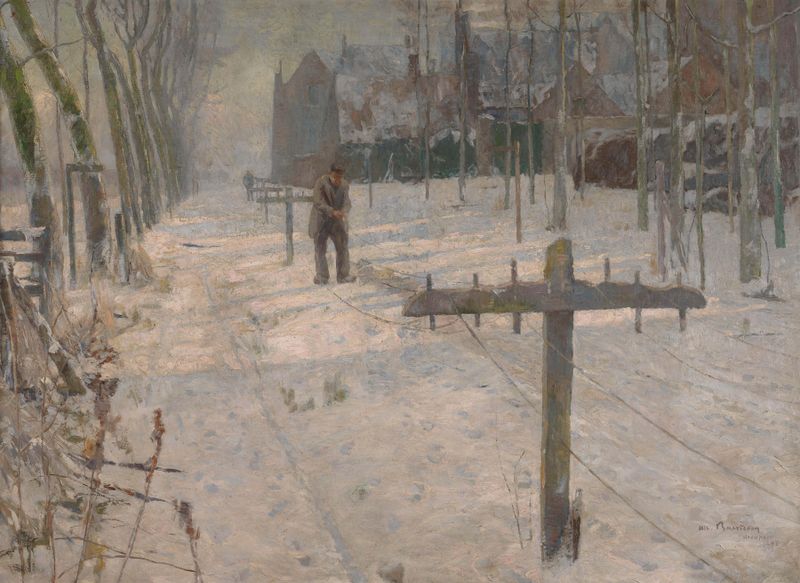
Can beauty exist without sorrow? In Landhuis en park onder de sneeuw, the serene landscape invites contemplation, balancing the tranquility of nature with the weight of stillness. Look to the foreground, where the pristine snow blankets the ground like a soft, white whisper. The soft strokes of Baertsoen’s brushwork create a harmonious interplay between the delicate flakes falling from the overcast sky and the sturdy silhouettes of the trees standing sentinel. Notice how the muted palette — shades of white, gray, and hints of blue — evokes a sense of calm, while the hidden structure of the landhuis looms gently in the distance, a quiet promise of warmth among the chill. Delve deeper into the composition, where contrasts emerge in the interplay of light and shadow.
The starkness of the snow-heavy branches hints at the burdens of winter, yet the delicate beauty of the scene speaks to a quiet resilience. The house, partially obscured and draped in snow, suggests a moment frozen in time — a sanctuary waiting for life to return. This tension between isolation and the calm of beauty encapsulates the duality of existence, where joy and melancholy coexist. Albert Baertsoen painted this piece in 1900, during a time when the art world was evolving towards modernity, yet still deeply rooted in realism.
Working in Belgium, he was influenced by the Impressionist movement, which sought to capture the transient effects of light and atmosphere. This was a period of personal introspection for Baertsoen, as he navigated the changing artistic landscape, finding his voice in the quiet, reflective moments of nature.
More Artworks by Albert Baertsoen
Browse all →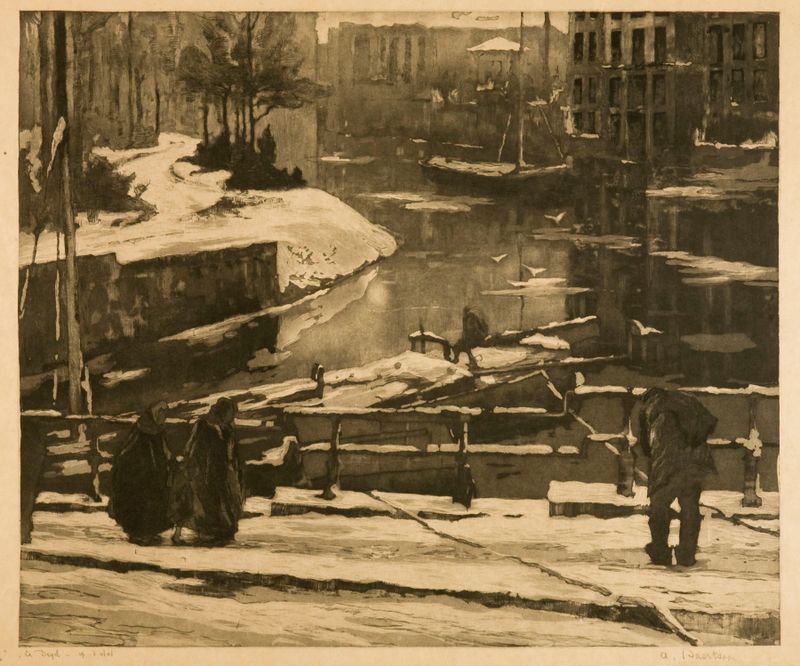
Thaw in Ghent
Albert Baertsoen
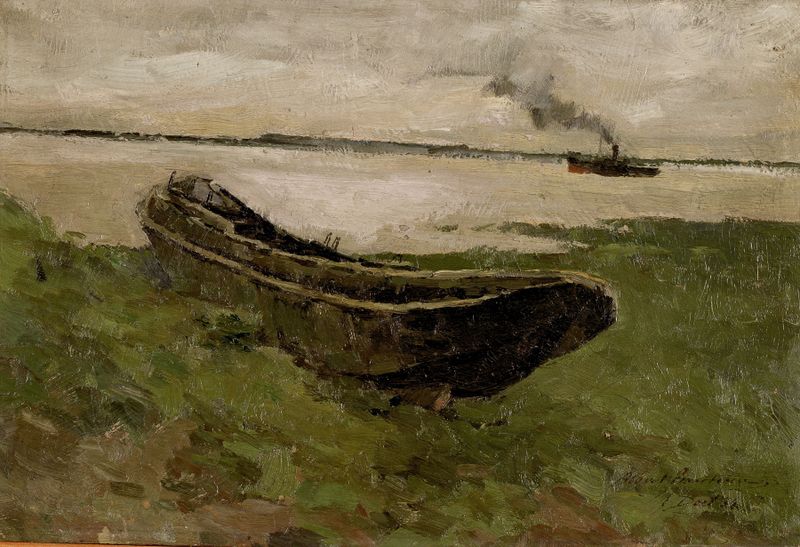
The River Scheldt at Doel
Albert Baertsoen
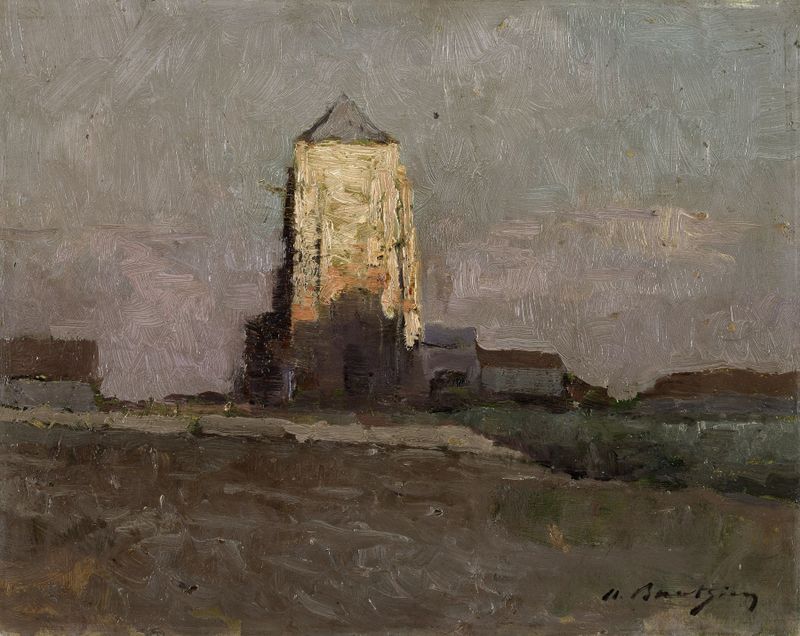
The Church of Mariakerke (Ostend)
Albert Baertsoen
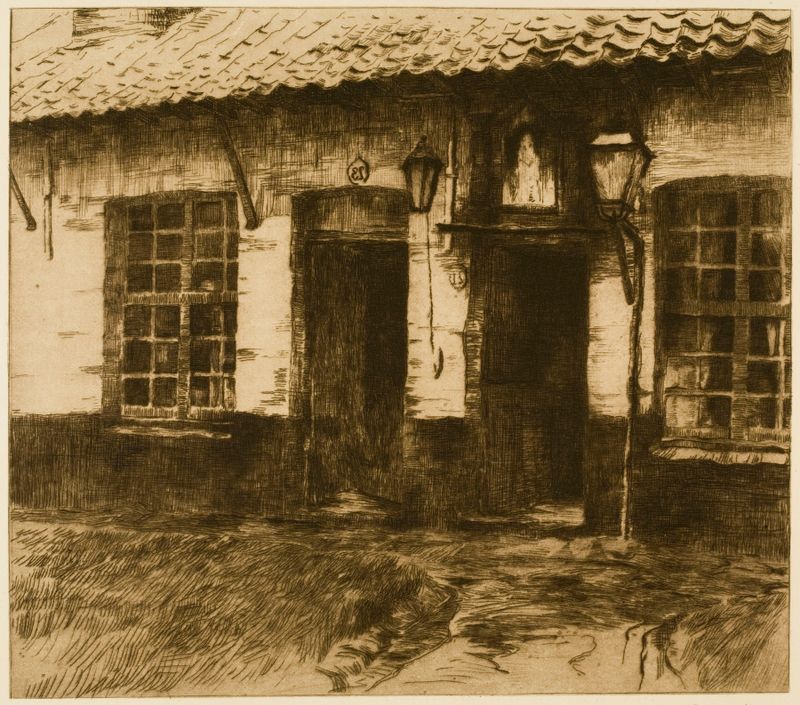
Houses of the Poor (Courtrai)
Albert Baertsoen
Rope-makers on The Ramparts
Albert Baertsoen
Old Houses on the Waterfront
Albert Baertsoen
The San Francesco Bridge in Venice
Albert Baertsoen
Square in Flanders
Albert Baertsoen
Zeeland Houses (Old Houses in Middelburg)
Albert Baertsoen
Thaw in Ghent
Albert Baertsoen





