
Landscape — History & Facts
In a world where moments slip away like grains of sand, the act of capturing nature allows us to awaken to its beauty and transience. Begin by focusing on the horizon where the sky meets the land, a delicate interplay of soft blues and warm earth tones. The gentle strokes create a sense of depth, pulling the viewer into a serene landscape where every element seems to breathe. Notice how the sunlight casts a warm glow, illuminating the foliage and creating a dance of shadows that enhances the composition's tranquil rhythm. Within the scene lies a juxtaposition of stillness and vitality.
The quivering leaves suggest a whispering wind, while the vibrant colors pulse with life, embodying the delicate balance between the ephemeral and the eternal. A solitary tree stands resolute, its branches reaching skyward, embodying a quiet longing that speaks to the human experience of yearning for connection with nature. In the late 1880s, Weir was establishing himself in the American Impressionist movement, painting primarily in Connecticut. This period was marked by a blossoming interest in capturing light and atmosphere, influenced by his studies in Europe.
As he embraced the essence of American landscapes, he created works that not only reflected personal introspection but also a broader cultural shift towards appreciating nature in an industrializing world.
More Artworks by Julian Alden Weir
Browse all →
My Back Yard no. 1
Julian Alden Weir
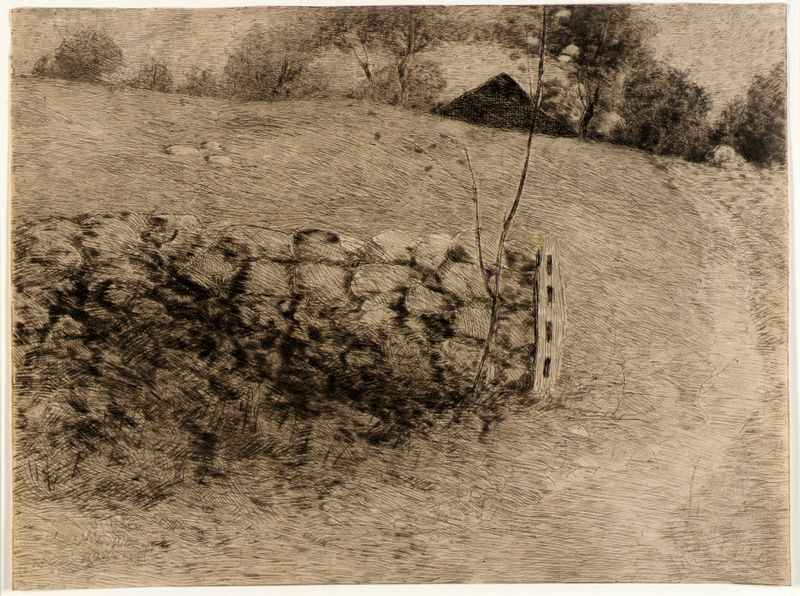
The Barn Lot
Julian Alden Weir

The Webb Farm
Julian Alden Weir
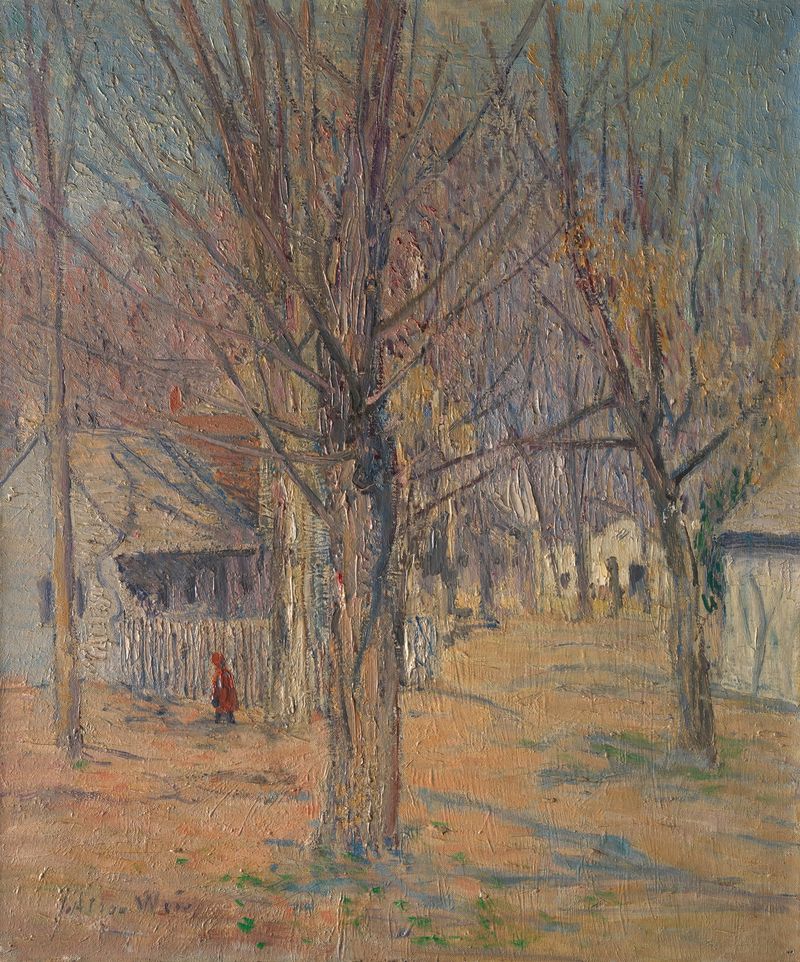
Connecticut Village (Going to School)
Julian Alden Weir

The Stone Bridge
Julian Alden Weir

The Webb Farm 2
Julian Alden Weir
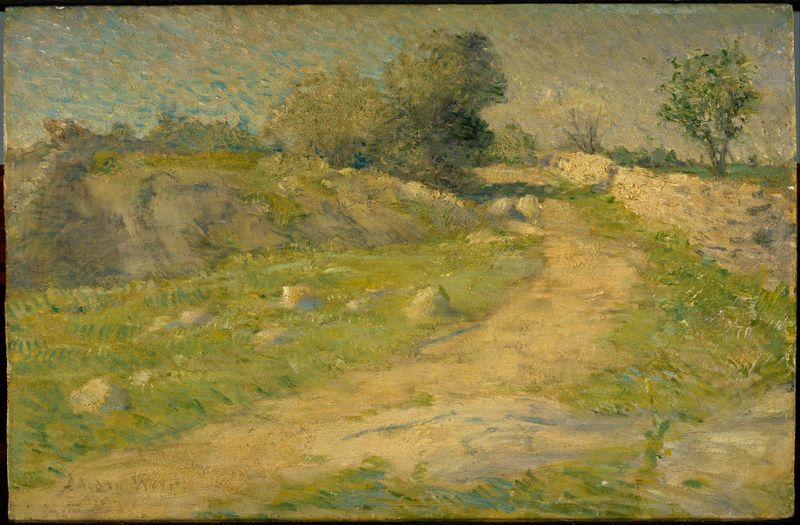
The Lane
Julian Alden Weir
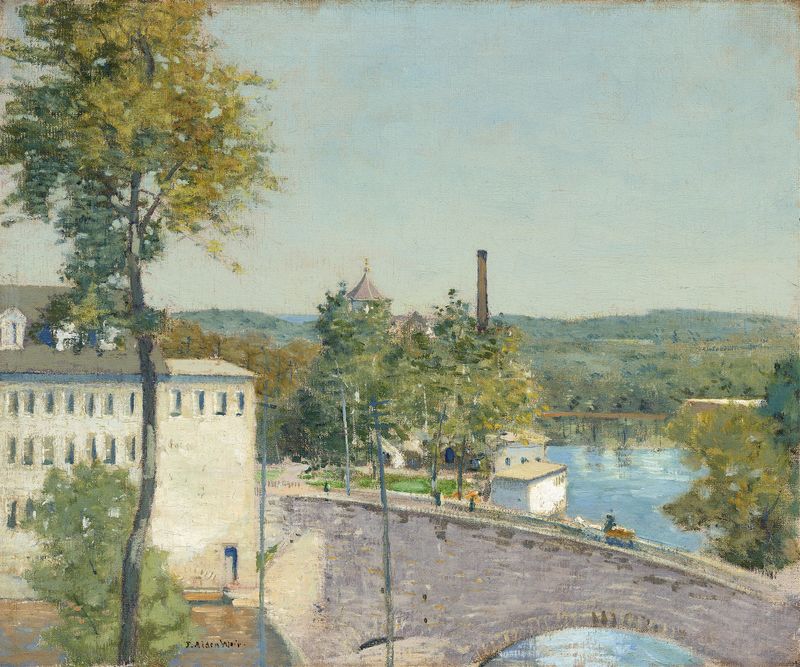
U.S. Thread Company Mills,Willimantic,Connecticut
Julian Alden Weir

Neighboring Farm
Julian Alden Weir

Coon Alley
Julian Alden Weir





