
Landscape — History & Facts
The stillness of a landscape can speak truths that words often fail to express, inviting us to pause and reflect. In essence, it transforms hope into a visual language, capturing the essence of what lies beneath the surface. Direct your gaze to the horizon, where soft hues of blue meld with wisps of golden light. Observe how the gentle strokes create a sense of depth, leading the eye through rolling hills and tranquil skies.
The interplay of light and shadow adds a dynamic quality to this serene scene, evoking a feeling of movement and life in an otherwise quiet expanse. Within this landscape, there exists a delicate balance between vastness and intimacy. The expansive sky can symbolize boundless possibilities, while the closer elements, perhaps a solitary tree or a meandering path, suggest a whisper of the personal journey. Each brushstroke carries with it an emotional pulse, and the subtle variations in color speak of the transient moments of dawn or dusk—instants pregnant with hope and transition. Painted in 1840, this work emerged from the hand of Decamps during a time when Romanticism was flourishing in France.
Having spent his early years deeply influenced by the classical ideals of beauty, he began to explore nature with a more personal lens, emphasizing emotional resonance over strict realism. This painting reflects not only his evolving style but also the broader artistic movement, as artists were beginning to find inspiration in the landscapes that surround them, seeking to elicit deeper emotional responses from their viewers.
More Artworks by Alexandre-Gabriel Decamps
Browse all →
The Good Samaritan
Alexandre-Gabriel Decamps
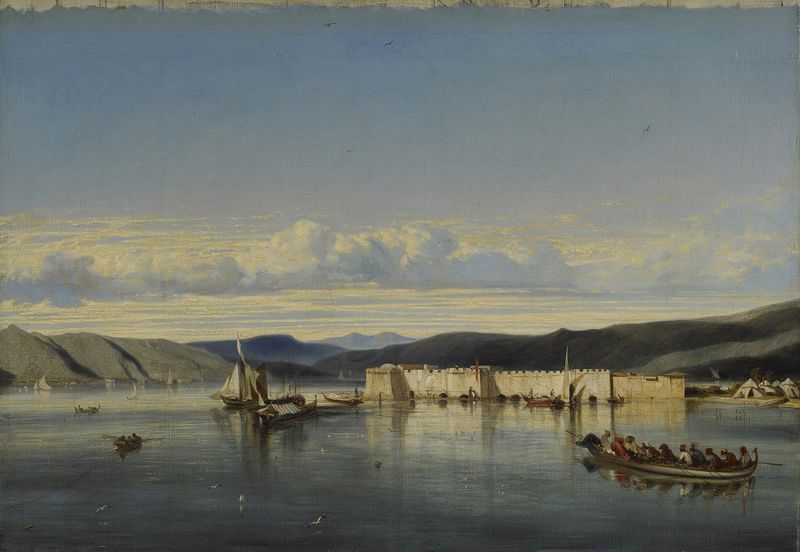
The Anchorage of Smyrna
Alexandre-Gabriel Decamps

Souvenir de Turquie d’Asie (Environs de Smyrne)
Alexandre-Gabriel Decamps
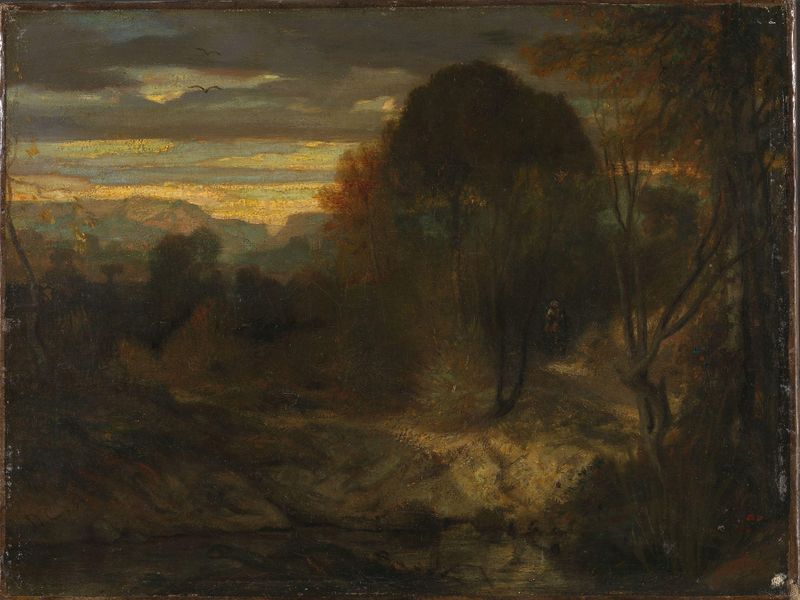
Evening landscape
Alexandre-Gabriel Decamps
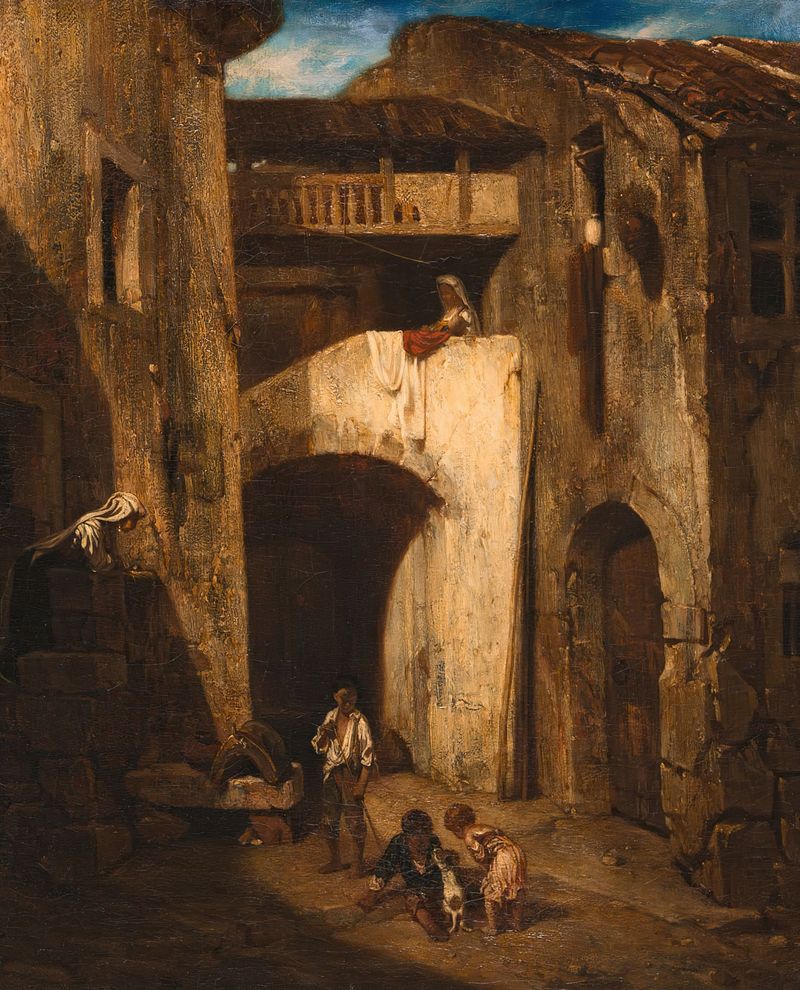
Italian Courtyard
Alexandre-Gabriel Decamps
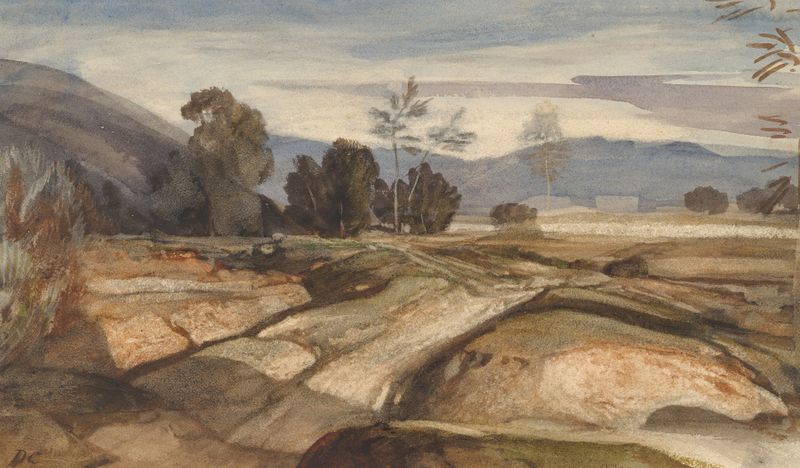
Landscape
Alexandre-Gabriel Decamps

A Well in the East
Alexandre-Gabriel Decamps
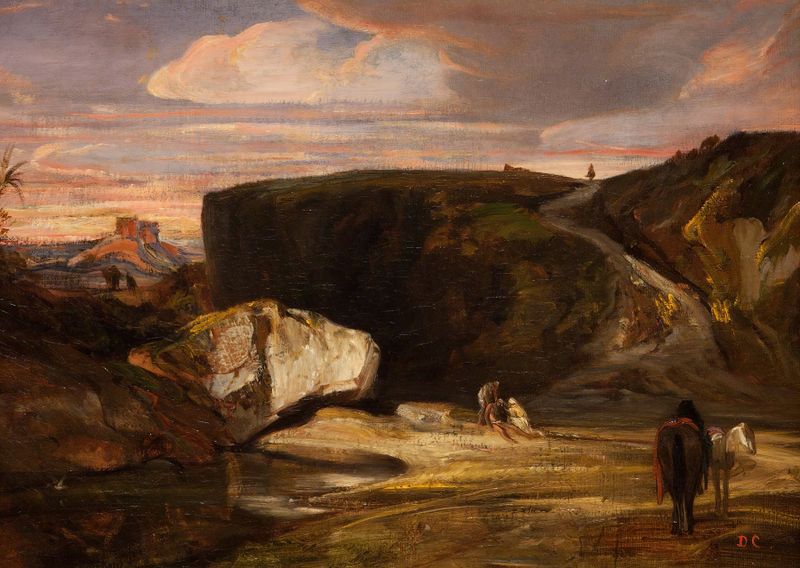
Landscape with the Good Samaritan
Alexandre-Gabriel Decamps
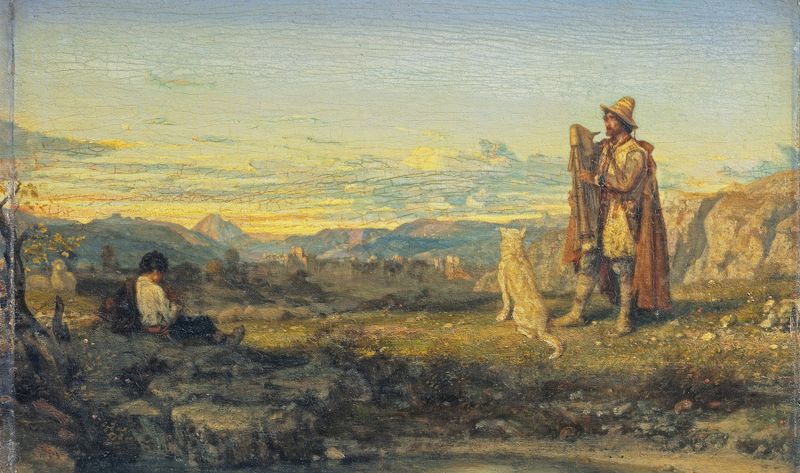
The Roman Campagna
Alexandre-Gabriel Decamps

The Villa Doria Pamphilj, Rome
Alexandre-Gabriel Decamps





