
Landscape — History & Facts
Can beauty exist without sorrow? In Landscape, the delicate balance of light and shadow invites us to ponder the fragility of nature itself. Focus on the horizon, where soft hues of lavender and gold blend seamlessly as they meet the rolling hills, whispering secrets of a tranquil dawn. The brushstrokes are fluid, almost ephemeral, capturing the transient moment between night and day. Notice how the vibrant greens of the foliage seem to shimmer with life, yet beneath that vibrancy lies an underlying tension, a reminder of nature’s impermanence. The juxtaposition of light and dark throughout the canvas speaks to the duality of existence—each radiant area of color is countered by deeper shadows, suggesting both hope and melancholy.
Every stroke encapsulates a fleeting moment, where beauty is eternally intertwined with the inevitable decay that follows. In this landscape, we are afforded a glimpse of serenity, but it carries with it an awareness of the fragility of what we perceive as perfect. Johan Barthold Jongkind painted Landscape in 1877 while residing in France, immersed in the burgeoning Impressionist movement. During this period, he sought to express the essence of light and atmosphere, influenced by his contemporaries yet forging his path.
The art world was shifting, and Jongkind’s work reflected the transition toward capturing the ephemeral qualities of nature, marking his significance in the evolution of modern landscape painting.
More Artworks by Johan Barthold Jongkind
Browse all →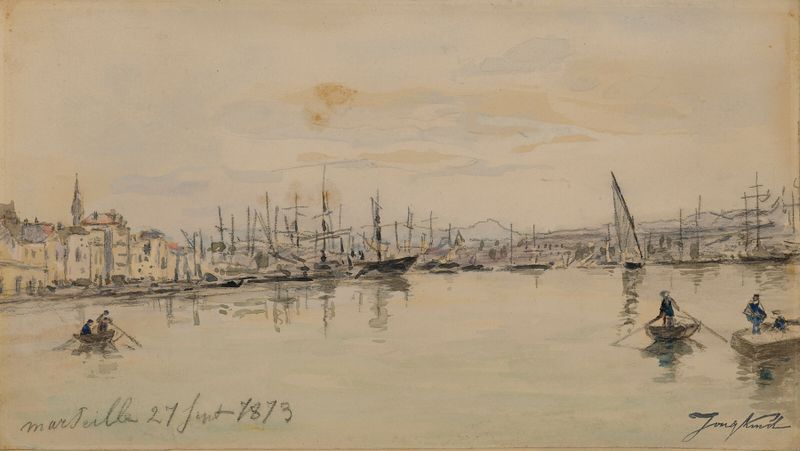
Le Port de Marseille
Johan Barthold Jongkind

Canal Saint-Martin
Johan Barthold Jongkind

Countryside near Brezins, between Grenoble and Vienne
Johan Barthold Jongkind

Notre-Dame vue du quai de la Tournelle
Johan Barthold Jongkind

Environs de Grenoble
Johan Barthold Jongkind

Clair de lune à Overschie (environs de Rotterdam)
Johan Barthold Jongkind

Port de Honfleur
Johan Barthold Jongkind
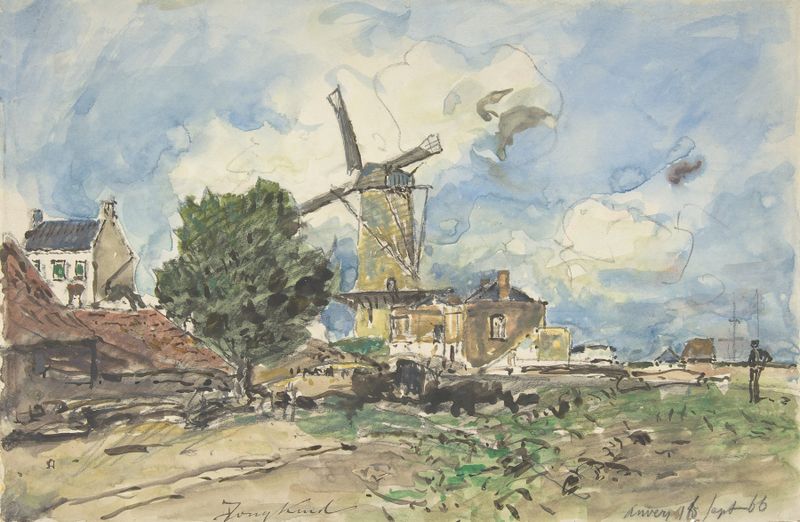
Wind Mill at Antwerp
Johan Barthold Jongkind

Le Havre
Johan Barthold Jongkind

The Church of Overschie
Johan Barthold Jongkind





