
Landscape — History & Facts
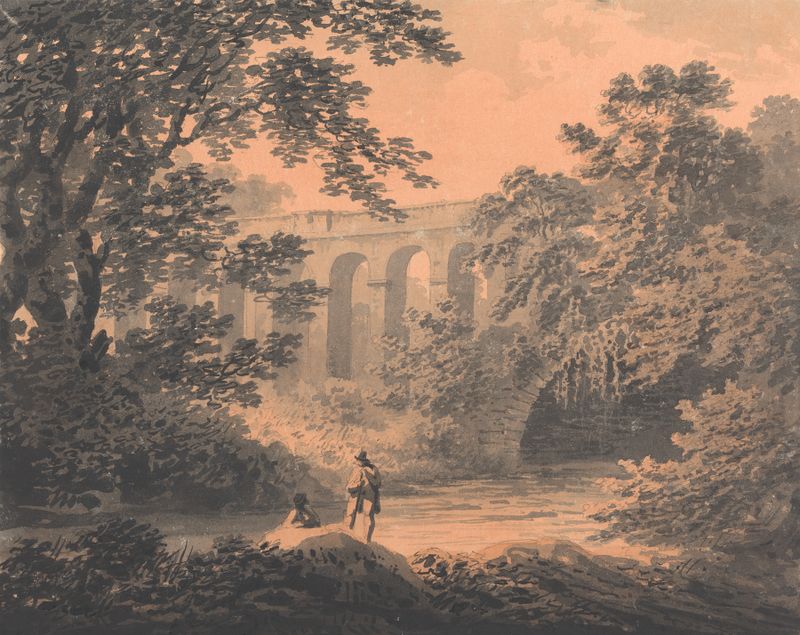
What if beauty was never meant to be finished? This contemplation echoes through the layers of a serene vista, where the painter invites us to pause and reflect on nature’s bounty. Look to the horizon in Landscape, where rolling hills meet a gentle sky, their soft blues and greens merging in a harmonious dance. The brushstrokes convey a sense of tranquility, drawing your eye from the foreground’s meticulously rendered foliage, with its vibrant greens, to the distant mountains that seem to disappear into the atmosphere. Notice how the light filters through the clouds, casting a delicate glow that brightens certain areas while leaving others in subtle shadow, creating an inviting depth that invites exploration. At first glance, the scene may appear idyllic, but subtle tensions lie beneath its surface.
The scattering of darkened trees suggests a potential storm on the horizon, juxtaposing beauty with nature's unpredictability. The viewer might also sense the passage of time in the unaltered wilderness, hinting at the transient nature of life and the eternal cycle of change. Each element, while tranquil, carries whispers of the chaos that lies beyond the frame, captivating the mind with thoughts of what is and what could be. William Gilpin painted Landscape during a time of profound change in England, between 1762 and 1783.
His works came to define the picturesque movement, a celebration of idealized nature that contrasted with the industrialization permeating society. As he explored the sublime beauty of the English countryside, he was deeply engaged in the philosophical discussions of aesthetics, seeking to capture not just a view but an experience that resonated with the human spirit.
More Artworks by William Gilpin
Browse all →
Bridgnorth Bridge, Shropshire
William Gilpin
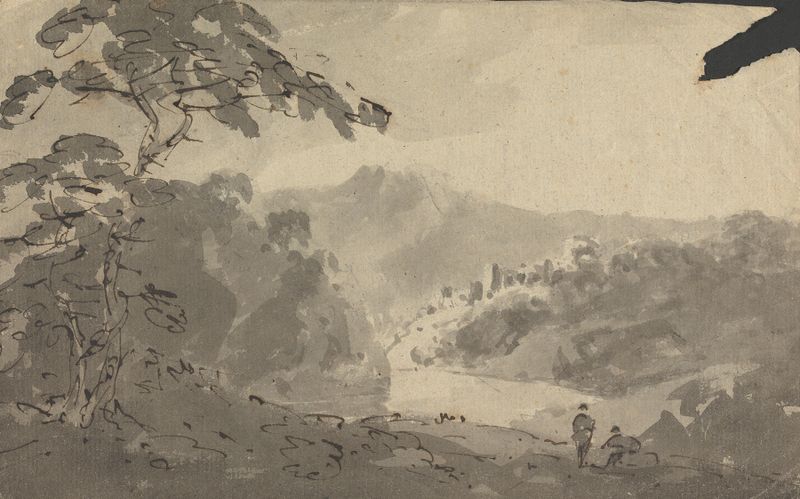
Two Men Looking Into Landscape with Castle, River and Mountain Scene
William Gilpin
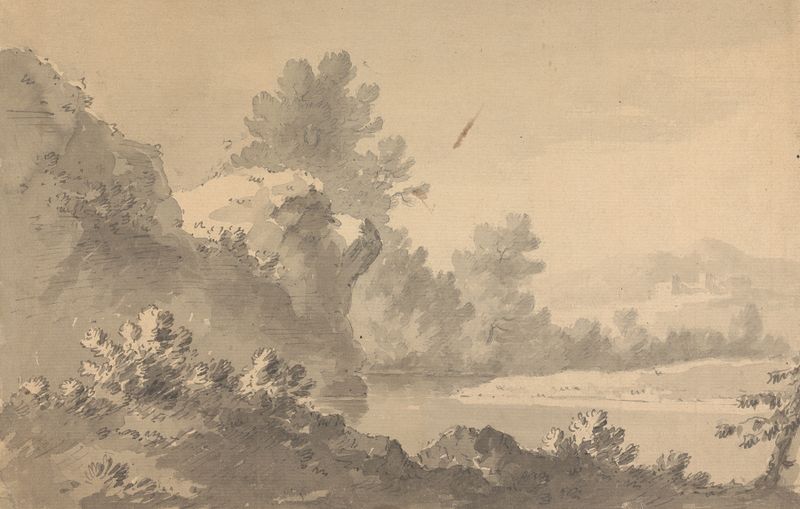
River Landscape with Castle in the Distance
William Gilpin
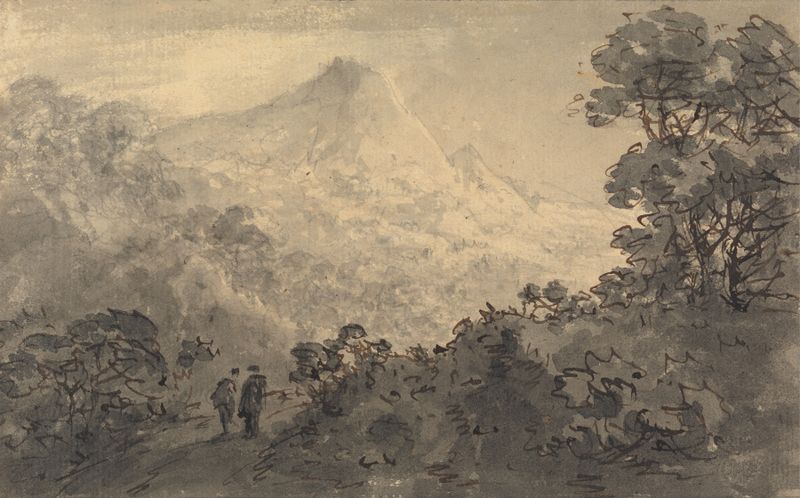
Snowdon
William Gilpin

Hilly Landscape
William Gilpin
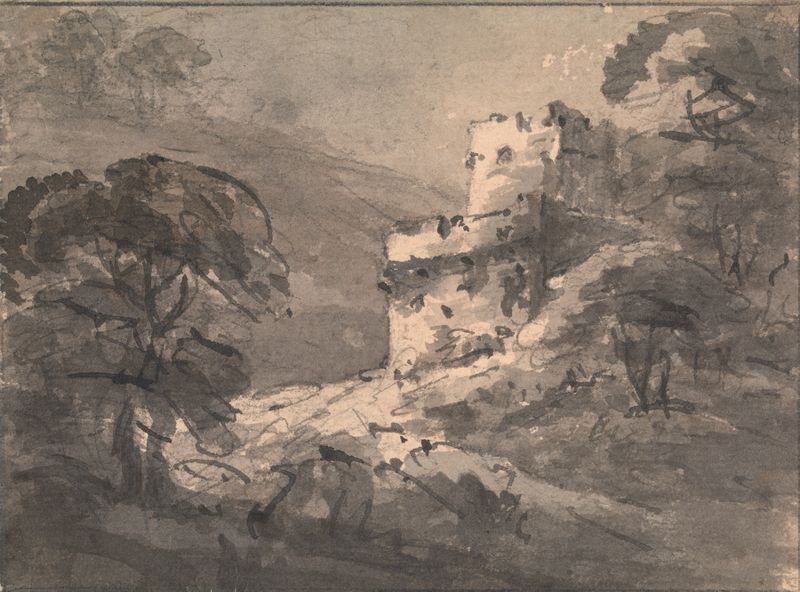
Landscape with a Ruined Castle on the Right
William Gilpin

Mountainous Landscape with Trees – High Crags to the Right
William Gilpin

View of Castle Ruin
William Gilpin
Bridge on the Malton Road from York
William Gilpin

Landscape with Two Trees and Castle
William Gilpin





