
Landscape — History & Facts
Could beauty survive in a century of chaos? In Landscape, Auguste Louis Lepère invites us to ponder that very question, intertwining the ephemeral with shadows of uncertainty. Look to the foreground, where delicate trees emerge from the canvas like whispers of resilience. Their intricate branches dance against a backdrop of muted earth tones, grounding the viewer in the serene yet tumultuous world depicted. The interplay of light and shadow reveals the subtle texture of the landscape, each stroke of the brush echoing a moment in time.
The soft grays and greens evoke a sense of tranquility, while the gentle blending of colors invites the eye to roam, tracing the contours of the hills beyond. Delving deeper, one might notice how the shadows loom, hinting at the underlying tension in the composition. They serve as a reminder of the chaos that brews just beyond the serene surface. The juxtaposition of vibrant foliage and darkened areas sets up a dialogue between hope and despair, embodying the artist’s reflection on nature’s persistence amidst the turmoil of human existence.
Here, the landscape becomes a canvas for emotion, a silent witness to the passage of time and the resilience of life. Created in 1915, this piece emerged during a period of global upheaval, as World War I reshaped the landscape of society and art alike. Lepère, a prominent figure in the art world, was grappling with the shifting tides of human experience. The impressionistic style he employed in Landscape reflects both a personal and collective longing for beauty, a testament to the ongoing struggle between creation and destruction during one of history’s darkest chapters.
More Artworks by Auguste Louis Lepère
Browse all →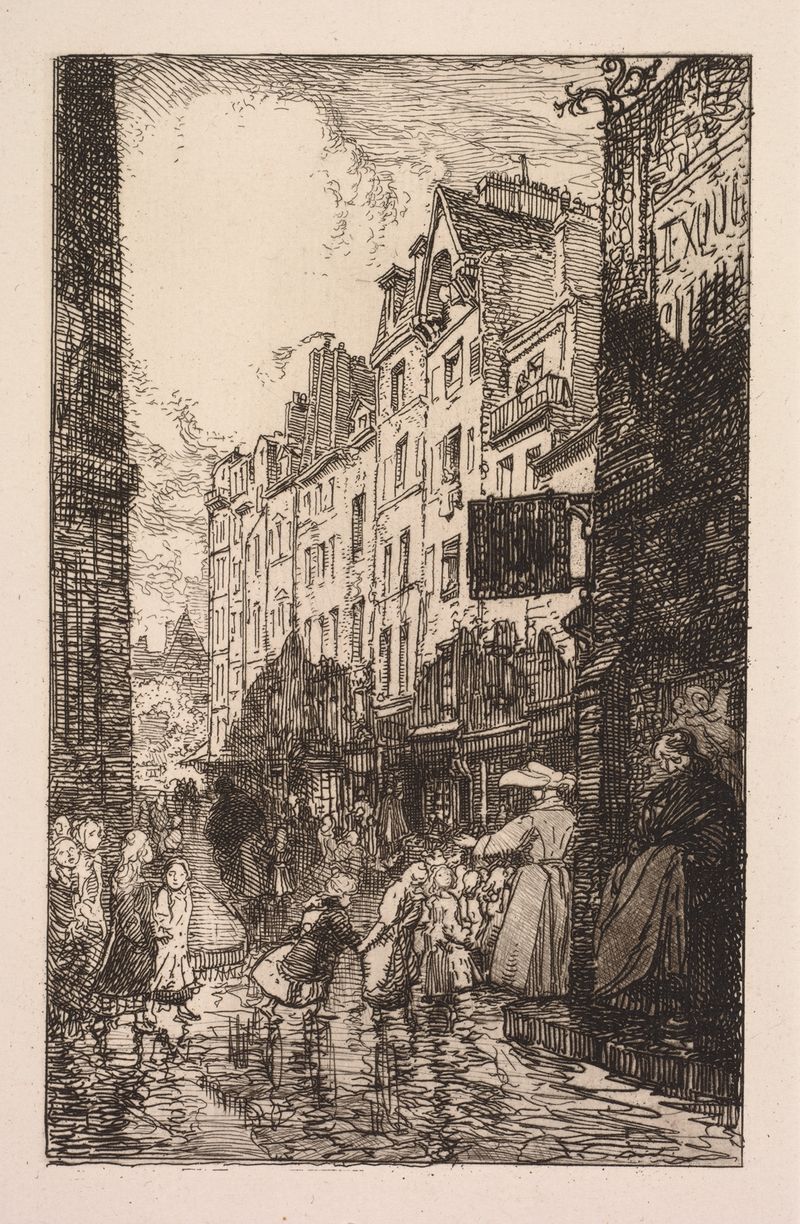
La Rue des Prêtres Saint-Séverin
Auguste Louis Lepère
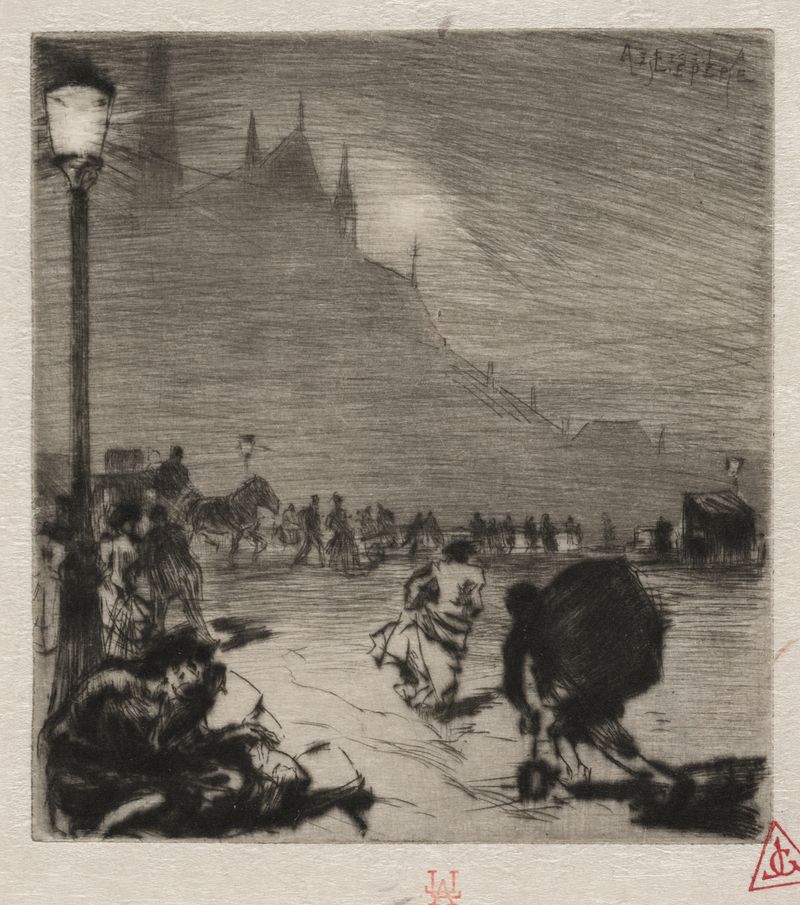
Au Coin du Pont-aux-Doubles
Auguste Louis Lepère
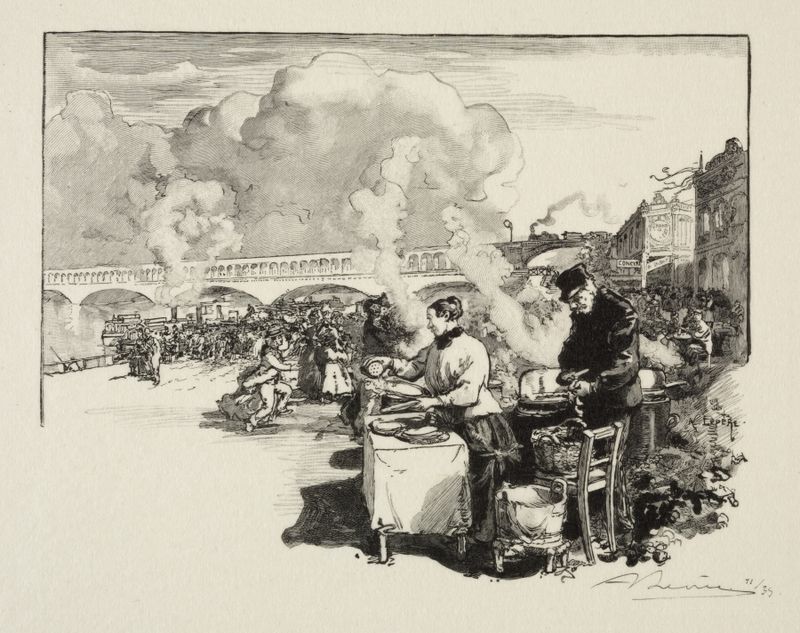
Debarcadère des bateaux-omnibus
Auguste Louis Lepère

La Seine, au quai de la Rapée
Auguste Louis Lepère
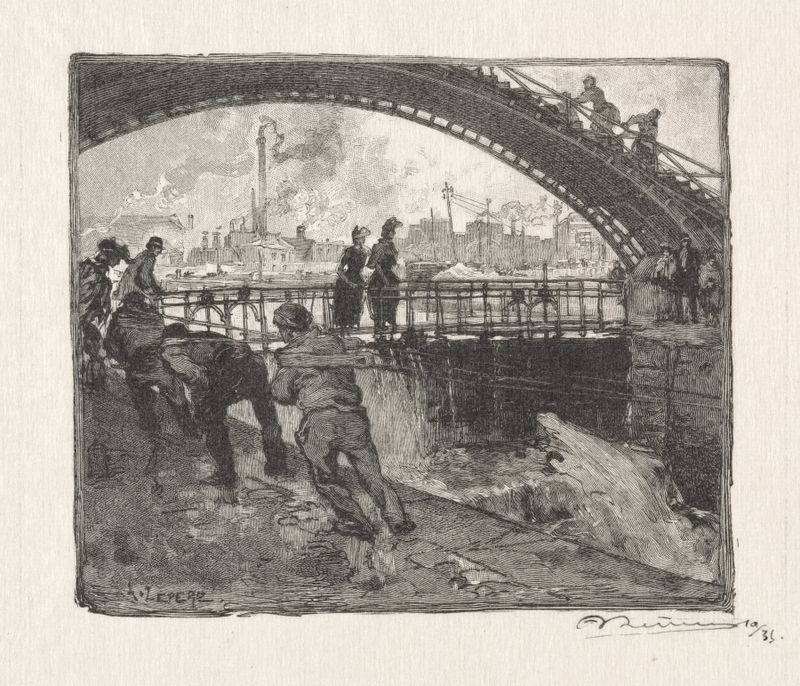
L’Ecluse du Canal St. Martin
Auguste Louis Lepère

Le Boulevard Montmartre, le Soir
Auguste Louis Lepère

Une Chasse au Mont Gérard
Auguste Louis Lepère
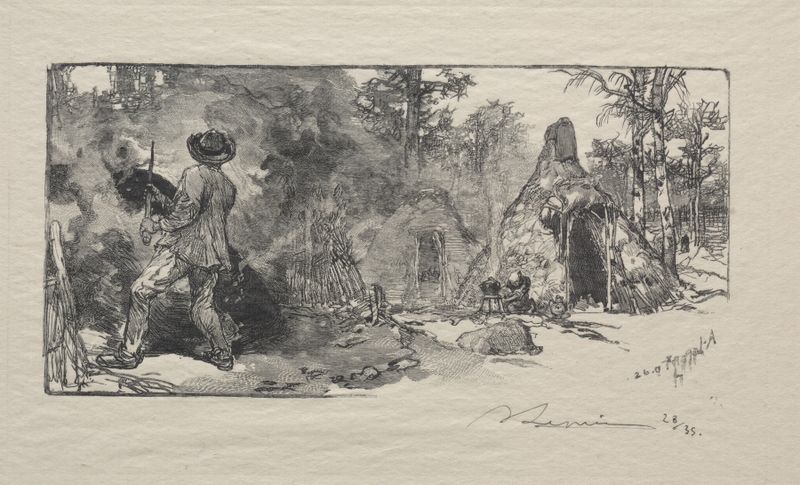
Les Charbonniere
Auguste Louis Lepère
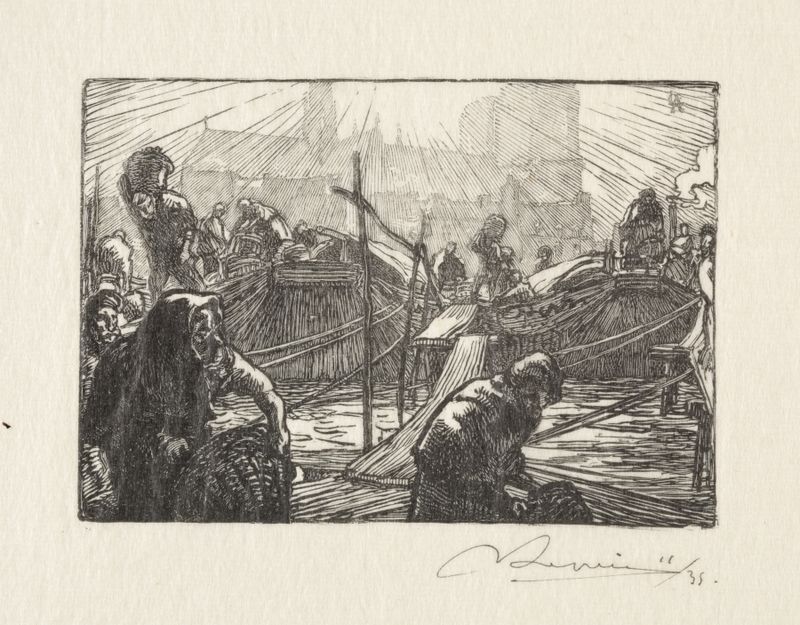
Notre Dame vue du Marché aux pommes
Auguste Louis Lepère

Le Palais des Arts Liberaux, Intèrieur
Auguste Louis Lepère





