Landscape — History & Facts
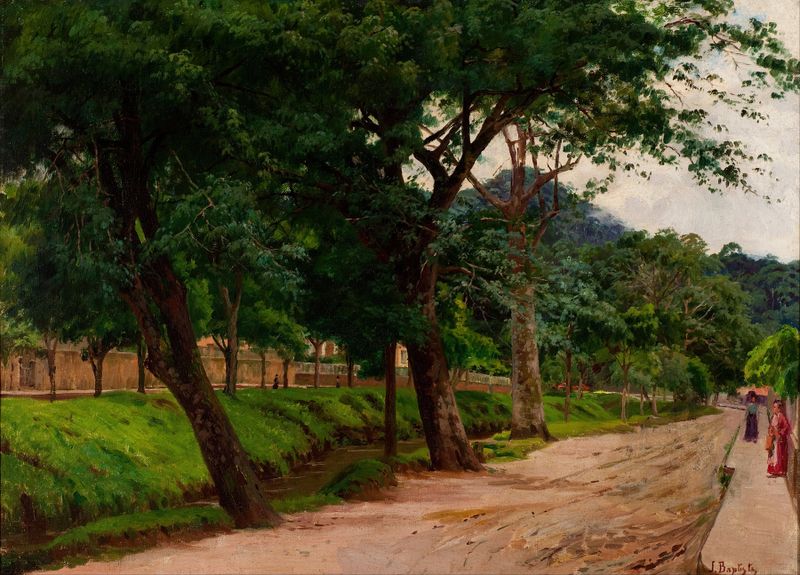
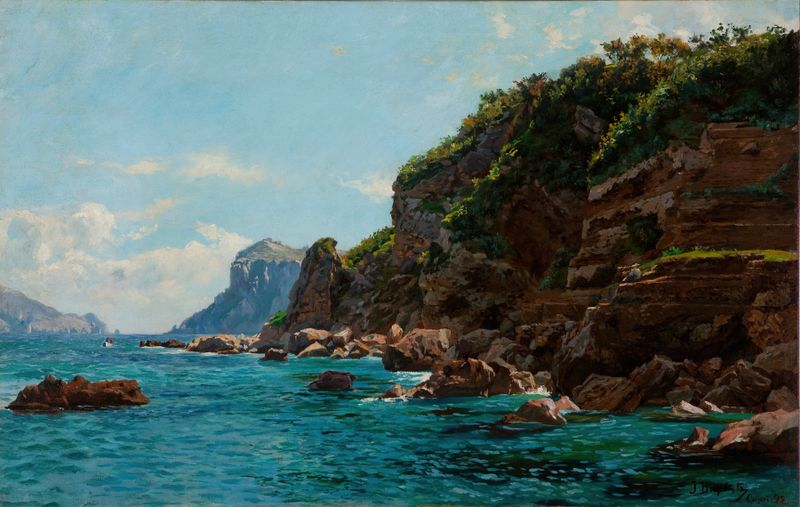
In the stillness of a landscape, reflections whisper secrets of the soul, inviting us to look closer and listen deeply. Focus on the expansive horizon, where soft hills cradle a tranquil body of water. The painter’s delicate brushwork creates a shimmering surface that captures the light's essence, transforming it into a mirror of the sky above. Notice how the subtle hues blend seamlessly, with greens and blues intertwining, evoking a sense of harmony that draws the viewer into its embrace. Beneath the serene surface lies an emotional tension — the juxtaposition of stillness and the ever-changing nature of life.
The merging of land and water serves as a reminder of our own reflections, both literal and metaphorical. This landscape becomes a canvas for introspection, where every ripple hints at deeper currents of thought and feeling, revealing hidden layers of meaning that resonate with longing and tranquility. João Baptista da Costa created this work during a time marked by artistic exploration and the embrace of natural beauty. While the precise date remains undetermined, his journey as a painter unfolded in late 19th-century Portugal, where the influence of Romanticism was palpable.
It was an era of emerging artistic identity, as he sought to capture the essence of the landscapes around him, blending reality with an idealized vision that continues to captivate today.