
Landscape — History & Facts
Who listens when art speaks of silence? In the stillness of Landscape, the quietude echoes deeply, inviting solitude and introspection. Look to the left at the sweeping expanse of muted greens and browns, where the gentle brushstrokes create a sense of movement in the foliage. The horizon line, low and expansive, draws your eye across the canvas, while soft, dappled sunlight filters through the trees, casting delicate shadows. The composition is balanced yet contemplative, as the subtle contrast between light and dark imbues a sense of depth and tranquility. Beneath the serene surface lies a poignant tension between beauty and isolation.
The solitary tree, standing tall against the vast landscape, symbolizes resilience amidst loneliness. The interplay of light and shadow speaks of fleeting moments, hinting at the transient nature of existence. This sense of solitude is not despairing but rather reflective, offering a visual meditation on the human experience. In the late 19th century, during the years 1887 to 1893, the artist captured this scene in rural Connecticut, a period marked by a shift towards Impressionism in American art.
Weir was deeply influenced by his surroundings, seeking to convey the essence of nature while exploring emotional depth through paint. As he painted Landscape, he was part of a broader movement that emphasized the importance of personal expression and the relationship between humanity and the natural world.
More Artworks by Julian Alden Weir
Browse all →
My Back Yard no. 1
Julian Alden Weir
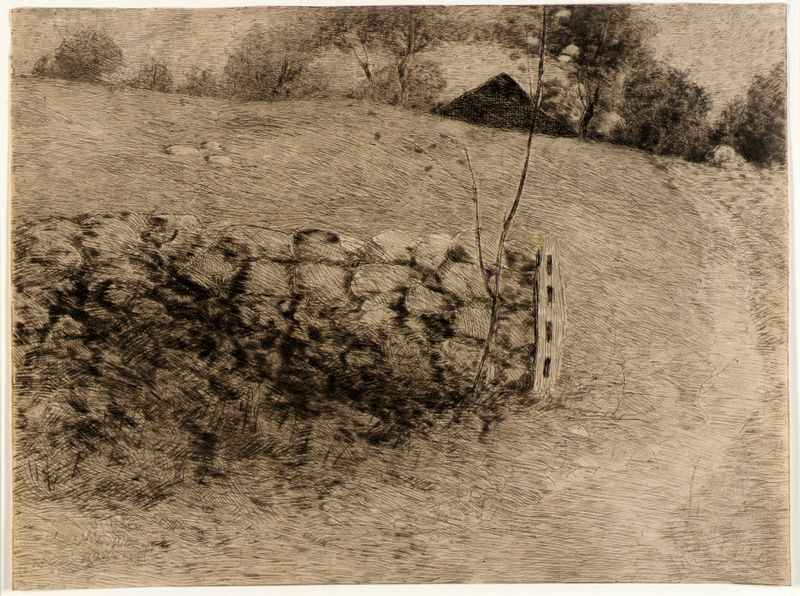
The Barn Lot
Julian Alden Weir

The Webb Farm
Julian Alden Weir
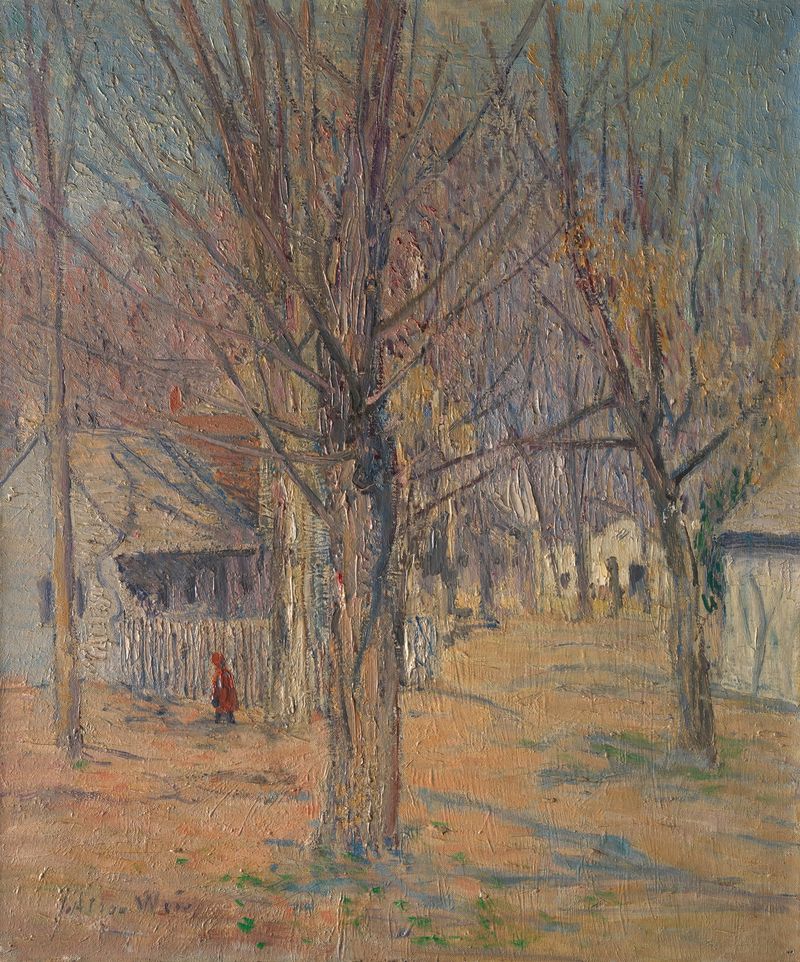
Connecticut Village (Going to School)
Julian Alden Weir

The Stone Bridge
Julian Alden Weir

The Webb Farm 2
Julian Alden Weir
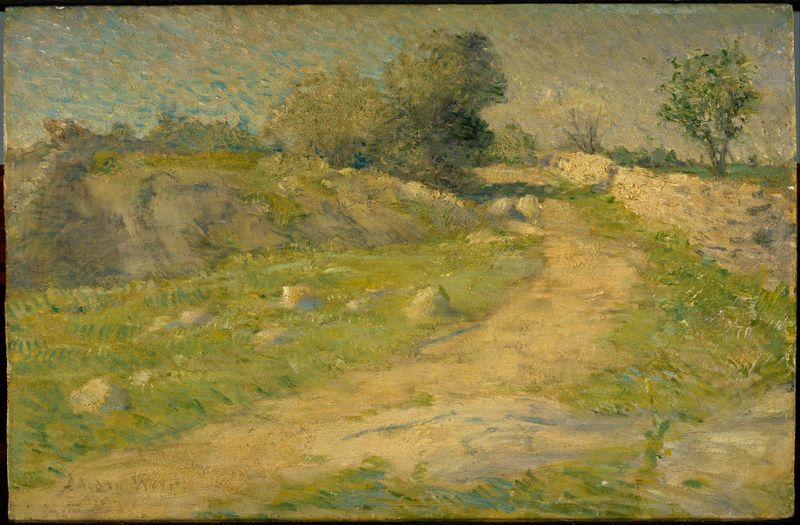
The Lane
Julian Alden Weir
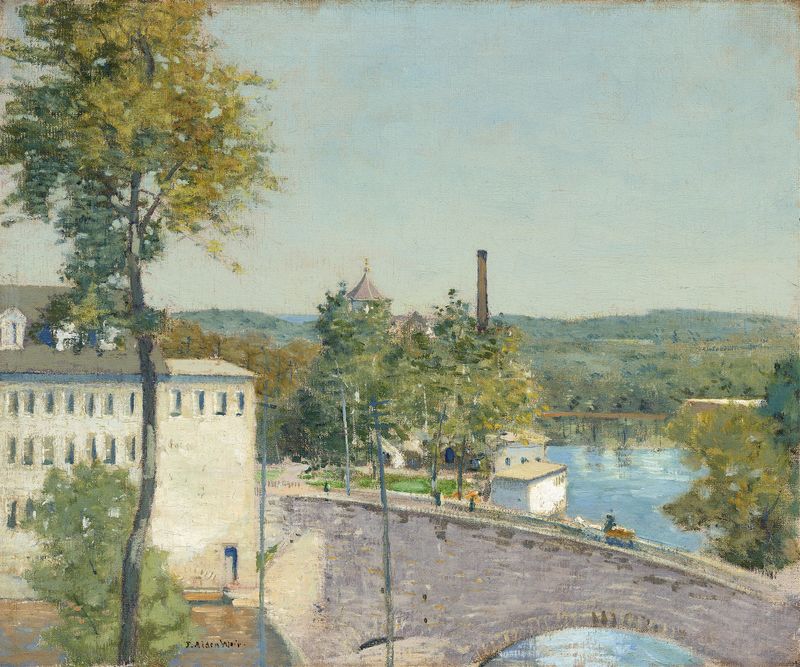
U.S. Thread Company Mills,Willimantic,Connecticut
Julian Alden Weir

Neighboring Farm
Julian Alden Weir

Coon Alley
Julian Alden Weir





