Landscape — History & Facts
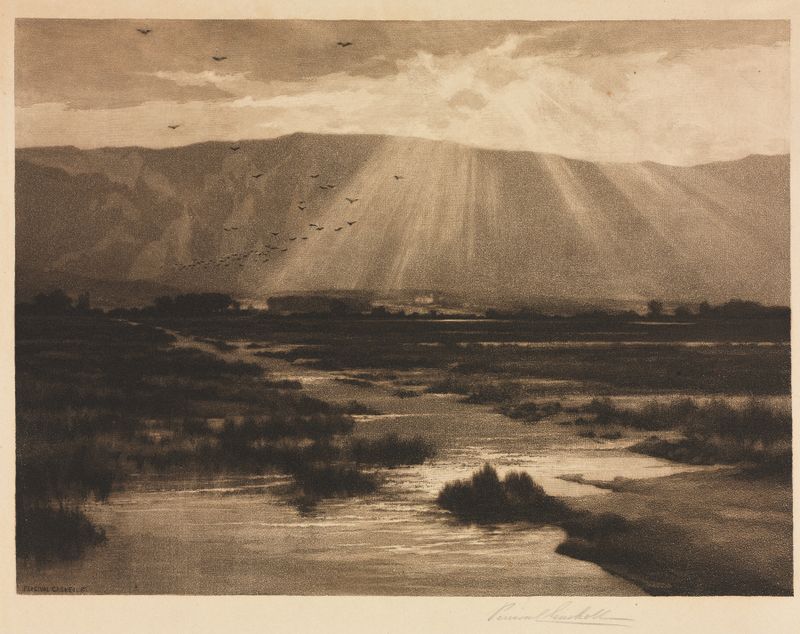
In the realm of art, time materializes not as a linear measure but as an intricate dance of color and form. Look to the lower right of the canvas, where lush greens and deep browns weave together, hinting at a rich, earthy landscape. The brushstrokes are fluid yet deliberate, inviting the viewer’s eye to travel upward through layers of vibrant hues that suggest the fleeting nature of daylight. Notice how the sky, painted in soft pastels, gradually transitions from brilliant oranges to serene blues, encapsulating a single moment that feels both timeless and transient.
The juxtaposition of earth and sky creates a sense of balance, mirroring the harmony found in nature amidst the chaos of existence. Amidst the vibrant colors lies a deeper contrast between stillness and movement. The painting’s foreground, brimming with texture and detail, offers a sense of grounding, while the ethereal background suggests the inevitable passage of time. Shadows play softly across the landscape, imparting a fleeting quality that speaks to the impermanence of beauty.
This juxtaposition reflects the artist’s understanding of nature’s relentless cycle, capturing both the present moment and the whisper of what has been. In this undefined period of his career, Gaskell immersed himself in the landscapes around him, likely influenced by the burgeoning Romantic movement. Working at a time when artists sought to convey personal expression through nature, he painted this piece, establishing his unique voice in an era that embraced emotion and the sublime. This was a time marked by exploration and the quest for meaning in an ever-changing world.