Landscape by the Danube — History & Facts
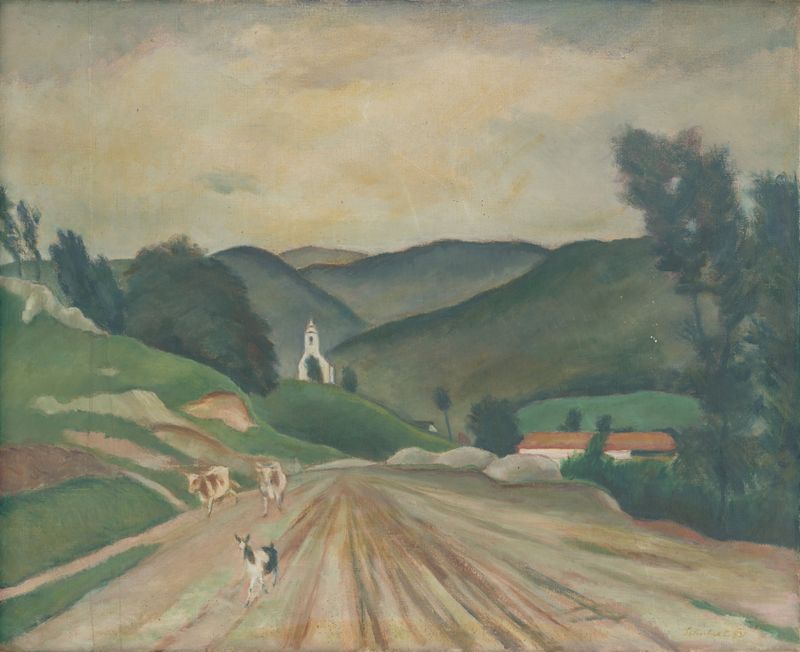
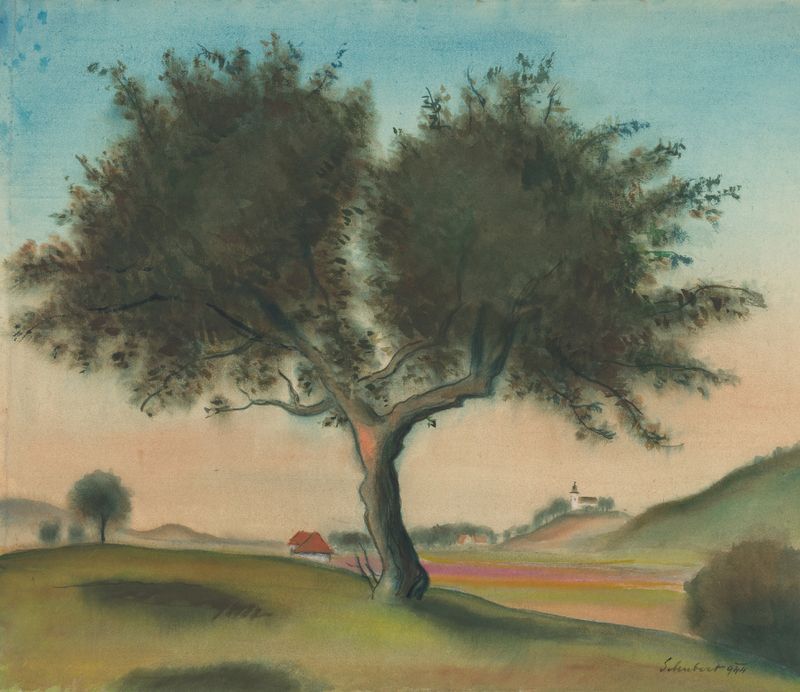
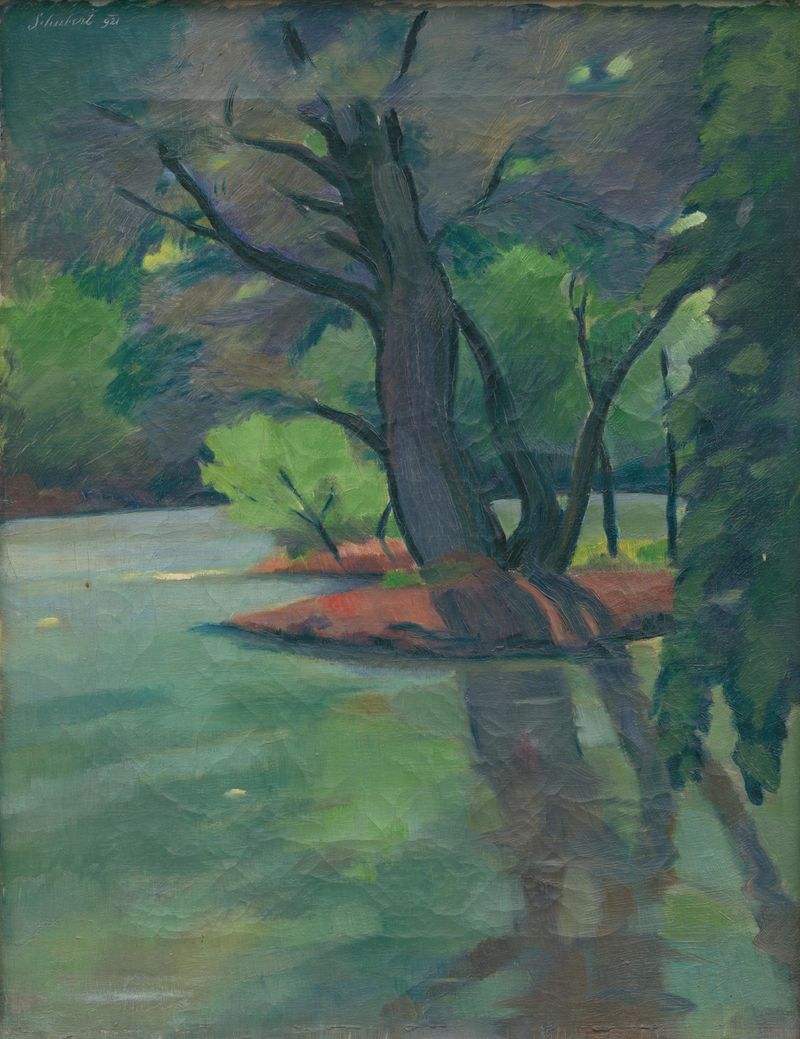
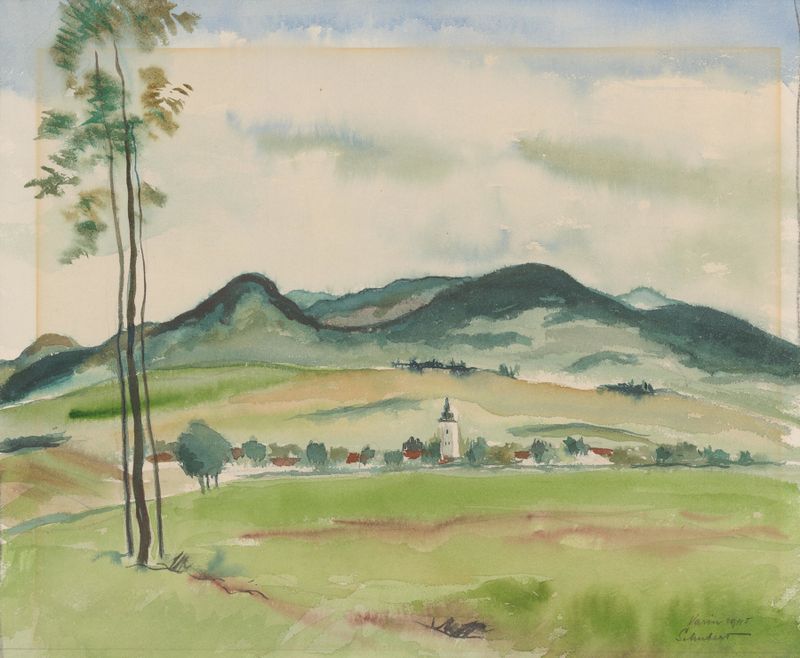
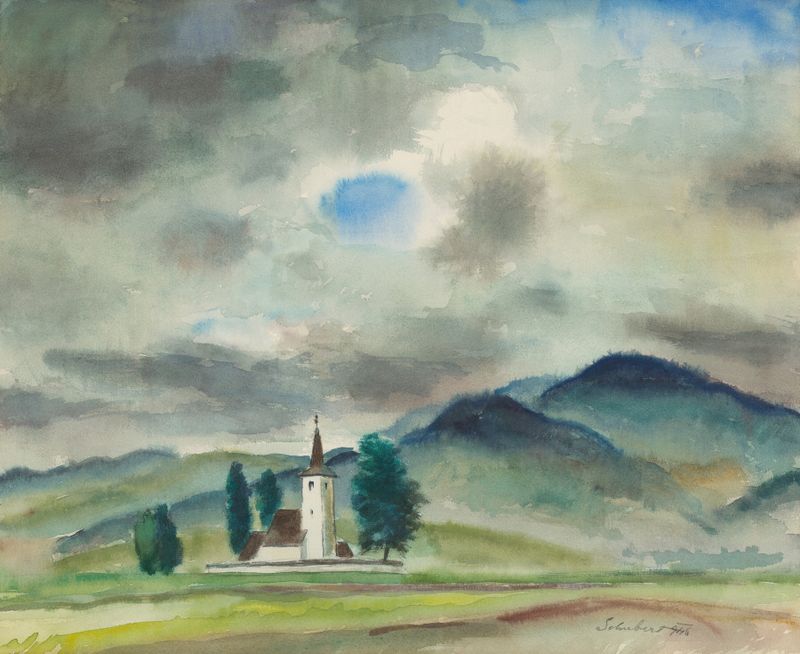
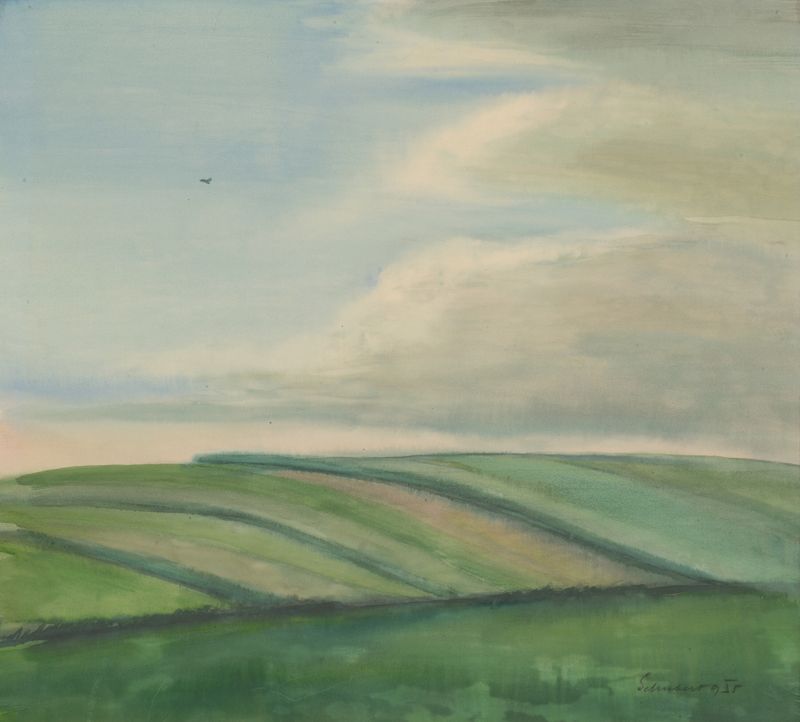
Is this a mirror — or a memory? The vast tranquility of Landscape by the Danube evokes a profound sense of emptiness, inviting viewers to reflect on their own experiences of solitude and stillness. Focus on the serene river that bisects the canvas, its placid surface mirroring the muted hues of a twilight sky. Notice how the gentle gradient of blues and purples envelops the horizon, instilling a feeling of calm yet distant yearning. To the left, a solitary tree stands, its branches reaching skyward, almost pleading for connection in the vastness of nature.
The delicate brushwork enhances the ethereal quality of the scene, making it feel both intimate and expansive. The landscape reveals a delicate tension between isolation and beauty, as the stillness of the water contrasts with the tree's yearning posture. This juxtaposition speaks of the loneliness that often accompanies moments of introspection, suggesting that emptiness can be both a refuge and a burden. The fading light casts long shadows, hinting at the encroaching night and the uncertainties that lie in the dark.
Each element contributes to a collective sense of longing, resonating deeply with anyone who has faced the quiet ache of solitude. Július Schubert painted Landscape by the Danube during the late 1930s, a time when he was finding his artistic voice amidst the complexities of the interwar period in Europe. Living in Prague, he witnessed a shifting art scene, embracing both traditional and modernist influences. This work reflects his deep connection to the natural world, as well as the emotional landscape of a time marked by uncertainty and change.