Landscape with a Tree (From Lamač) — History & Facts
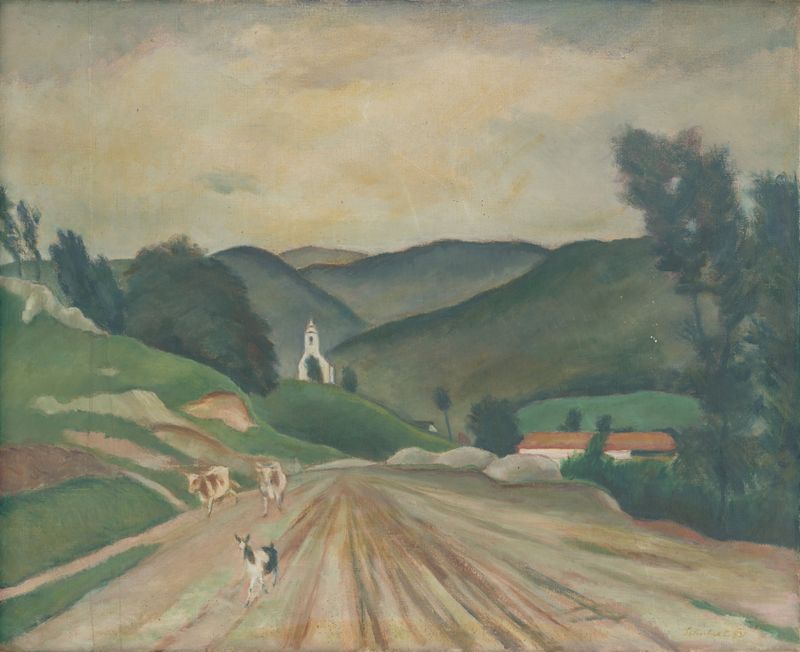
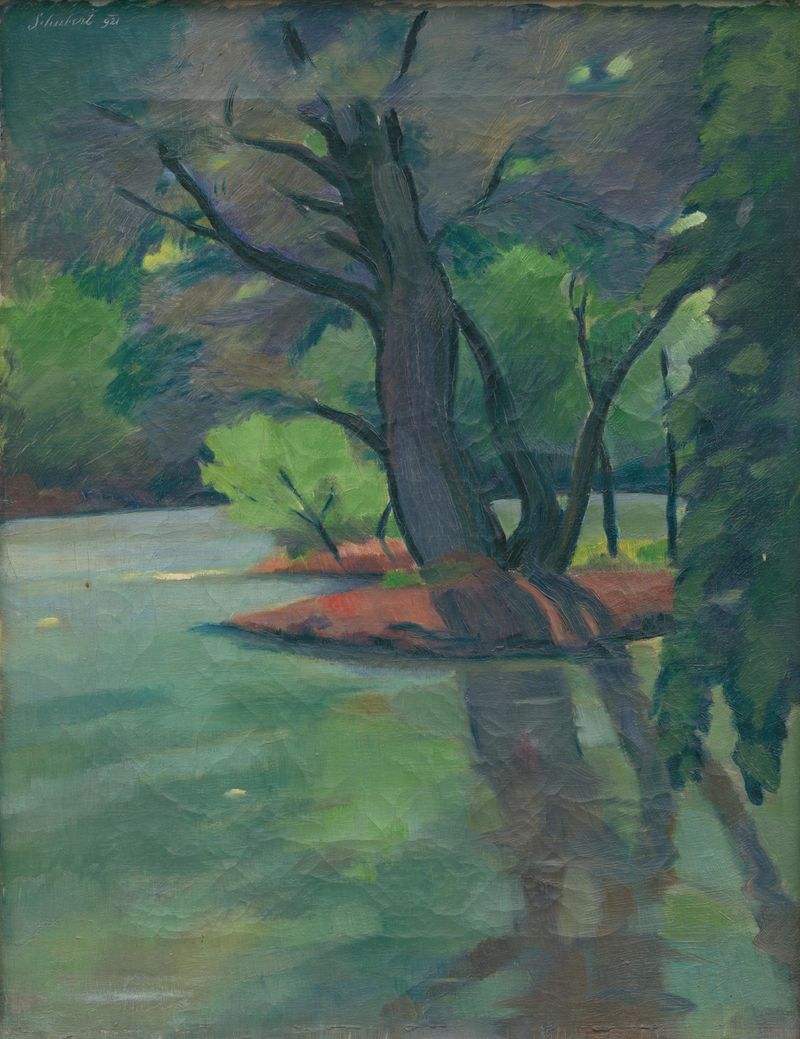
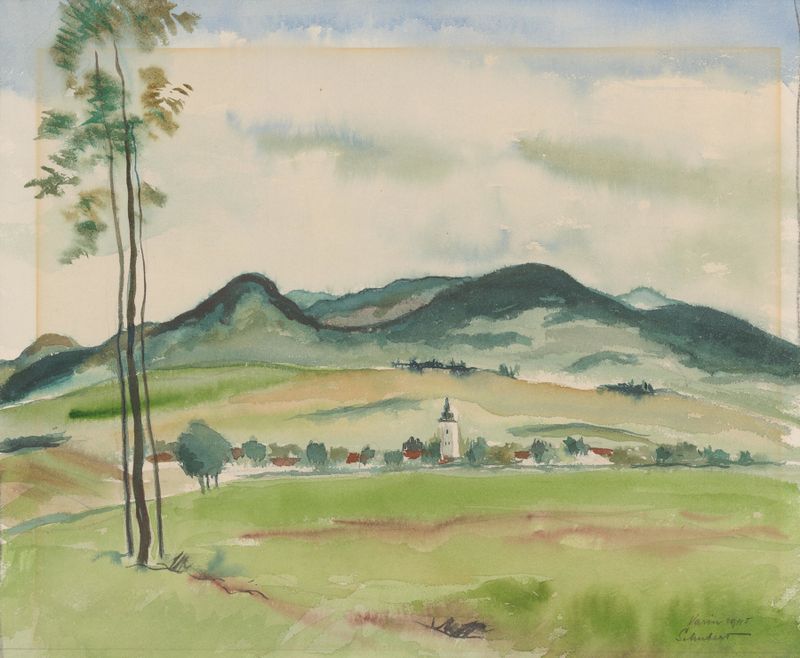
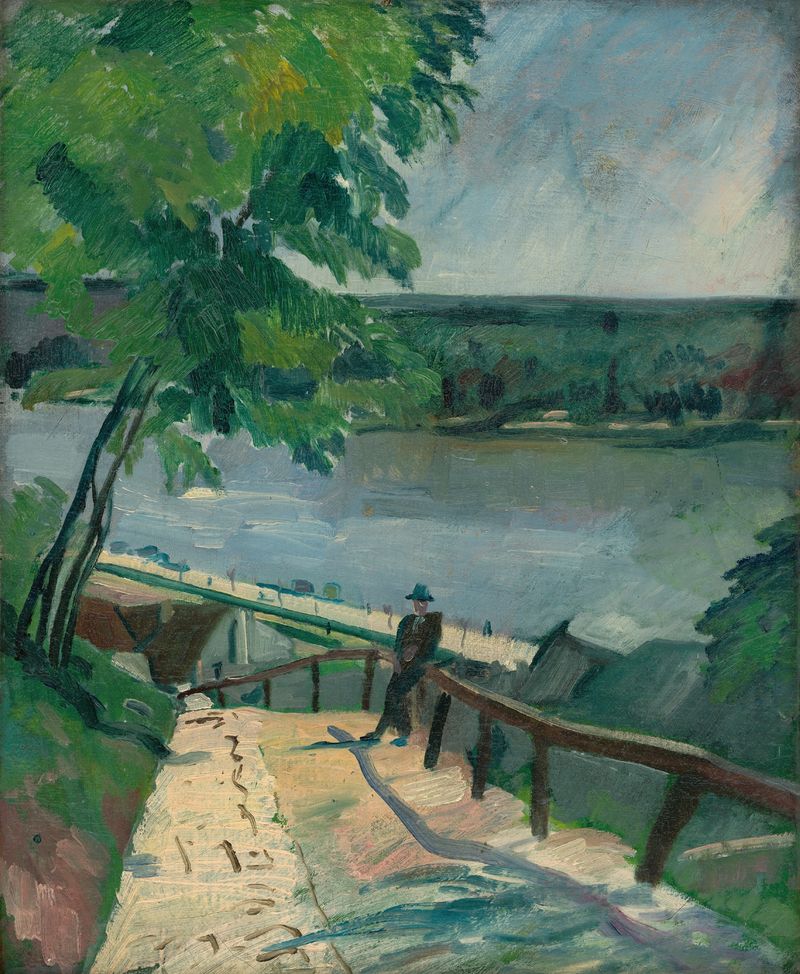
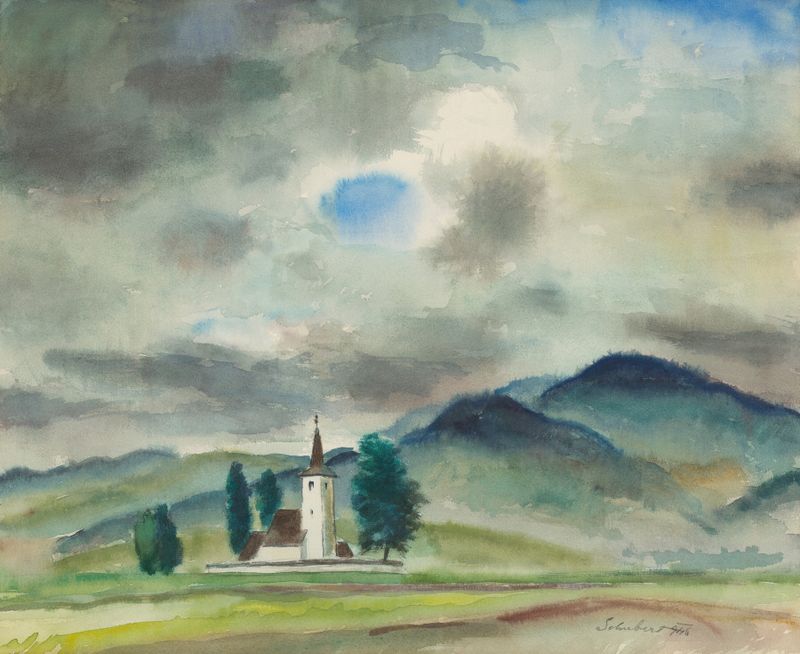
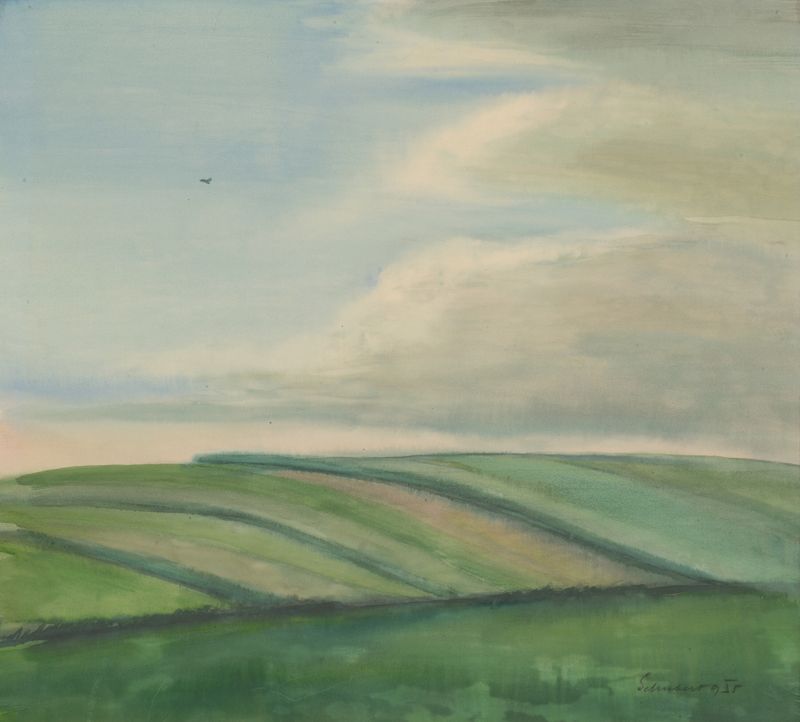
Did the painter know this moment would outlive them? A solitary tree stands against a backdrop of muted greens and browns, a testament to resilience amid the passage of time. An air of melancholy envelops the scene, suggesting an echo of longing and remembrance, as if the landscape itself mourns what has been lost. Look to the left where the tree, gnarled yet sturdy, commands attention. Its branches stretch outward, juxtaposed against the soft, rolling hills that gently cradle the horizon.
Notice how the brushstrokes create a sense of movement, each stroke a whisper of the wind rustling through leaves, while the interplay of light and shadow casts a profound depth across the canvas. The earthy palette conveys a raw authenticity, grounding the viewer in the emotional weight of the scene. Delving deeper, the tree embodies not just nature, but a silent witness to the passage of grief and time. The starkness of its form against the landscape invites contemplation on themes of solitude and survival.
Perhaps it symbolizes memory itself, rooted in the past yet yearning towards the unknown future, bridging the gap between what was cherished and the inevitable changes of existence. This quiet tension resonates throughout the piece, urging reflection on personal loss and the enduring nature of hope. In 1944, Július Schubert created this work during a turbulent period marked by World War II. Living in Bratislava, he faced the challenges of an art world increasingly influenced by political turmoil and existential despair.
This landscape reflects not only a personal connection to his surroundings but also the collective grief of a society in flux, capturing a moment that transcends its time—a silent rallying cry against the impermanence of life.