Plavecké Podhradie — History & Facts
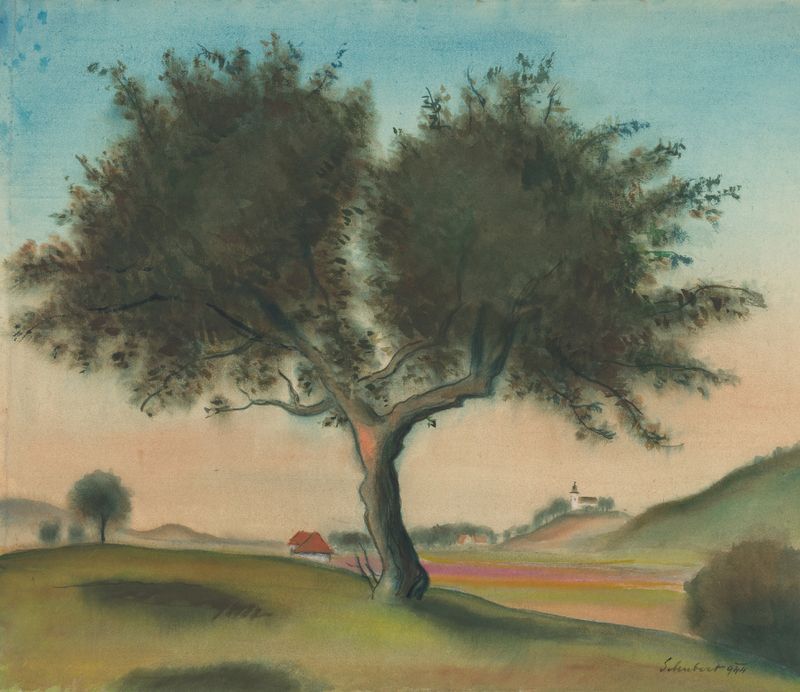
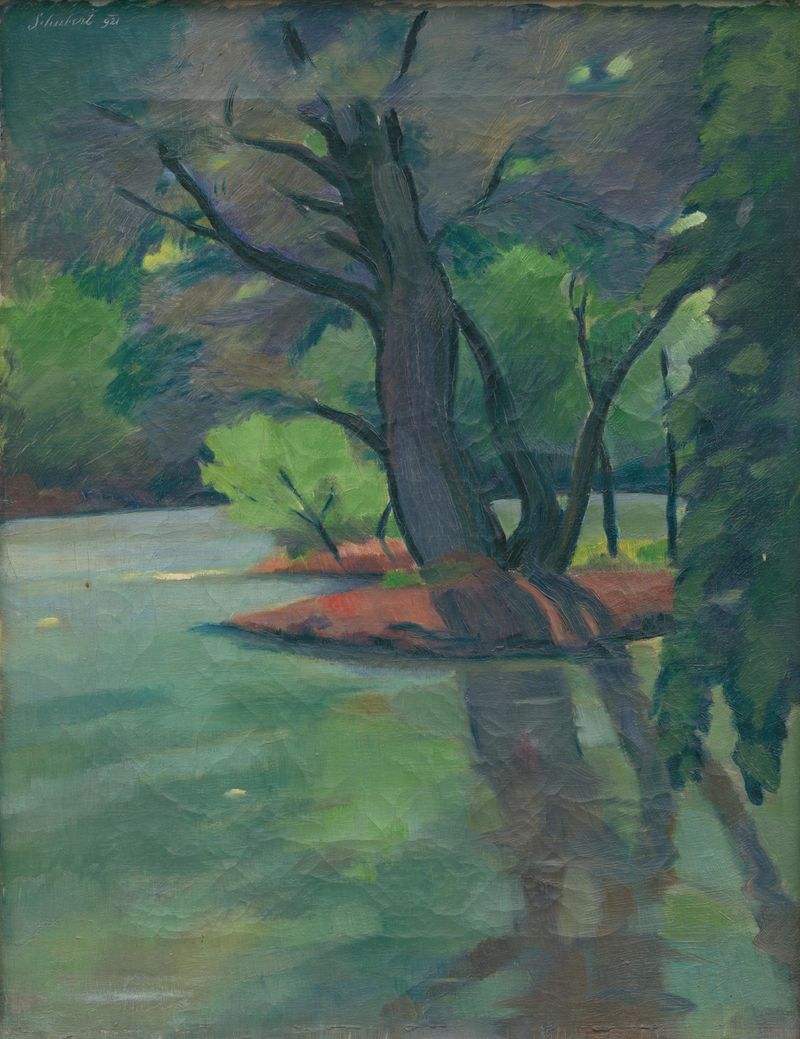
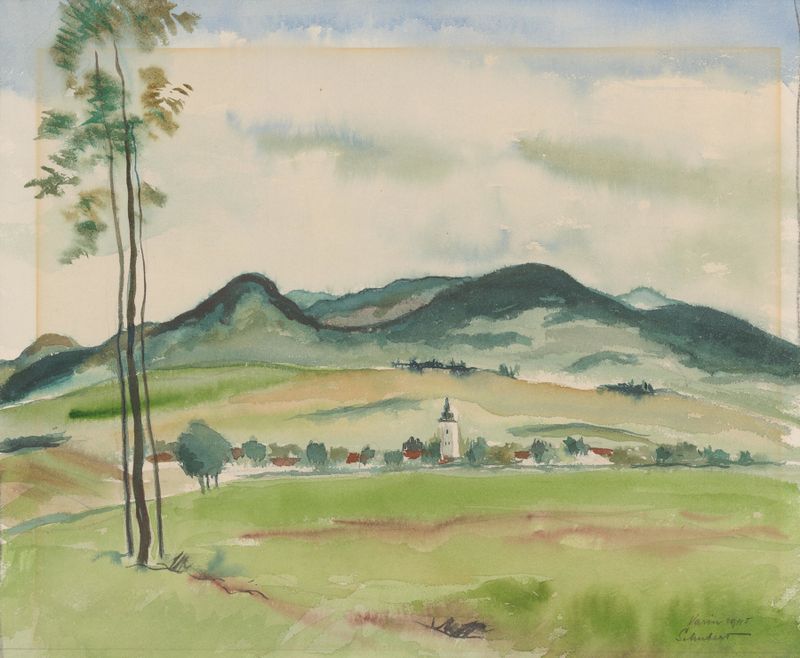
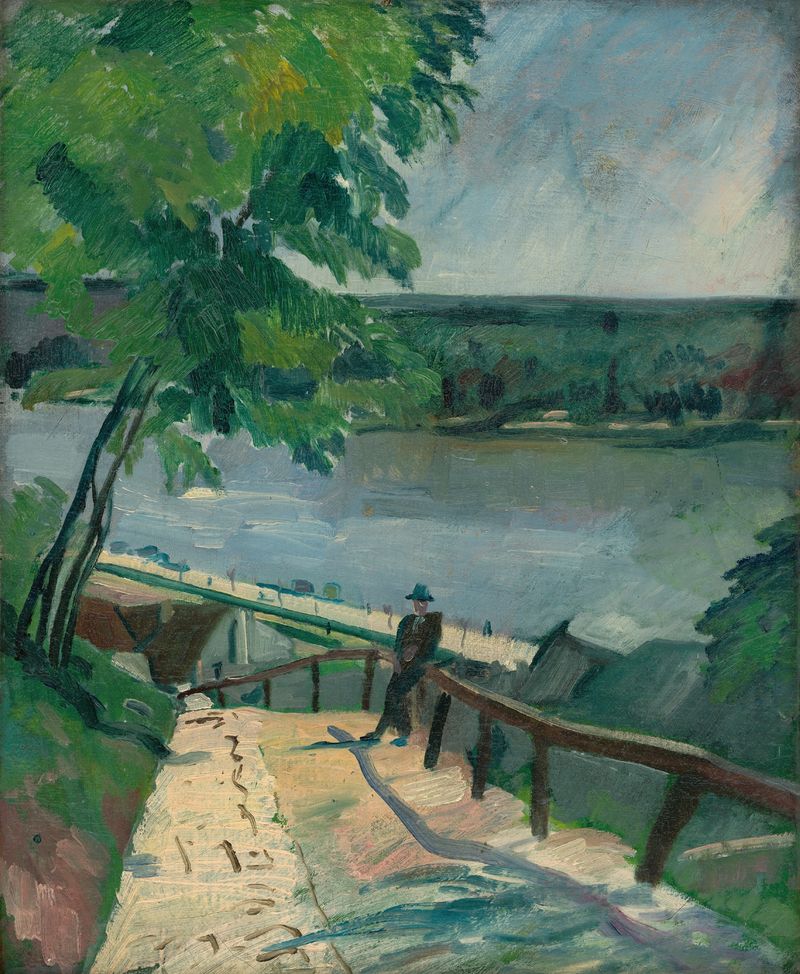
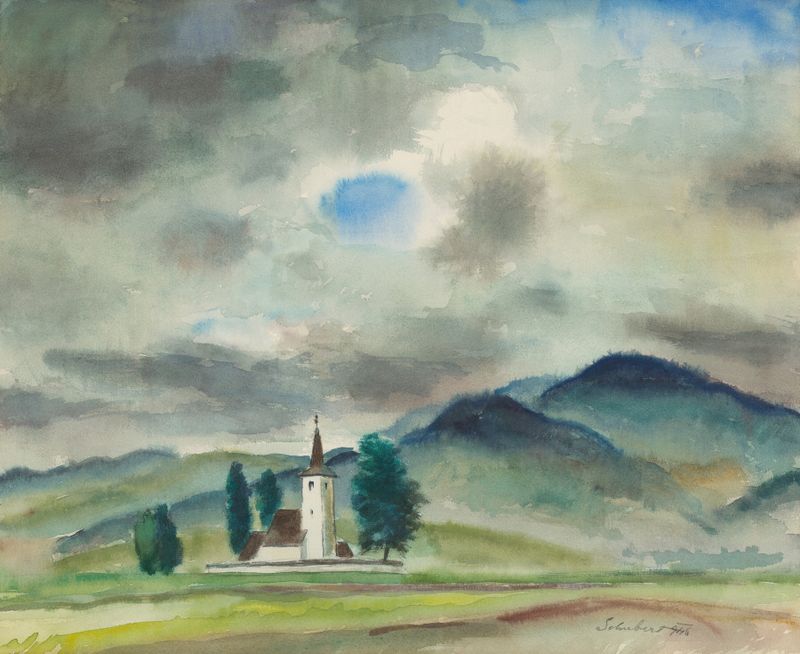
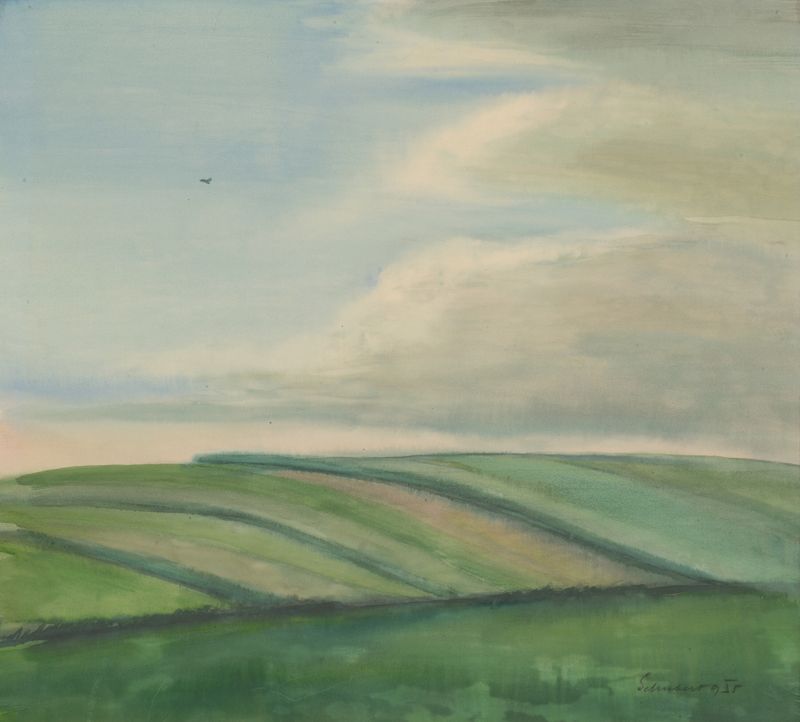
Did the painter know this moment would outlive them? In Plavecké Podhradie, a tranquil village scene becomes a meditation on permanence, capturing the delicate balance between nature and human existence. Focus on the serene river that glides across the foreground, reflecting the gentle hues of the day’s fading light. Notice how the soft blues and warm earth tones meld harmoniously, inviting you to linger on the shimmering surface. The composition is anchored by the distant hills, their soft undulations providing a backdrop for the quaint homes nestled below, where the smoke from chimneys wisp upward, mingling with the clouds.
Each brushstroke reveals Schubert’s deft hand, meticulously crafting the interplay of light and shadow to breathe life into the landscape. The painting encompasses contrasts that speak to deeper themes: the stillness of water against the quiet bustle of village life, the blend of natural and manmade elements symbolizing coexistence. Hints of vibrant greenery juxtapose the muted buildings, echoing the resilience of nature amid human encroachment. Here, the reflections in the water not only mirror the scene but also suggest a duality of existence—what is seen on the surface versus the currents that run beneath, perhaps a metaphor for the unspoken stories of the villagers. In 1931, Schubert painted this piece while living in Czechoslovakia, a period marked by political instability and cultural shifts.
As the art world began to embrace modernist influences, he remained deeply rooted in the romantic depiction of landscapes. This work stands as a testament to his love for the land, capturing a moment that resonates through time even as the world around it continued to change.