Landscape, Cassis — History & Facts
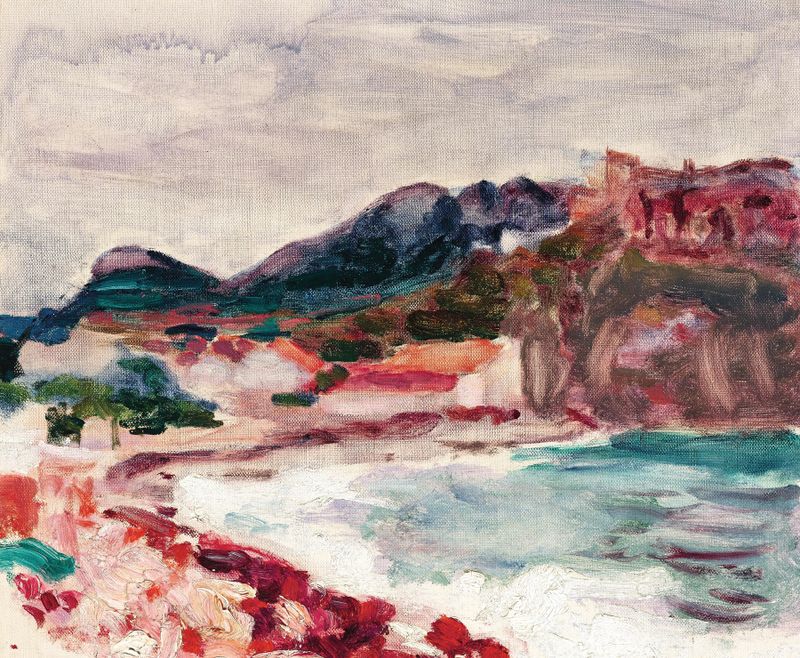
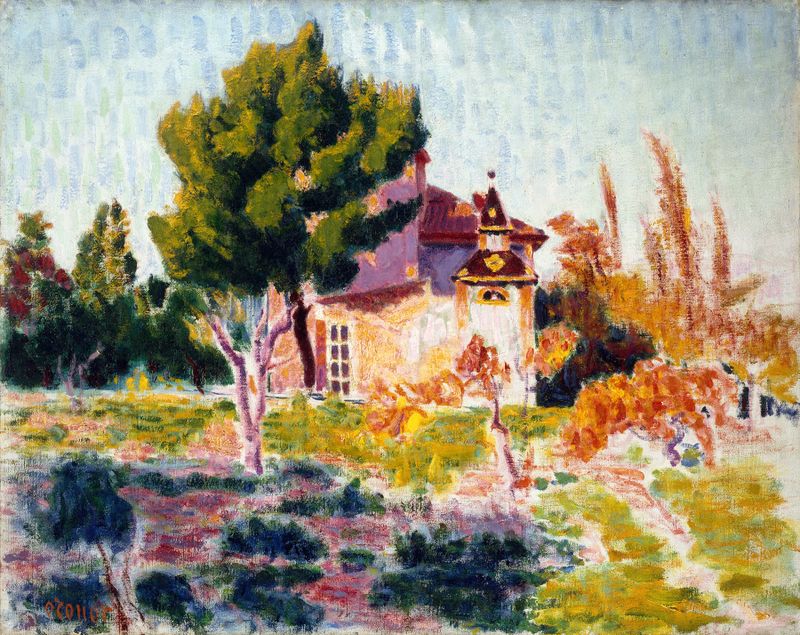
When did color learn to lie? In the stillness of Landscape, Cassis, vibrant hues wrestle with an unsettling emptiness, beckoning viewers to question the very essence of what they see. Look to the left at the bold strokes of emerald green, a verdant contrast against the muted ochres of the sun-baked earth. The brushwork here is expressive, with each swirl hinting at the landscape’s undulating hills, while patches of cerulean sky peek out timidly through the clouds above. The composition draws the eye toward the horizon, inviting contemplation on the delicate balance between vibrancy and void that O’Conor has masterfully captured. As you linger over the canvas, notice the juxtaposition of color that speaks to the tension between life and desolation.
The lively greens suggest vitality, yet the barren stretches beneath them evoke a profound sense of isolation. This duality taps into an existential reflection on nature and the human condition, creating a dialogue between what is seen and what is felt—a longing for connection amidst vast, lonely landscapes. In 1913, while residing in France, Roderic O'Conor was immersed in the post-Impressionist movement, exploring the interplay of color and form. This period of experimentation coincided with personal challenges, as he sought to refine his artistic voice.
His work reflects broader trends in the art world, where artists began to move away from strict representation, embracing abstraction and emotional depth, a shift that would ultimately influence modern artistic expressions.