Red Rocks And Sea — History & Facts
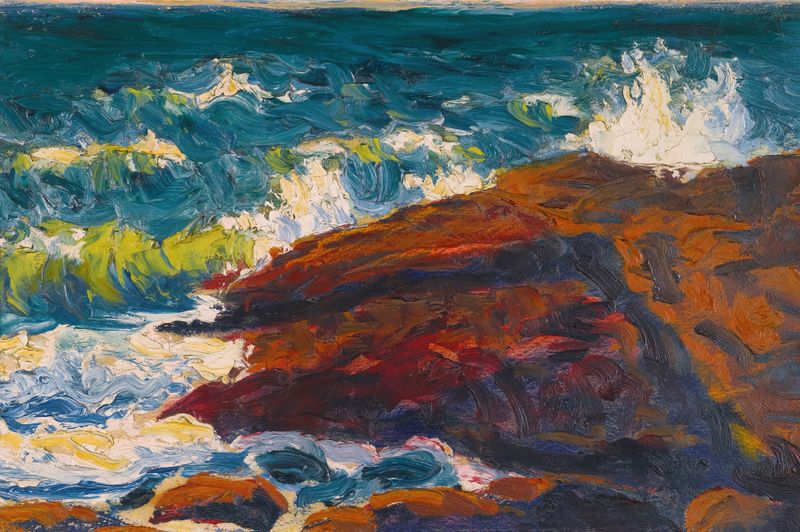
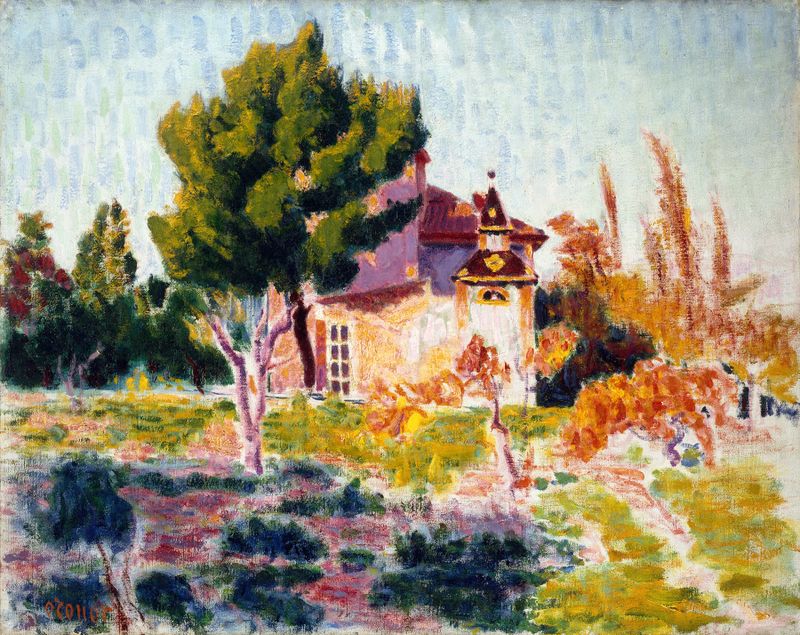
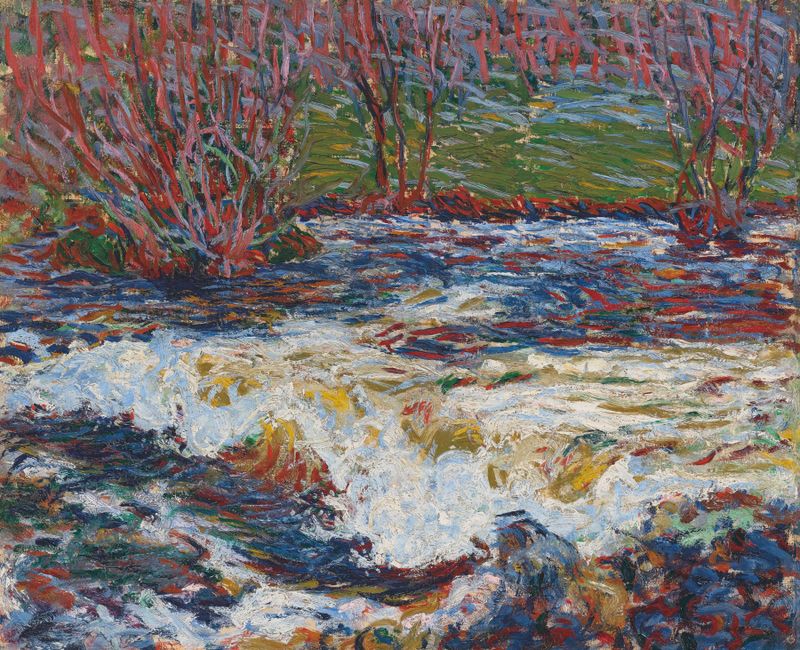
In the quietude of existence, we find ourselves confronted by the stillness of nature. This is a reminder that silence can resonate as powerfully as sound, holding secrets in its embrace. Look to the vivid crimson hues cascading down the rocky outcrops in Red Rocks and Sea. The artist employs a dynamic palette that pulsates with energy, inviting you to explore the textured surfaces that mimic the rawness of nature.
Notice how the waves crash softly against the shore, the gentle interplay of blue and white contrasting with the intense reds, creating a dialogue between land and sea. The composition leads your eye across the canvas, where light dances delicately over the rocks, suggesting both movement and stillness. Dig deeper into the layers of emotion present in the work — the juxtaposition of the vibrant terrain against the tranquil sea calls attention to the coexistence of chaos and calm. The rocks stand as ancient sentinels, embodying resilience, while the ocean reflects a fleeting moment, an echo of time passing.
This tension encapsulates the very essence of nature's duality, prompting reflection on your own journey through silence and sound. In 1898, Roderic O'Conor was living in France, a period marked by an exploration of post-impressionism and a fascination with the interplay of color and form. The artist’s time spent in the vibrant artistic circles of Paris allowed him to engage with the works of his contemporaries while nurturing a distinct voice that integrated the emotive power of landscape. This painting captures a moment of introspection, a quiet communion with the earth that speaks volumes through its serene composition.