
Landscape-Composition: In the Catskills — History & Facts
A shaft of golden light pours across the valley, drawing your gaze from the shadowed path in the foreground to the distant, sunlit slopes of the Catskills. The artist, Asher Brown Durand, leads the eye not with drama but with quiet invitation: a winding trail, a pair of travelers—one on horseback, one on foot—and a dog, all dwarfed by the vastness of trees and stone. Notice how the broken trunk at center left stands as a silent witness, its gnarled branches echoing the wildness of the land.
The light is not merely illumination; it is a guide, tracing the contours of the hills and lending a sense of promise to the journey ahead. The palette, rich in greens and ochres, gives the scene a hushed clarity, as if the world is holding its breath. Painted in 1848, Landscape-Composition: In the Catskills belongs to a moment when American artists were shaping a new vision of their country’s wilderness. Works like this, in oil on canvas, were often commissioned or collected by patrons eager to celebrate the nation’s natural grandeur and its possibilities.
The Hudson River School, with which Durand is closely associated, championed such landscapes as both art and argument: these were not just views, but statements about identity, destiny, and the relationship between people and place. Now in the San Diego Museum of Art, this painting invites us to step into that nineteenth-century world, to follow the travelers’ path, and to consider what lies beyond the next bend in the road.
More Artworks by Asher Brown Durand

A Sycamore Tree, Plaaterkill Clove (The Sycamore, Kaaterskill Clove)
Asher Brown Durand
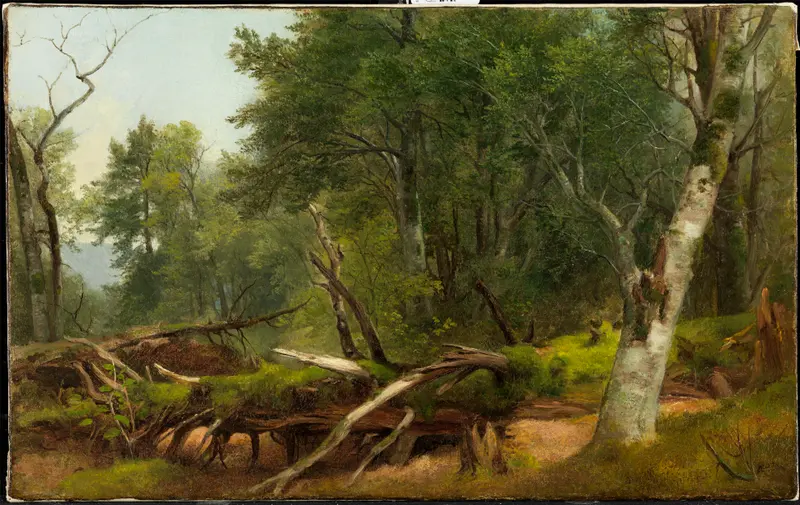
Forest Scene in the Catskills
Asher Brown Durand
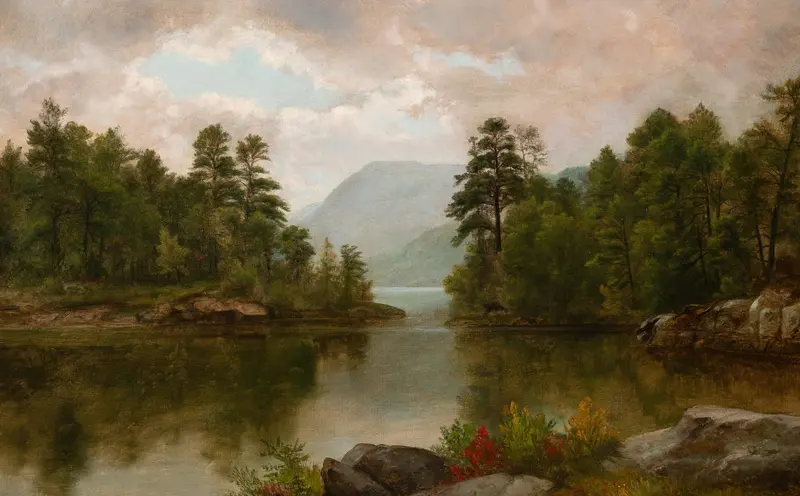
The Narrows, Lake George
Asher Brown Durand
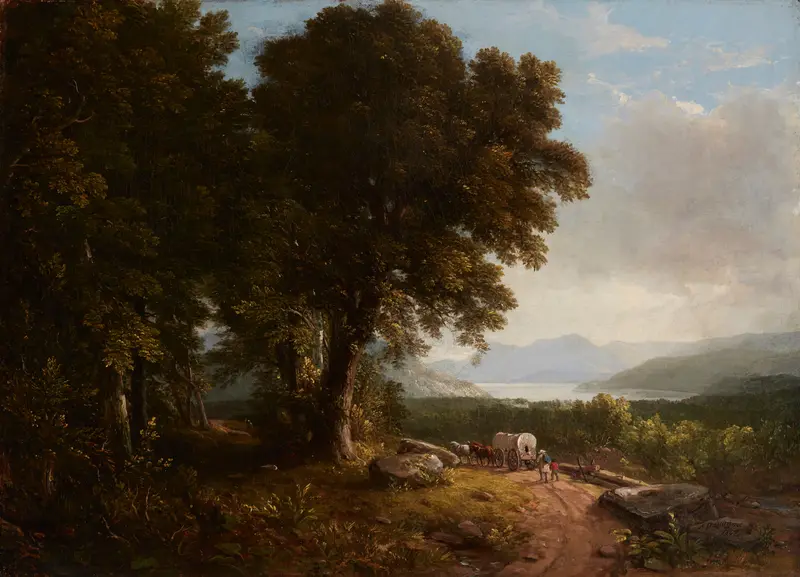
Landscape with Covered Wagon
Asher Brown Durand
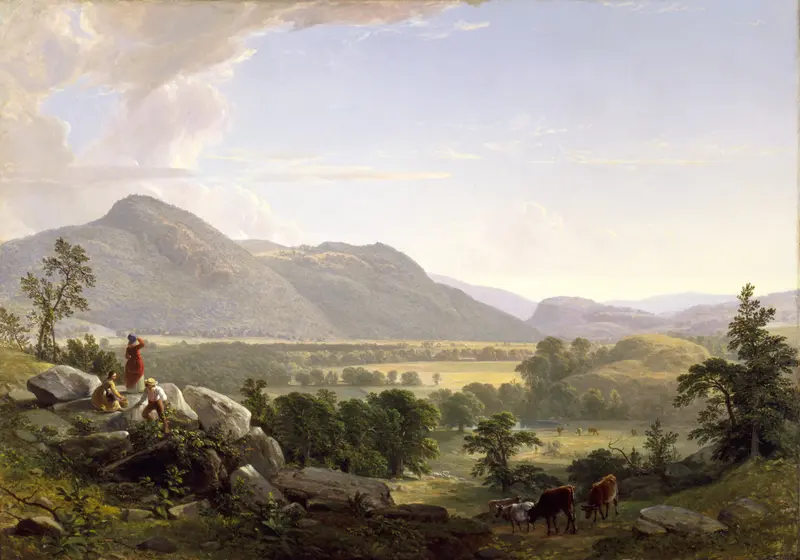
Dover Plains, Dutchess County, New York
Asher Brown Durand
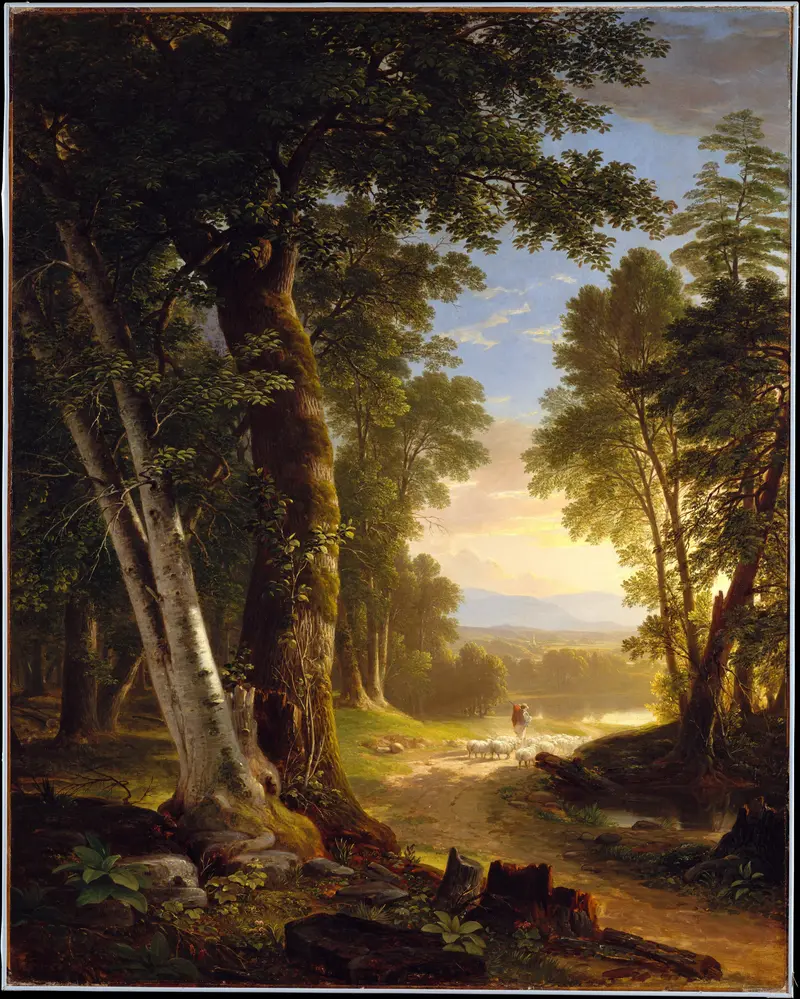
The Beeches
Asher Brown Durand

Kaaterskill Landscape
Asher Brown Durand
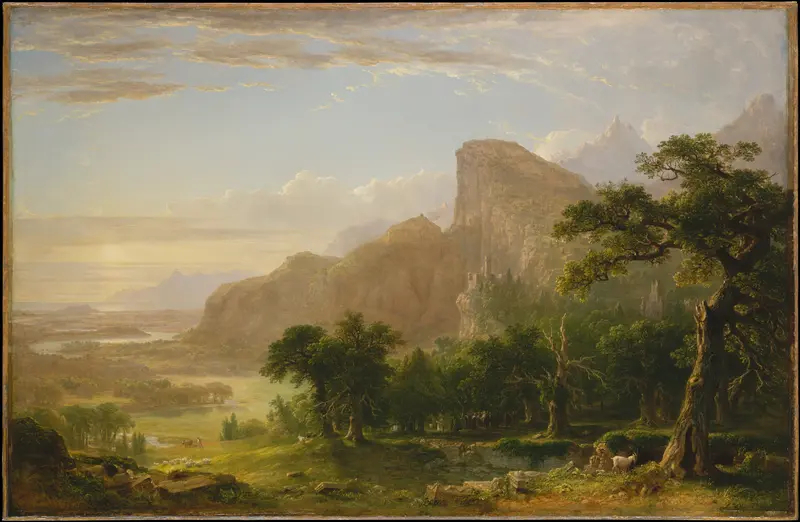
Landscape—Scene from ‘Thanatopsis’
Asher Brown Durand
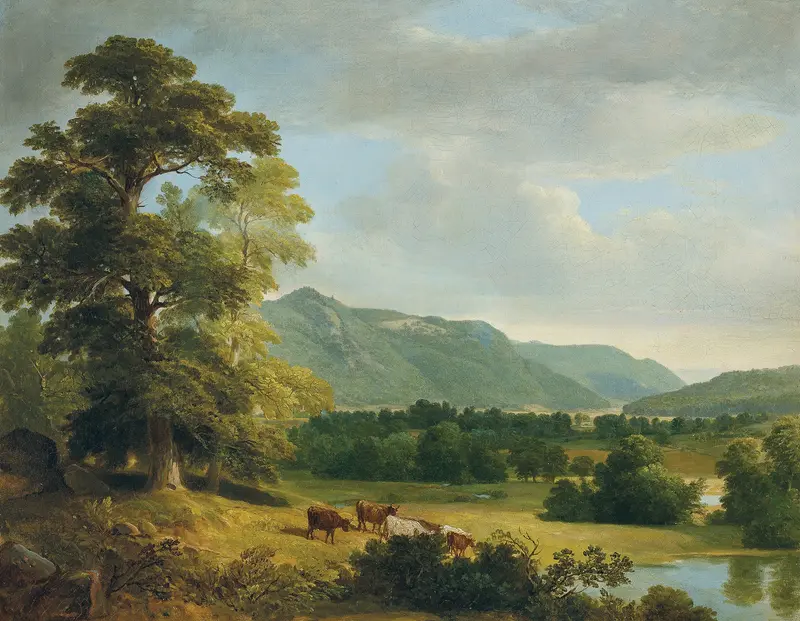
Landscape Study, Dover Plains, New York
Asher Brown Durand
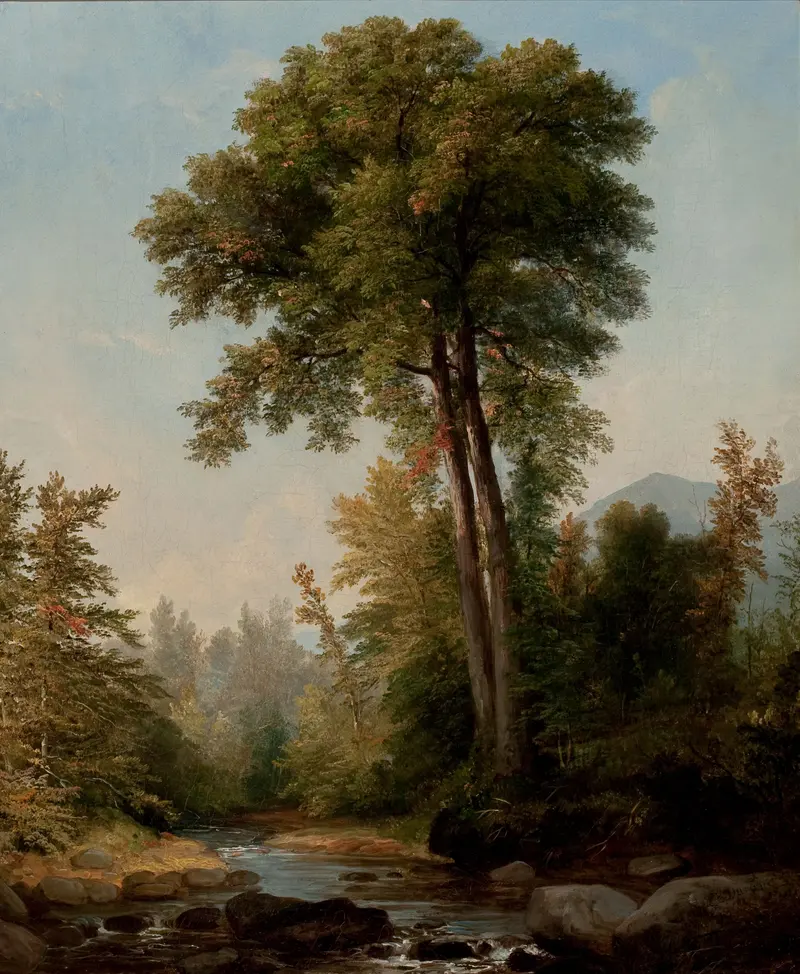
A Natural Monarch
Asher Brown Durand
More Landscape Art

The Starry Night
Vincent van Gogh

View of Delft
Johannes Vermeer

Water Lilies
Claude Monet

The Grand Canal, Venice, looking north-west from the Ca' Corner to the Ca' Contarini degli Scrigni, with the campanile of Santa Maria della Carità
Canaletto

Windsor Castle
Canaletto

The Grand Canal looking North-East from the Palazzo Dolfin-Manin to the Rialto Bridge
Canaletto