Landscape from Estonia — History & Facts
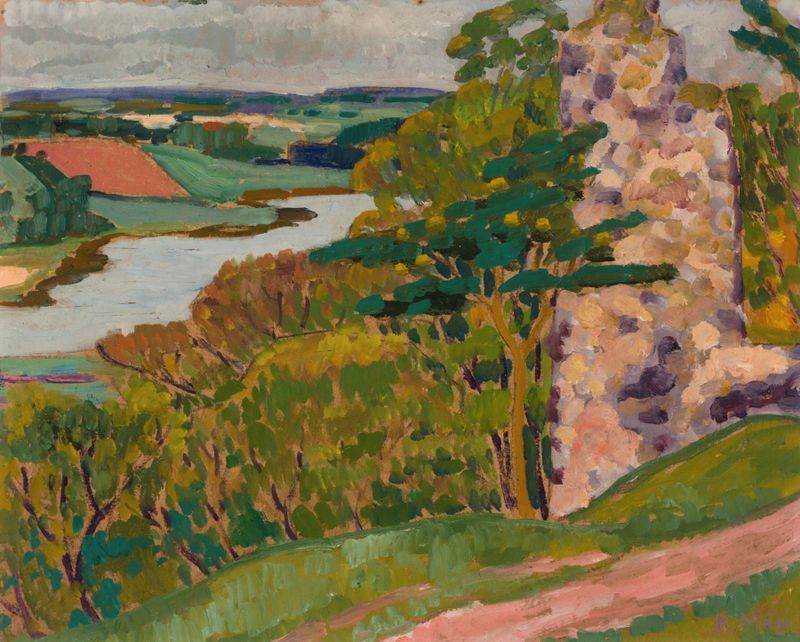
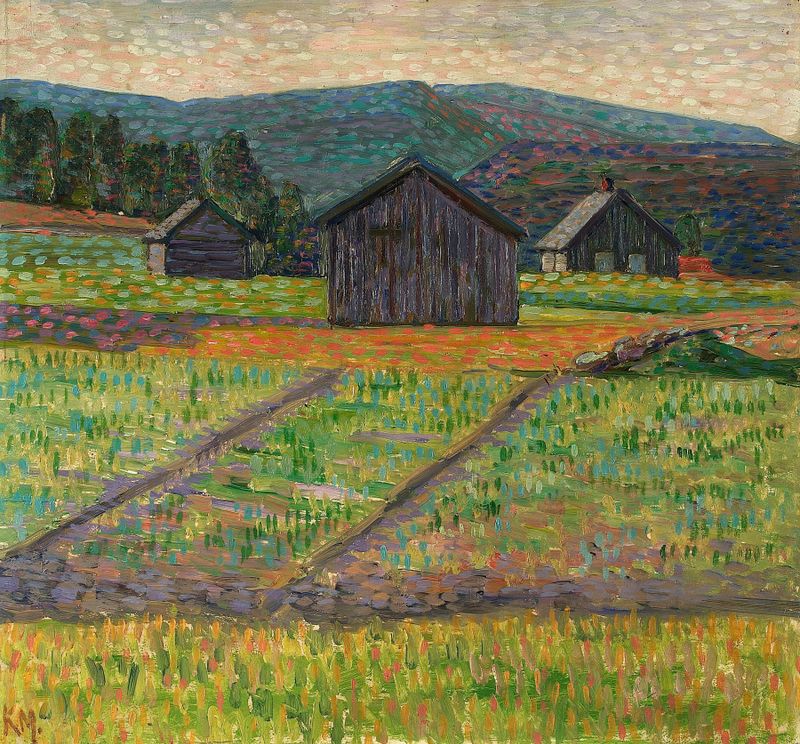
When did color learn to lie? In the depths of a silent landscape, hues whisper secrets of both presence and absence, revealing the delicate dance between what is seen and what is felt. Look to the foreground, where a soft, rolling expanse of verdant greens meets a horizon painted with the lightest touch of cerulean blue. The gentle brushwork invites the viewer to trace the contours of the land, while the textured strokes suggest an ethereal quality that lingers just out of reach. Notice how the light kisses the edges of the foliage, creating a shimmering effect that breathes life into the composition, yet simultaneously evokes a haunting emptiness within the vastness. As you delve deeper, observe the contrast between the vibrant colors and the starkness of the composition.
Here, the juxtaposition of warmth and coolness reflects an emotional tension, a longing that echoes through the open space. The absence of figures magnifies this feeling—each stroke seems to cradle solitude, inviting contemplation while hinting at a deeper narrative about loss and the search for belonging within the natural world. During 1915-16, the artist created this work amidst the tumult of World War I, while living in Estonia. It was a period marked by national identity struggles and a personal quest for artistic clarity.
Mägi’s exploration of landscape painting was pivotal, as he sought to capture the essence of his homeland, using color not merely for representation, but as a means to convey complex emotional landscapes—a language that reached beyond realism into the realm of the spiritual.