Maastik majadega — History & Facts
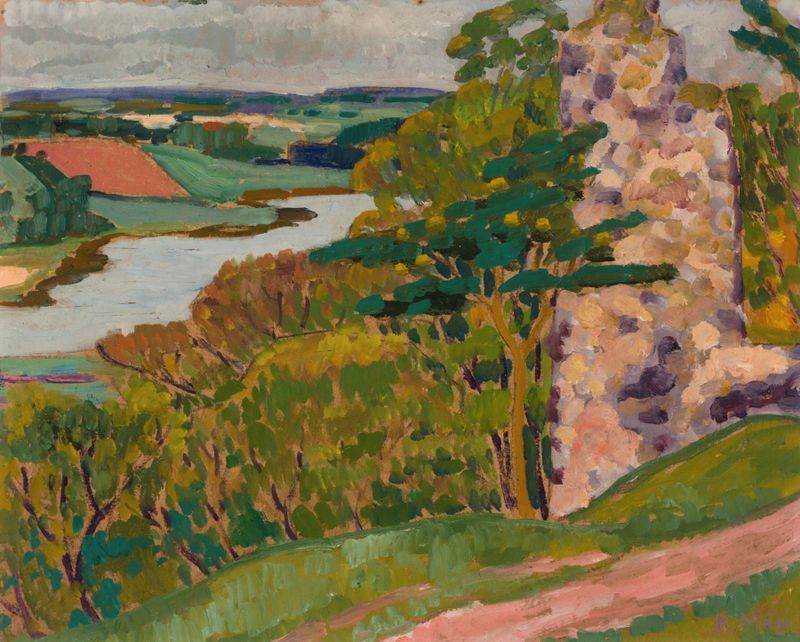
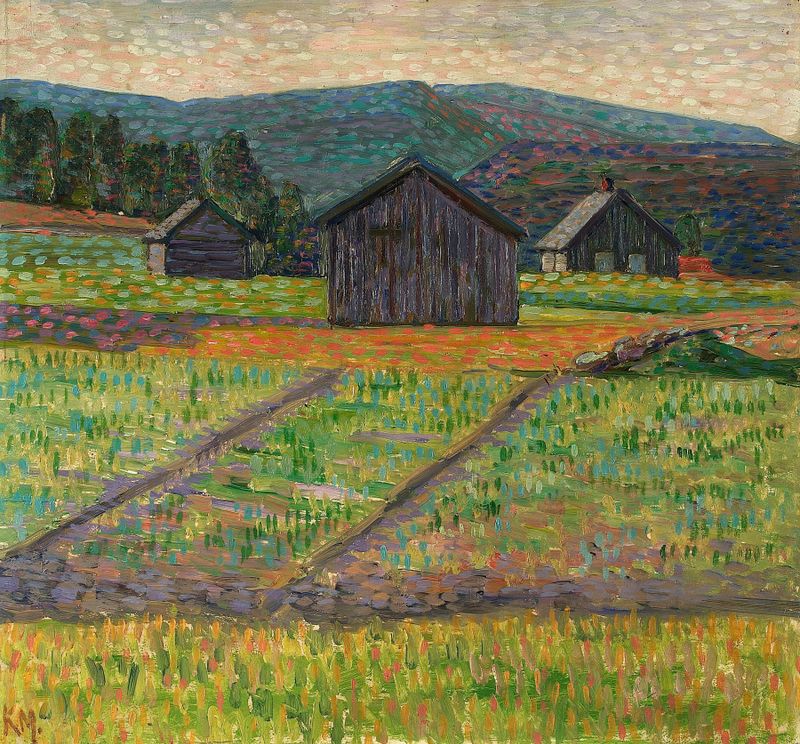
Where does light end, and longing begin? This question resonates deeply within the vibrant hues and serene landscapes captured in the work of Konrad Mägi. Look to the left at the gentle rise of the hills, where they embrace the horizon. The saturated greens and earthy browns are punctuated by dashes of bright color, guiding your eyes toward the cluster of houses nestled below. Notice how the warm sunlight bathes the scene, creating a delicate contrast between the rugged terrain and the soft, welcoming façades of the dwellings.
The brushwork is expressive yet controlled, suggesting a harmony between nature and human presence. Delve deeper into the interplay of light and shadow that hints at the passage of time. The way the sunlight dances across the hills evokes a sense of fleeting beauty, while the shadows lurking at the edges speak to the untold stories and emotions lingering in the background. Here, color transcends mere representation; it becomes a language of yearning, illustrating not just the landscape but the artist's own connection to place, memory, and identity. Painted between 1908 and 1910, this piece emerged during a transformative period for Mägi in Estonia.
At the time, he was exploring Impressionism, moving away from traditional forms to embrace a more personal expression influenced by his surroundings. This painting reflects not only his artistic evolution but also the burgeoning national identity in Estonia, capturing a moment where nature and culture intertwine, inviting viewers to contemplate their own relationship with light and place.