Maastik — History & Facts
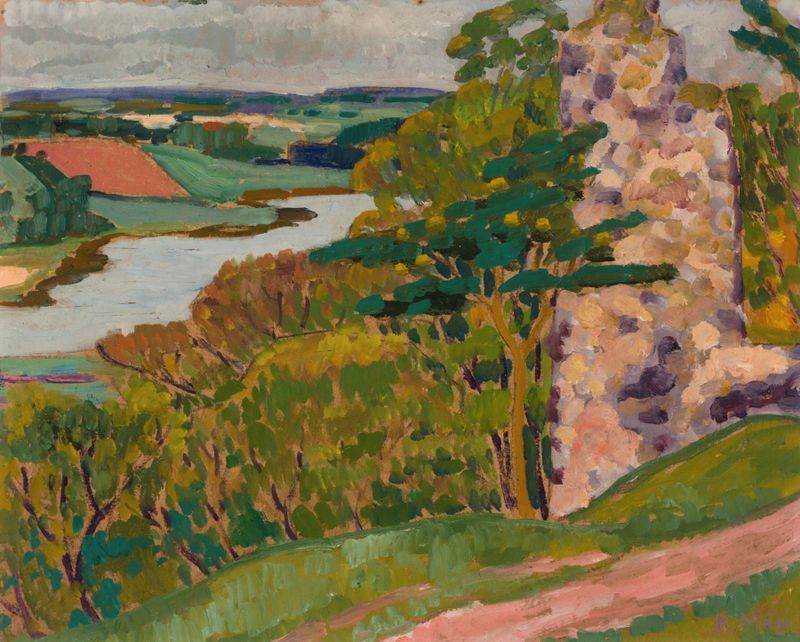
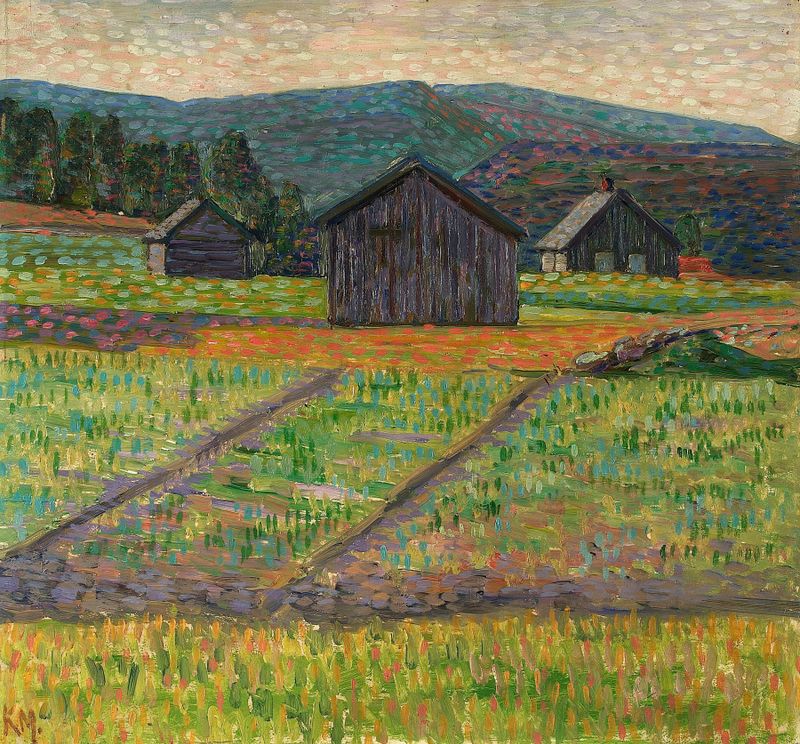
In the depths of a quiet landscape, where the earth whispers secrets of loss and longing, a story unfolds within the brushstrokes. Notice how the sweeping horizon draws your gaze toward the luminous interplay of light and shadow in Maastik. Focus first on the golden hues that dance across the fields, illuminating the vibrant greens and earthy browns. The composition invites you to wander through the undulating hills, each stroke meticulously crafted, revealing a textured landscape that feels both real and dreamlike.
The subtle gradients of color suggest a fleeting moment, as if the artist captured an ephemeral beauty that may soon fade away, echoing the transient nature of existence. Beneath the surface, emotional tensions pulse through the work. The juxtaposition of the warm, inviting colors with the underlying shadows hints at an unresolved grief, a longing for something lost. Each brushstroke carries a weight, as if the landscape embodies the artist's own experiences with loss—both personal and universal.
The gentle curves of the land might evoke nostalgia, while the distant mountains stand as a silent reminder of unattainable dreams. Created between 1920 and 1921, Maastik emerged during a transformative period for its creator. Living in Estonia, Mägi was influenced by the rise of modernism, seeking to imbue his landscapes with emotional depth and a sense of identity rooted in his homeland. This work reflects his turbulent emotional landscape as he navigated the aftermath of World War I and the socio-political changes sweeping through Europe, capturing a moment of beauty intertwined with the shadows of loss.