Landscape from Lannion — History & Facts
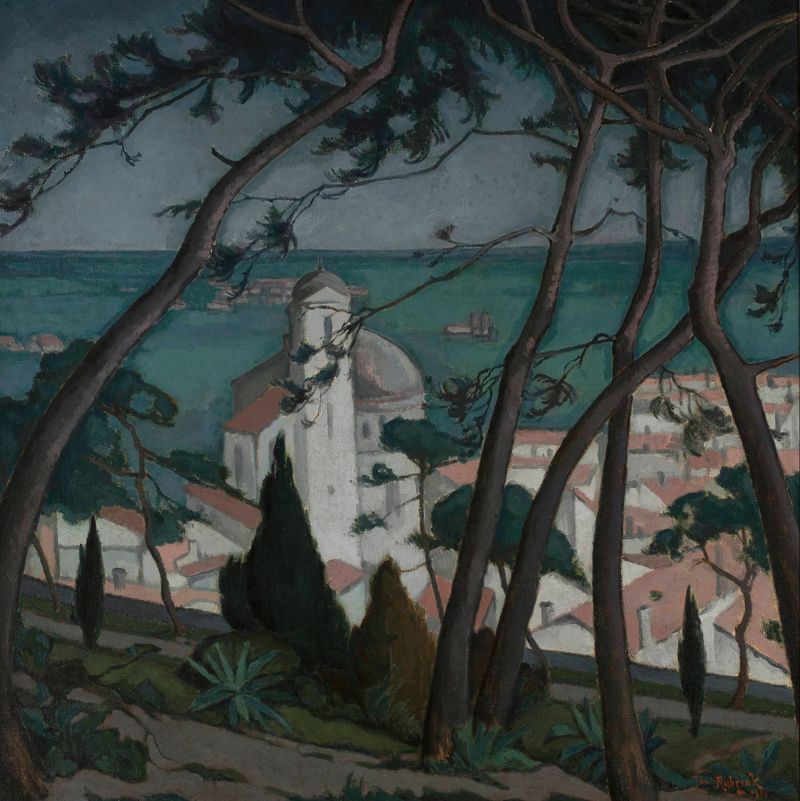
Who listens when art speaks of silence? In the haunting stillness of Landscape from Lannion, longing resonates through every brushstroke, inviting viewers to explore the world it conjures. Focus on the gentle undulation of the hills in the background, where soft greens mingle with muted browns, drawing the eye across the canvas. Notice how the light delicately caresses the landscape, illuminating certain areas while casting others into shadow, creating a profound sense of depth. The horizon stretches invitingly, as if whispering untold stories of the land, while the simplicity of the foreground—a solitary tree, robust yet isolated—reflects the emotional weight of solitude. In this composition, contrasts emerge: the vibrant greens of nature juxtaposed against the muted tones of a cloudy sky evoke feelings of both hope and melancholy.
The lone tree stands as a symbol of resilience, yet its isolation suggests an undercurrent of yearning. This tension between the expansive beauty of the landscape and the solitary figure hints at a deeper narrative of connection and disconnection, illustrating our human desire to belong. Jan Rubczak painted Landscape from Lannion in 1914, during a pivotal time in European art. Based in France, he was influenced by the Post-Impressionist movement, which sought to capture the emotional resonance of a scene.
As the world edged towards the turmoil of World War I, Rubczak's work reflects both a personal and collective longing for peace and tranquility, as artists grappled with the changing tides of society while seeking solace in nature's beauty.