Most na Sekwanie — History & Facts
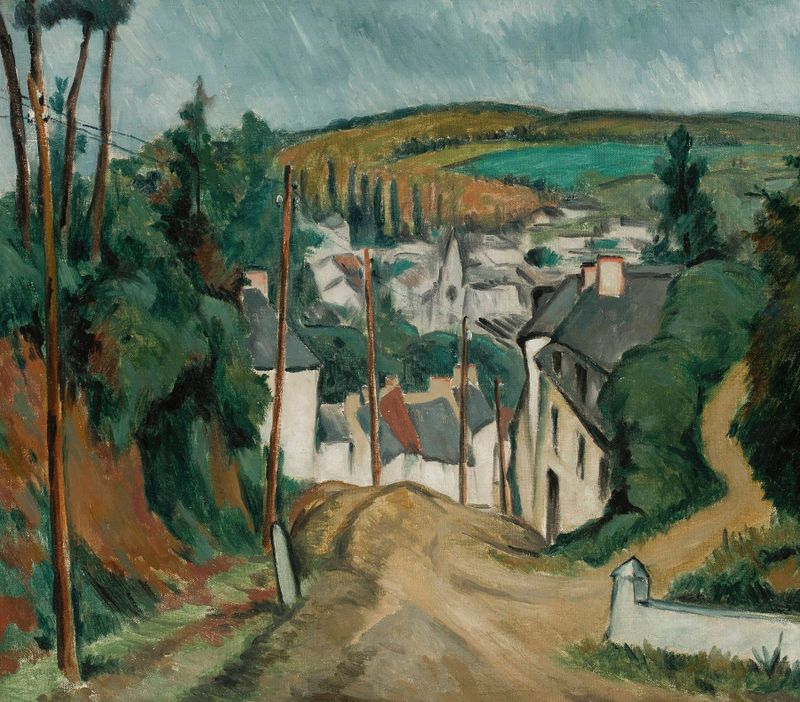
Can beauty exist without sorrow? In Jan Rubczak's Most na Sekwanie, the answer unfolds in hues of twilight, where moments of radiant grace are intertwined with the weight of loss. Look to the foreground, where the delicate arches of a bridge capture the evening light, shimmering softly against the flowing river below. The palette of blues and golds blends seamlessly, evoking a serene atmosphere, yet there's an undercurrent of longing—a subtle reminder of the transient nature of this picturesque scene. Notice how the brushstrokes create a rippling texture on the water's surface, drawing the eye toward reflections that shimmer like fragmented memories. As you delve deeper, consider the interplay between light and shadow.
The bridge stands as a metaphorical threshold, bridging the beauty of the present with the nostalgia of the past. Here, the silvery ripples suggest a movement that resonates with the idea of transcendence—an invitation to embrace both joy and melancholy. Each element invites contemplation; the calm water conceals depths yet to be explored, suggesting that beneath beauty lies a complex emotional landscape. In 1908, Rubczak painted this work during a time when expressions of emotion began to permeate the art world.
Living in Poland, he was influenced by the shifting cultural identities of his homeland while also drawing inspiration from the Symbolist movement. The painting reflects his desire to capture not just the aesthetics of nature, but also the profound feelings that arise from its contemplation—an embodiment of both the fleeting and the eternal.