
Luxembourg Palace in Snow — History & Facts
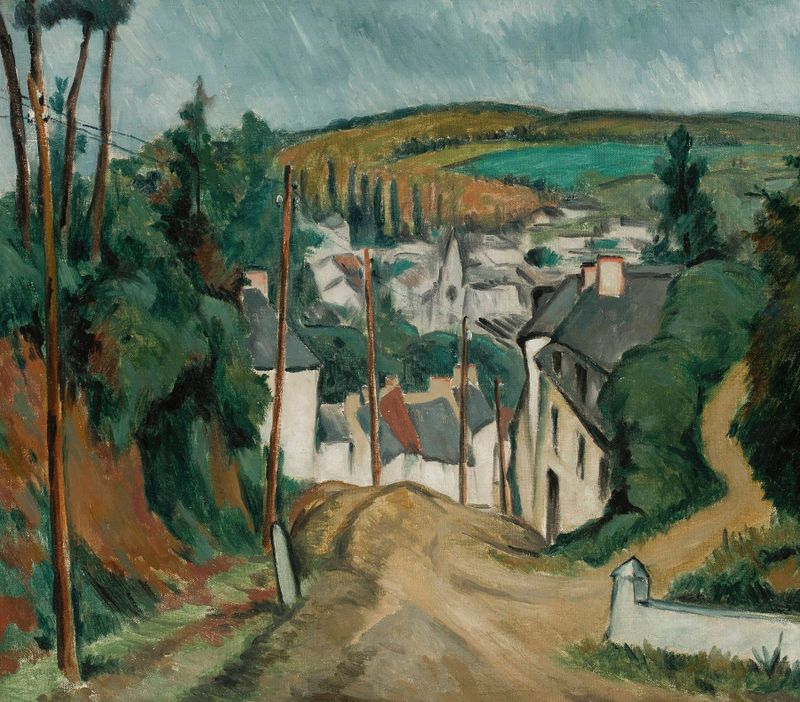
Can paint confess what words never could? In Luxembourg Palace in Snow, the canvas breathes with a chilling stillness that speaks volumes about a world on the brink of revolution. Look to the upper left at the delicate interplay of light and shadow draping over the palace's classical architecture. Notice how the white snow cloaks the structures in a serene but deceptive purity, contrasting sharply with the muted colors of the surrounding trees, which seem to linger in a darkened palette. Each brushstroke captures the intricate details of the palace, inviting your gaze to wander along its grand façades, while soft flakes dance in the air, adding a sense of movement to the otherwise tranquil scene.
The cool blues and grays evoke a palpable chill, emphasizing the isolation that accompanies winter. Yet beneath this serene façade lies a tension that lurks in the unblemished snow. The calmness of the scene belies the unrest brewing in the broader world, hinting at the societal changes on the horizon. The stark contrast between the opulence of the palace, a symbol of stability and tradition, and the encroaching winter suggests a fleeting moment before inevitable upheaval.
Each detail whispers of impending transformation, where beauty and cold coexist as reflections of both the external landscape and the inner turmoil of a society in flux. In 1912, the artist captured this moment during a period of significant change in Europe. Amidst the whispers of war and social transformation, Rubczak painted this scene while residing in Paris, a vibrant hub for artistic and political discourse. The tensions in his work resonate with the larger historical context, as the world prepped itself for the upheavals of the Great War and the revolutions that would follow, making this artwork a poignant reflection of its time.
More Artworks by Jan Rubczak
Browse all →


More Architecture Art
Browse all →
The statue of Liberty
Frédéric Auguste Bartholdi

View of Houses in Delft, Known as ‘The Little Street’
Johannes Vermeer

View of Houses in Delft, Known as ‘The Little Street’
Johannes Vermeer

The Cathedral in Rouen. The portal, Grey Weather
Claude Monet

The yellow house
Vincent van Gogh

The Church in Auvers-sur-Oise, View from the Chevet
Vincent van Gogh