
Landscape (NAD) — History & Facts
Sunlight pours through a break in the trees, drawing your eye to a quiet meeting at the forest’s edge—a pause in the shade before the land sweeps open toward water and distant blue hills. The painter, Asher Brown Durand, leads you gently from the cool, mossy rocks in the foreground, past the two small figures—one standing, one seated—toward the luminous valley beyond. The careful placement of these figures, dwarfed by the grandeur of the trees, signals a moment of reflection or conversation, their presence a reminder of human smallness within the vastness of nature.
The light, golden and clear, lingers on the treetops and the grassy bank, then spills out across the river, guiding the viewer’s gaze to the far-off church spires and the soft, receding mountains. Every detail—the curve of the stream, the dappling of sunlight, the sweep of clouds—serves to deepen the sense of peace and measured order. Painted in 1850, Landscape (NAD) belongs to the flourishing era of American landscape painting, when artists like Durand and his contemporaries in the Hudson River School sought to capture the spirit and promise of a still-young nation. These works were often commissioned by collectors eager to celebrate the American wilderness, or acquired by institutions such as the National Academy of Design, where this canvas found its home.
Durand’s landscapes, with their precise observation and gentle grandeur, reflect a period when the natural world was seen both as a subject for contemplation and as a symbol of national identity. History has kept few traces of this particular scene’s origins, but the painting’s careful construction and luminous atmosphere invite viewers to linger, tracing the path of light and shadow as if wandering the landscape themselves.
More Artworks by Asher Brown Durand

A Sycamore Tree, Plaaterkill Clove (The Sycamore, Kaaterskill Clove)
Asher Brown Durand
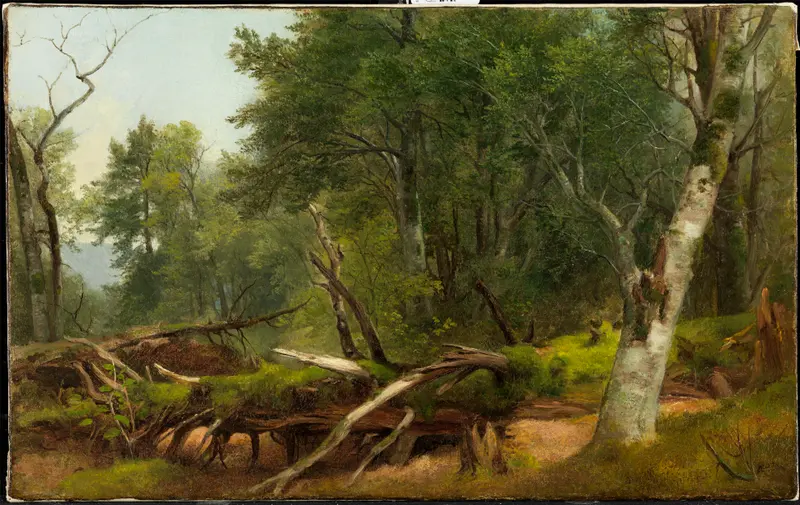
Forest Scene in the Catskills
Asher Brown Durand
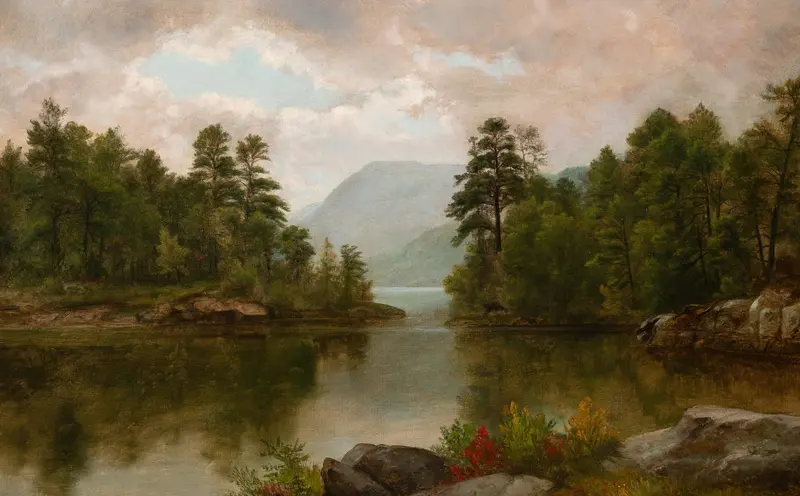
The Narrows, Lake George
Asher Brown Durand
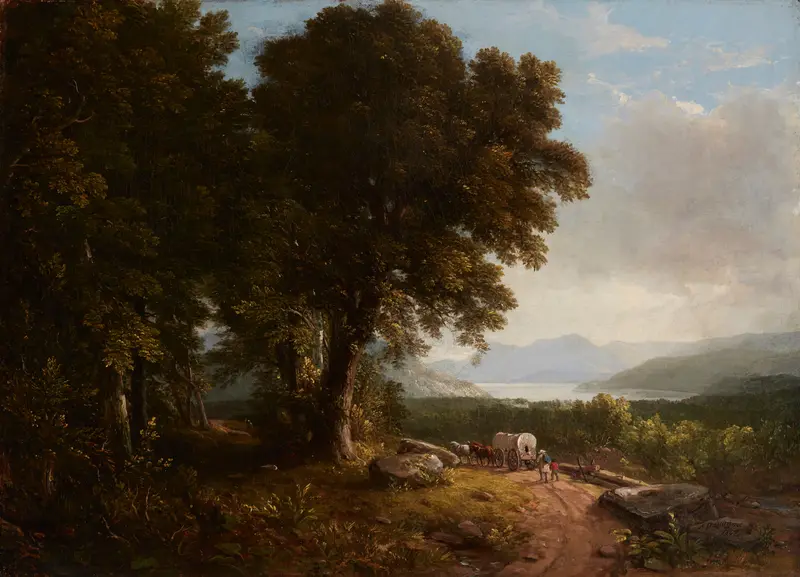
Landscape with Covered Wagon
Asher Brown Durand
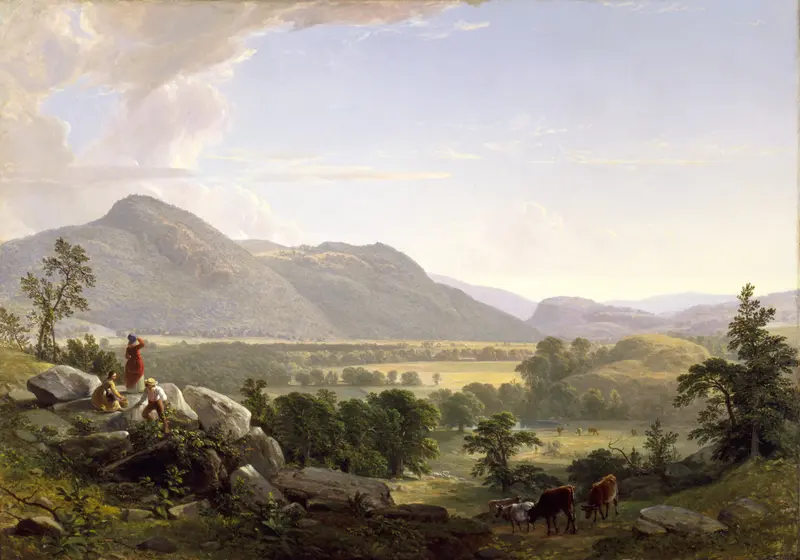
Dover Plains, Dutchess County, New York
Asher Brown Durand
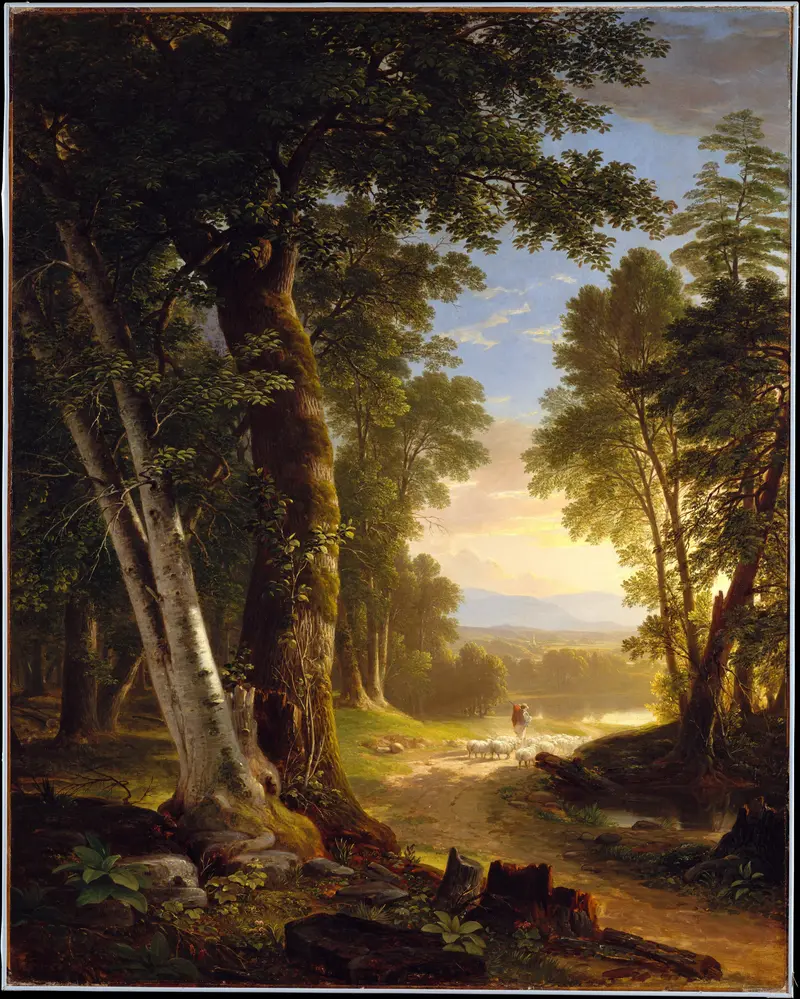
The Beeches
Asher Brown Durand

Kaaterskill Landscape
Asher Brown Durand
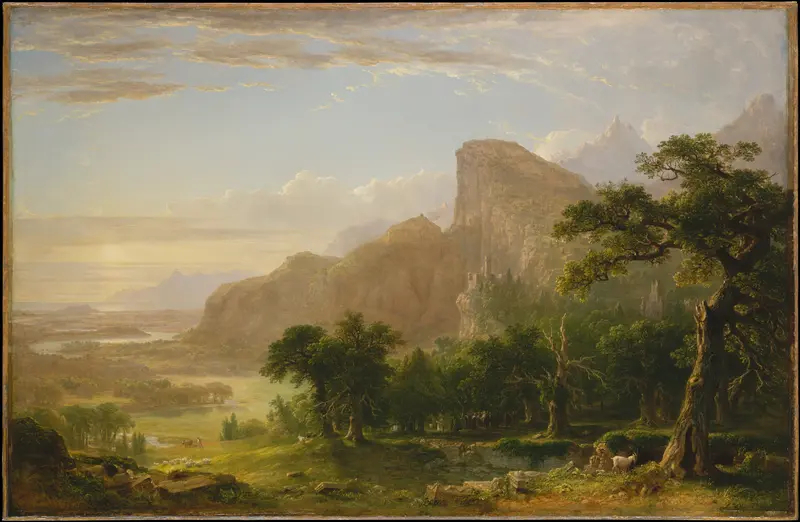
Landscape—Scene from ‘Thanatopsis’
Asher Brown Durand
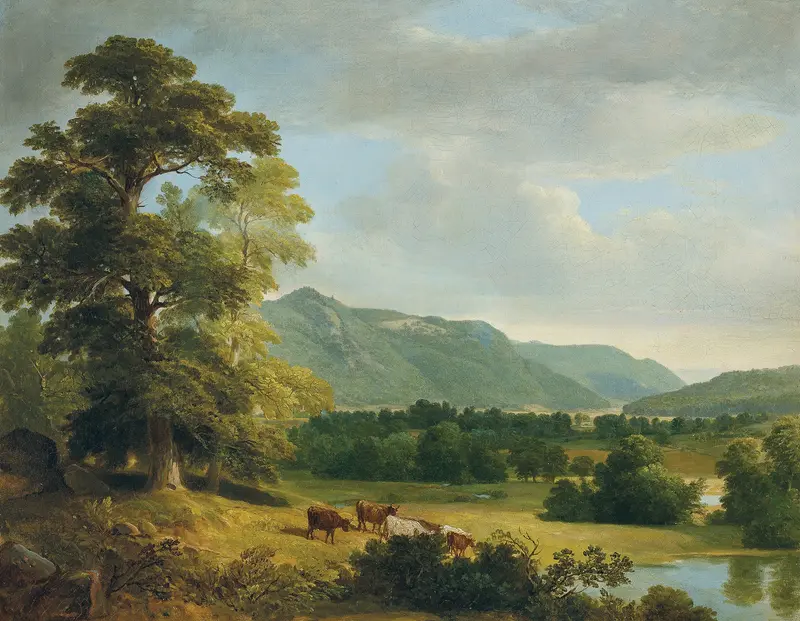
Landscape Study, Dover Plains, New York
Asher Brown Durand
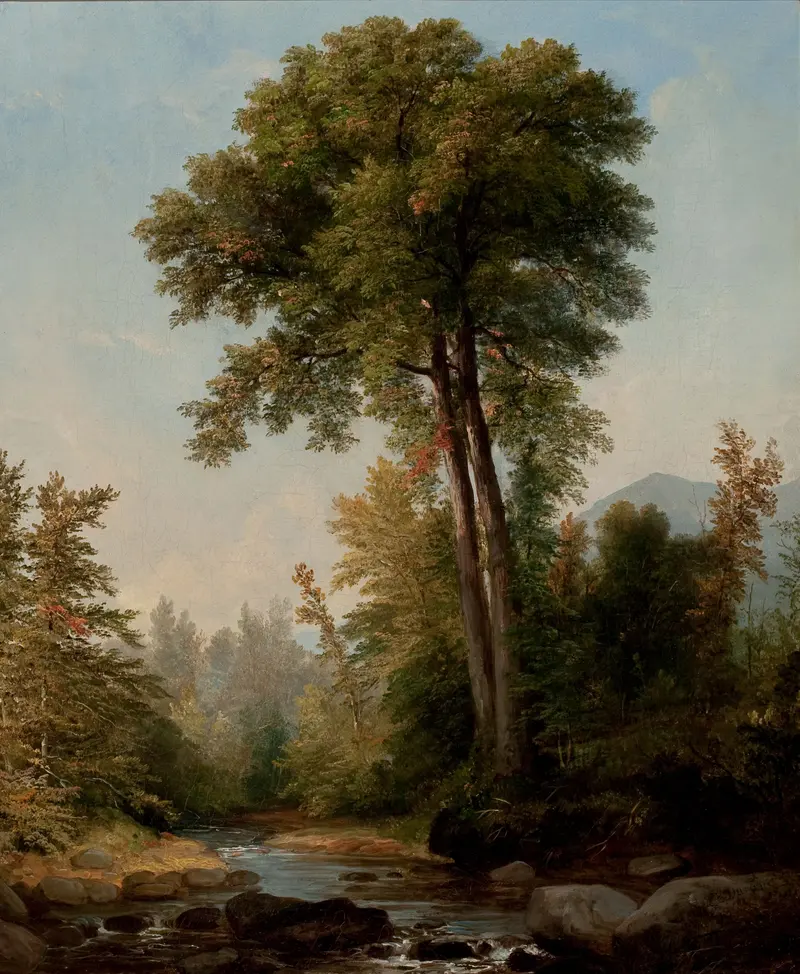
A Natural Monarch
Asher Brown Durand
More Landscape Art

The Starry Night
Vincent van Gogh

View of Delft
Johannes Vermeer

Water Lilies
Claude Monet

The Grand Canal, Venice, looking north-west from the Ca' Corner to the Ca' Contarini degli Scrigni, with the campanile of Santa Maria della Carità
Canaletto

Windsor Castle
Canaletto

The Grand Canal looking North-East from the Palazzo Dolfin-Manin to the Rialto Bridge
Canaletto