
Landscape of the Tatra Mountains — History & Facts
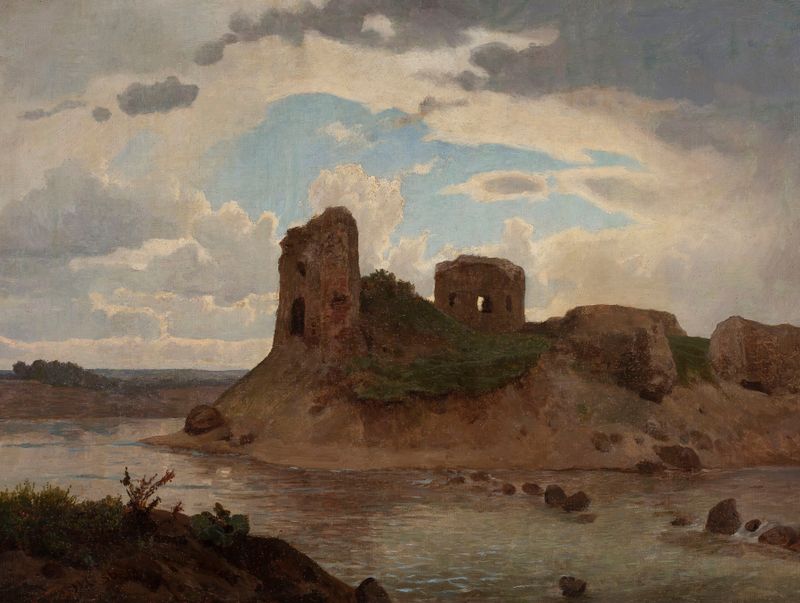
In that stillness, a world of melancholy emerges, inviting the viewer to linger in its depths. Look to the horizon where the Tatra Mountains rise, their jagged peaks cloaked in a soft haze. The palette of muted greens and blues suggests a somber tranquility, while the delicate brushstrokes evoke the whisper of wind through the valleys. Notice how the light plays gently on the surface of the water, reflecting the mountains in a way that blurs the line between reality and reverie.
The subtle gradation of colors pulls your gaze toward the distant summits, drawing you deeper into the landscape's embrace. Within this serene vista lies a poignant tension between nature’s majesty and the solitude it embodies. The presence of the water, still and reflective, serves as a mirror to the viewer’s own introspection, evoking feelings of nostalgia and yearning. Here, the mountains stand as silent witnesses to the passage of time, their grandeur contrasting with the ephemeral quality of the moment captured on canvas.
The calmness of the scene belies an undercurrent of longing, a reminder of the beauty and isolation that coexist within the natural world. Wojciech Gerson created this work in 1853, a time when Poland was grappling with national identity amid political turmoil. Living in Warsaw, Gerson was deeply influenced by Romantic ideals, aiming to capture the sublime in nature while expressing the emotional landscape of his homeland. The Tatra Mountains, a recurring motif in his art, reflect both the artist's personal sentiment and the broader cultural longing for freedom and beauty during an era of oppression.
More Artworks by Wojciech Gerson
Browse all →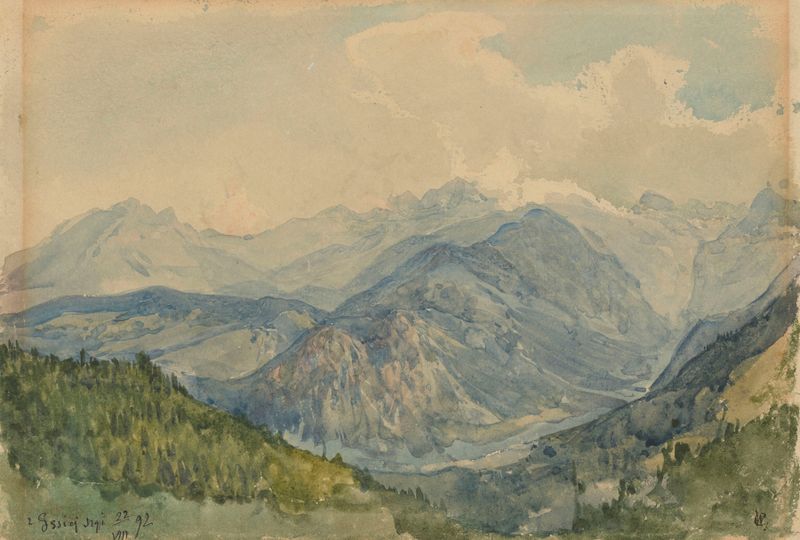
View from Gęsia Szyja Peak in the Tatra Mountains
Wojciech Gerson

View of Płock
Wojciech Gerson
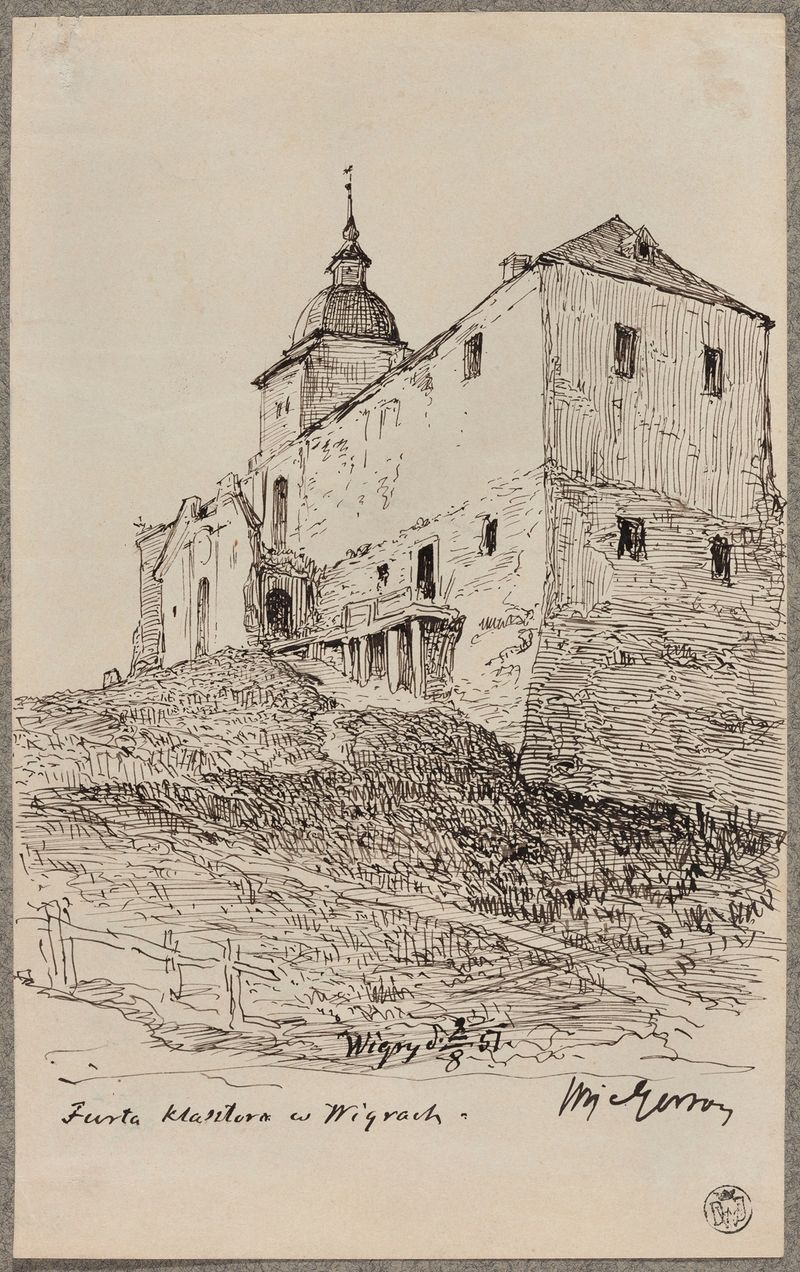
Furta klasztoru w Wigrach
Wojciech Gerson

Dom Długosza w Sandomierzu, tzw. Czerwona Kamienica
Wojciech Gerson
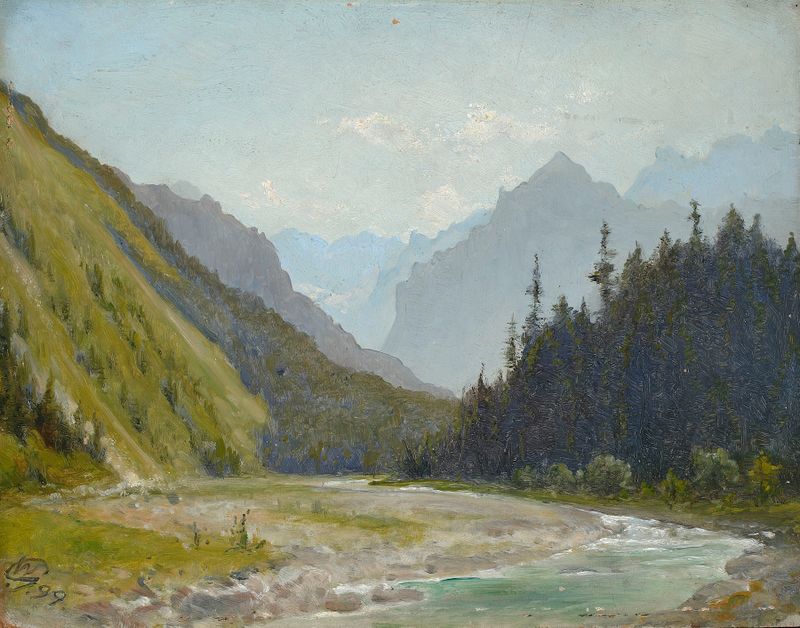
White Water Valley in the Tatra Mountains
Wojciech Gerson
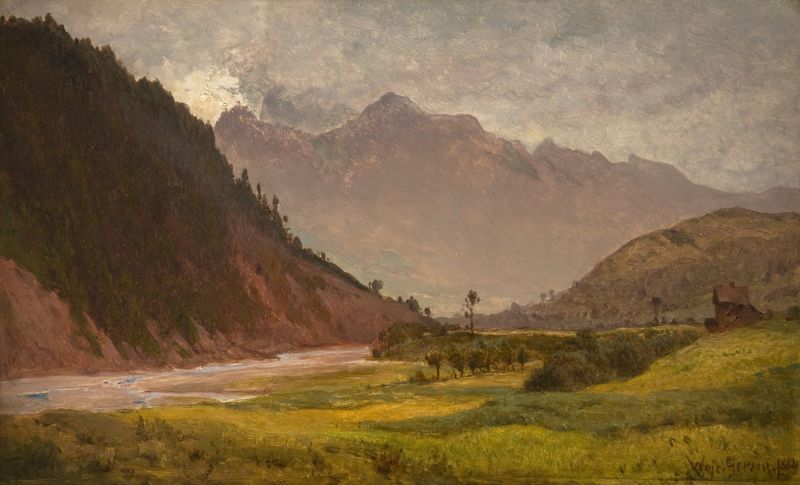
Fair Weather in the Pieniny Mountains
Wojciech Gerson

Rockslide in the White Water Valley in the Tatra Mountains
Wojciech Gerson

Graveyard in the mountains
Wojciech Gerson

Mountain Landscape
Wojciech Gerson
Ruins of the Bobrowniki castle by the Vistula River
Wojciech Gerson





